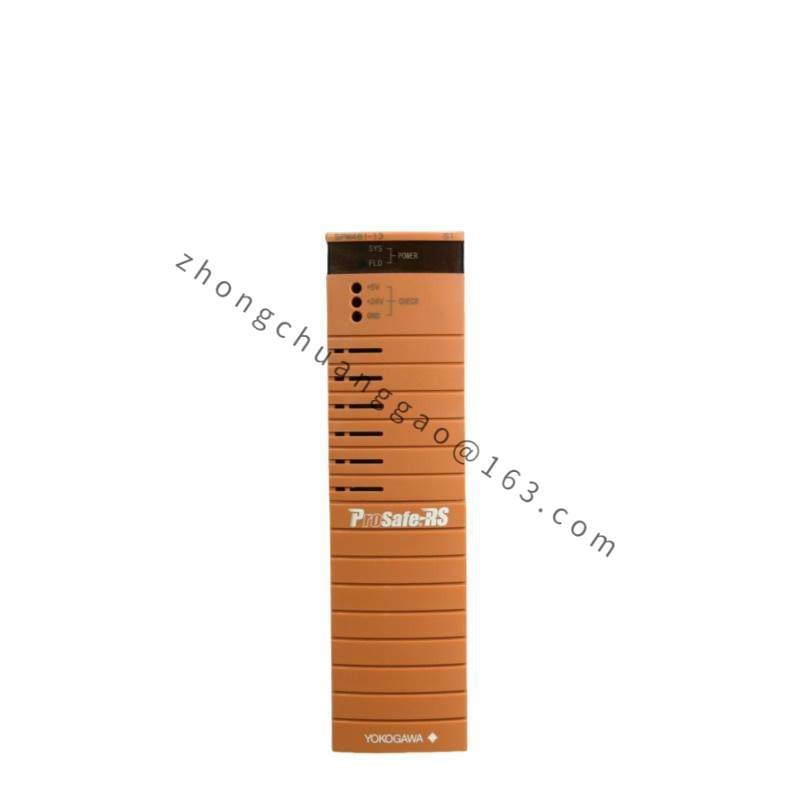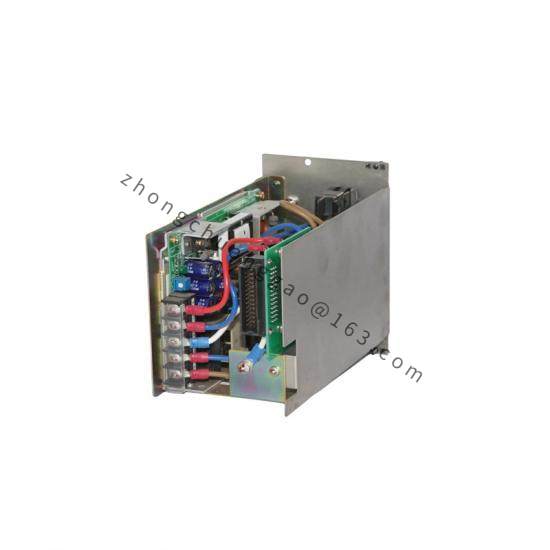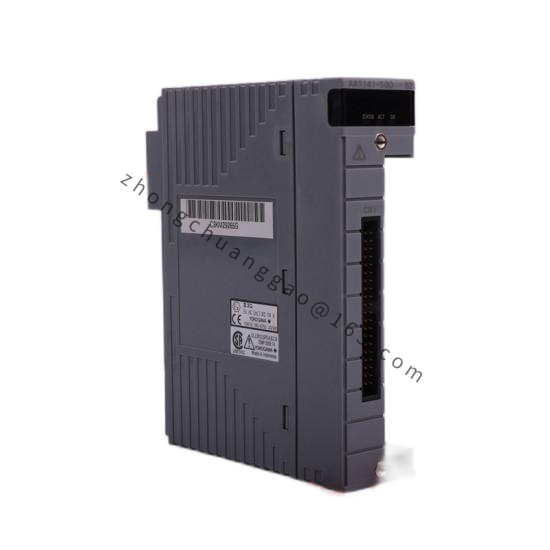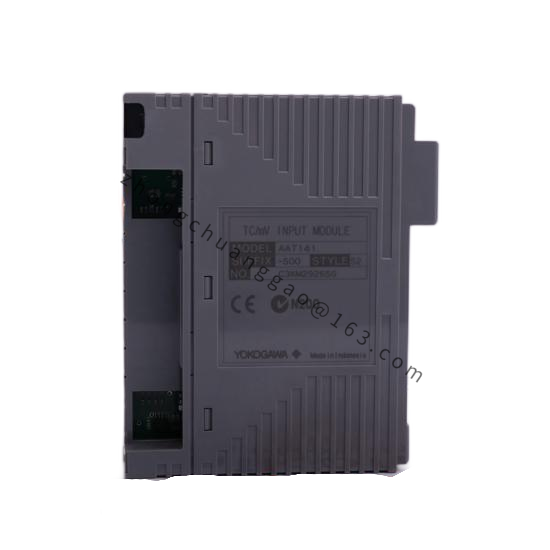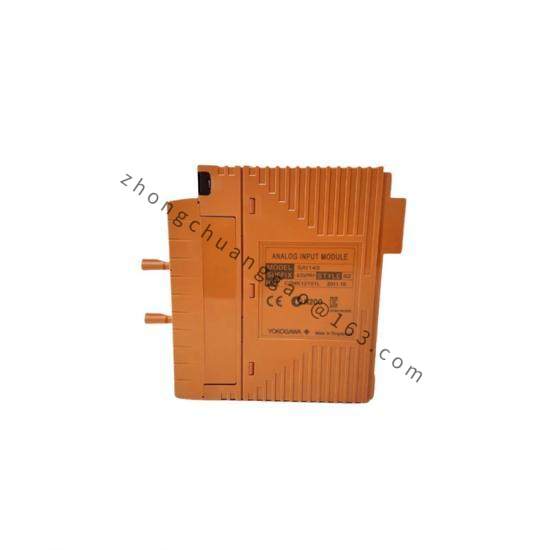
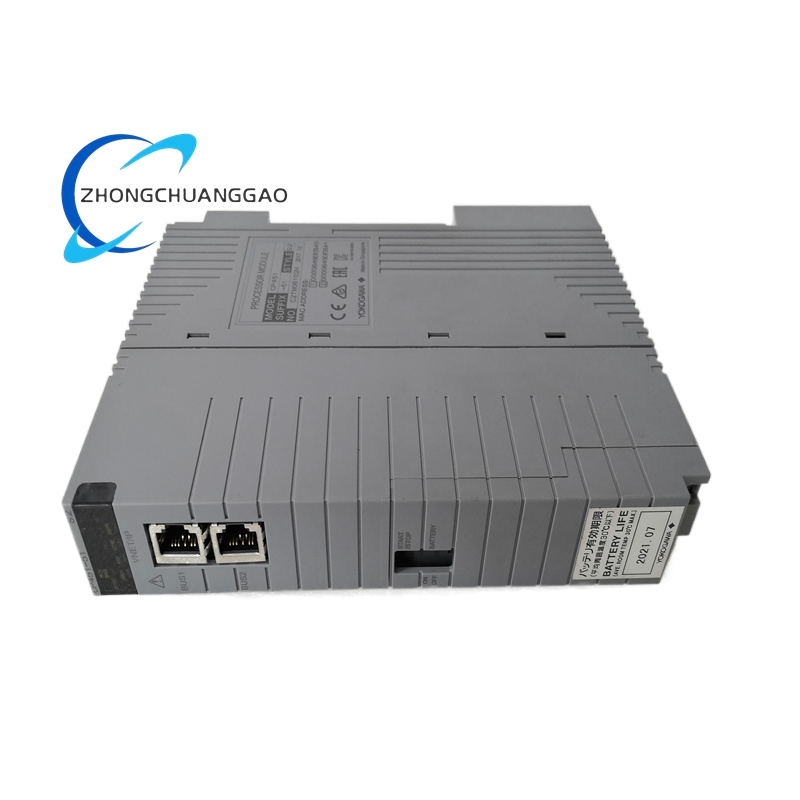
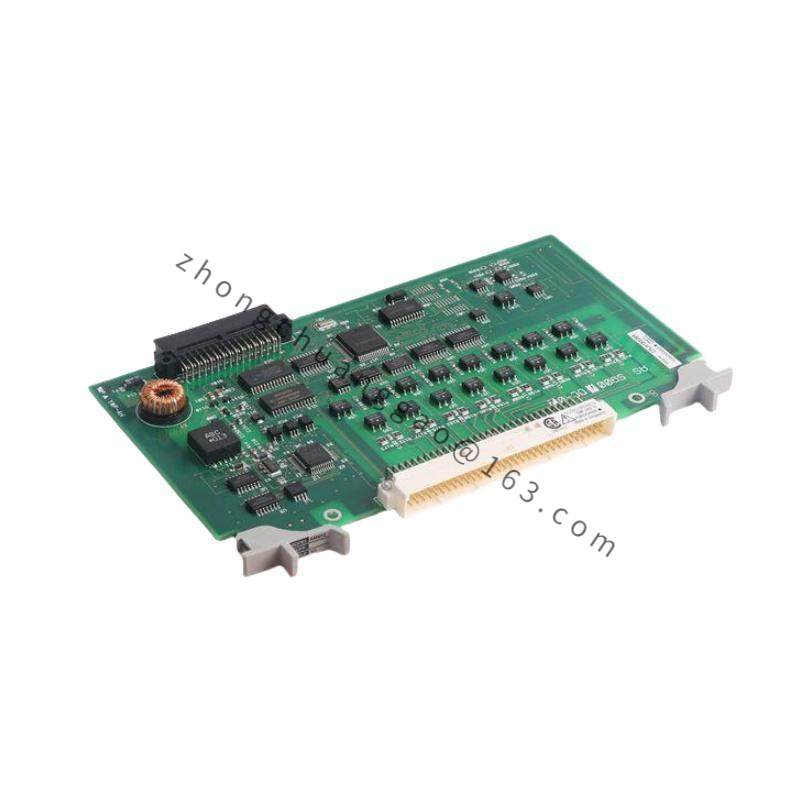
Yokogawa SPW482-53
Product Introduction:
The SPW482-53 is a multifunction power meter and energy quality analyzer from Yokogawa, designed for accurate measurement of electrical power parameters in industrial and commercial power systems. It measures voltage, current, active power, reactive power, apparent power, power factor, frequency, harmonics (up to 50th order), and energy (kWh/kvarh). The unit supports 3-phase 4-wire measurement and provides RS-485 and Ethernet communication for integration with SCADA, DCS, and energy management systems.
Detailed content
Model Number Breakdown:
- SPW: Single-Phase / Three-Phase Power Meter (Yokogawa internal designation)
- 482: 3-phase 4-wire measurement configuration
- 53: Specific variant — likely indicates RS-485 + Ethernet communication with Modbus TCP/RTU protocol
Key Specifications:
- Measurement Type: 3-Phase 4-Wire (3V + 3I)
- Voltage Range: 15–600 V AC (auto-range)
- Current Range: 0.1–5 A AC (via CT); 0.05–2.5 A AC (direct)
- Active Power Accuracy: ±0.1% of reading + ±0.1% of range (at 50/60 Hz)
- Reactive Power Accuracy: ±0.2% of reading + ±0.2% of range
- Power Factor Accuracy: ±0.005 (at PF = 1.0)
- Frequency Range: 45–65 Hz (accuracy ±0.01 Hz)
- Harmonic Analysis: Up to 50th order (voltage and current)
- Energy Metering: Active energy (kWh), Reactive energy (kvarh) — ±0.5% accuracy (Class 1 per IEC 62053-21)
- Display: LCD with backlight (numeric + bar graph)
- Communication: RS-485 (Modbus RTU/ASCII), Ethernet (Modbus TCP, HTTP)
- Power Supply: 85–265 V AC/DC (universal)
- Power Consumption: ≤ 5 VA
- Operating Temperature: -10 to +50 °C
- Protection Rating: IP54 (front panel)
- Dimensions (Panel Mount): 96 mm × 96 mm (1/4 DIN) or 72 mm × 72 mm (1/8 DIN) — verify from datasheet
Functional Features:
- Comprehensive Power Measurement: V, I, P, Q, S, PF, f, THD, harmonics (1–50th), energy (kWh/kvarh), demand (max/min/average)
- Maximum Demand Recording: Records maximum demand over configurable intervals (15/30/60 min)
- Alarm Outputs: 2 relay outputs for over/under voltage, over/under current, over/under power factor
- Pulse Output: Optically isolated pulse output (1000 pulses/kWh) for energy meter verification
- Data Logging: Internal memory stores up to 10,000 records with timestamp
- Web Server: Built-in HTTP web server for remote monitoring via standard web browser
Material Composition:
- Front Bezel: ABS + PC blend, flame-retardant (UL94 V-0)
- Housing: Cold-rolled steel with powder-coated finish
- Terminal Blocks: Phosphor bronze with tin plating; screw-type
- Display Cover: Tempered glass with anti-reflective coating
- PCB: FR-4 epoxy glass, conformally coated
Structural Characteristics:
- Form Factor: Panel-mount (1/4 DIN: 96×96 mm or 1/8 DIN: 72×72 mm)
- Dimensions: 96 mm (W) × 96 mm (H) × 80 mm (D) (1/4 DIN, approximate)
- Weight: Approximately 0.6 kg
- Cutout Size: 92 mm × 92 mm (1/4 DIN) or 68 mm × 68 mm (1/8 DIN)
- Terminal Connection: Screw terminals for voltage and current inputs; CT clamp input option available
Operating Principle:
The SPW482-53 samples all 3 phase voltages and 3 phase currents simultaneously using high-speed A/D converters (sampling rate: 256 samples/cycle at 50 Hz). The digital samples are processed by a DSP (Digital Signal Processor) that calculates:
- RMS values of voltage and current (true RMS, not average-responding)
- Active power (P = Σ Vi × Ii × cos φi) using instantaneous power method
- Reactive power (Q) using the 90° phase-shift method
- Power factor (PF = P/S)
- Harmonics via FFT (Fast Fourier Transform) analysis up to the 50th order
- Energy by time-integration of power
All calculated values are displayed on the LCD and transmitted via RS-485 (Modbus RTU) or Ethernet (Modbus TCP/HTTP) to the host system. The pulse output generates 1000 pulses per kWh for external energy verification.
Advantages & Highlights:
- Class 1 Energy Accuracy: ±0.5% — suitable for revenue-grade metering and billing applications
- 50th Order Harmonics: Full harmonic analysis for power quality compliance (IEEE 519, IEC 61000-4-30)
- Dual Communication: Both RS-485 and Ethernet — flexible integration with any SCADA/DCS/EMS
- Web-Based Monitoring: Built-in HTTP server eliminates need for dedicated software
Applicable Industries:
- Electrical Utilities (Substation/Feeder Metering)
- Industrial Facilities (Energy Management)
- Commercial Buildings (Energy Monitoring)
- Data Centers (Power Quality Monitoring)
- Renewable Energy (Solar/Wind Farm Metering)
- Manufacturing Plants (Motor/Drive Energy Monitoring)
Installation Requirements:
- Mount in a 1/4 DIN (96×96 mm) or 1/8 DIN (72×72 mm) panel cutout with gasket seal
- Connect voltage inputs directly to the terminals (for voltages ≤ 600 V) or via PT (potential transformer) for higher voltages
- Connect current inputs via CT (current transformer) — never connect current directly unless within the 0.05–2.5 A range
- Use shielded twisted-pair cable for all signals; ground shields at the meter end only
- For Ethernet communication, use Cat 5e or higher cable (max 100 m)
- Provide 85–265 V AC/DC power supply
Usage Precautions:
- Never open the voltage terminals while the circuit is energized — 600 V AC is lethal
- Verify CT ratio is correctly programmed in the meter — an incorrect CT ratio will cause gross energy measurement errors
- Do not exceed the maximum input voltage of 600 V AC — use a PT for higher voltages
- Perform zero calibration for current channels after CT installation
- Do not expose the meter to temperatures above +50 °C or humidity above 85% RH (non-condensing)
- The pulse output is optically isolated — do not apply external voltage to the pulse terminals