Yokogawa PH202G-UE/U
Overview:
The PH202G-UE/U is a 2-channel pH and/or ORP (Oxidation-Reduction Potential) analyzer/transmitter from the Yokogawa FLAXA series. It provides simultaneous dual-parameter measurement (pH + ORP or 2×pH) with a 2-wire 4–20mA DC output for each channel. The -UE/U suffix denotes universal input configuration with 2-wire loop-powered operation and integral temperature compensation via Pt1000 RTD. It is designed for continuous online monitoring in industrial water, chemical, pharmaceutical, and food & beverage processes.
Detailed content
Technical Specifications:
| Parameter | Value |
|---|---|
| Model Number | PH202G-UE/U |
| Product Series | FLAXA PH202G |
| Measurement Parameters | pH and/or ORP (dual channel) |
| Number of Channels | 2 channels (Channel 1: pH or ORP; Channel 2: pH or ORP) |
| pH Measurement Range | -2.00 to +16.00 pH |
| pH Resolution | 0.01 pH |
| pH Accuracy | ±0.02 pH (at 25°C, with buffer calibration) |
| pH Repeatability | ±0.01 pH |
| ORP Measurement Range | -1500 to +1500 mV |
| ORP Resolution | 1 mV |
| ORP Accuracy | ±2 mV (at 25°C) |
| ORP Repeatability | ±1 mV |
| Temperature Compensation | Automatic (ATC) via built-in Pt1000 RTD: -5°C to +105°C |
| Temperature Compensation Range (pH) | 0°C to +100°C (Nernst slope correction applied automatically) |
| Output Signal | 4–20mA DC (2-wire, per channel) |
| Output Load Resistance | ≤600Ω (at 24V DC supply) |
| Output Accuracy | ±0.1% of span (typical) |
| Isolation | Output-to-output isolated; output-to-input isolated (500V DC) |
| Supply Voltage | 12V DC to 35V DC (2-wire loop-powered) |
| Power Consumption | ≤1.5W (typical, both channels) |
| Sensor Input | BNC connector — compatible with Yokogawa 2-electrode or 4-electrode pH/ORP sensors (e.g., SC22V-ORP, SU20VP-ATC) |
| Temperature Sensor Input | Pt1000 (3-wire, 4-wire compatible) |
| Calibration | 2-point or 3-point pH calibration; 1-point or 2-point ORP calibration — via front panel push buttons or HART communicator |
| Communication Protocol (Optional) | HART 7 (on 4–20mA signal) |
| Response Time (pH) | ≤30 seconds (95% of final value, in standard buffer) |
| Response Time (ORP) | ≤10 seconds (95% of final value) |
| Operating Temperature (Transmitter) | -10°C to +60°C (+14°F to +140°F) |
| Process Temperature (Sensor) | 0°C to +120°C (standard); up to +150°C (high-temp option) |
| Process Pressure | ≤0.6 MPa (6 bar, standard); up to 1.6 MPa (16 bar, high-pressure option) |
| Protection Rating (Transmitter Head) | IP67 (NEMA 4X) — dust-tight, waterproof |
| Protection Rating (Sensor) | IP68 (submersible) |
| Wetted Materials (Sensor) | SUS316L stainless steel, PEEK, PTFE, glass (pH electrode) |
| Explosion-Proof Certification | ATEX: Ex ia IIC T4 Ga; IECEx: Ex ia IIC T4 Ga; FM: Class I Div 1, Groups C & D; CSA: Class I Div 1, Groups C & D |
| Intrinsic Safety | Ex ia IIC T4 Ga (ia = intrinsically safe, Zone 0 capable) |
| Approvals/Certifications | CE, UKCA, ATEX, IECEx, FM, CSA, EAC, METI (Japan) |
| Dimensions (Transmitter Head) | Approx. 160mm × 80mm × 130mm (W × H × D) |
| Weight (Transmitter Head) | Approx. 1.2kg (typical, without sensor) |
| Display | LCD display with backlight — shows pH/ORP value, temperature, output current, calibration status, alarm status |
Functional Features:
- Dual-channel measurement — simultaneously measures pH + ORP or 2×pH or 2×ORP with independent 4–20mA outputs
- 2-wire 4–20mA loop-powered — no separate power supply required; signal and power share the same pair of wires
- Automatic Temperature Compensation (ATC) — built-in Pt1000 RTD provides real-time temperature input for Nernst slope correction (pH) and temperature-compensated ORP
- 2-point or 3-point pH calibration — supports NIST buffer sets (pH 4.01, 7.00, 10.01) for high accuracy
- HART 7 communication — enables remote configuration, diagnostics, and calibration via HART communicator or DCS
- Front-panel LCD display — shows live pH/ORP value, temperature, mA output, sensor condition, calibration due reminder, alarm status
- Sensor diagnostics — monitors electrode impedance, slope, asymmetry potential, reference junction condition
- Alarm outputs (optional) — 2 programmable alarm relays (SPDT, 250V AC / 30V DC, 3A) for high/low pH or ORP setpoints
- Data logging — stores up to 1000 data points with timestamp (accessible via HART)
- Auto-buffer recognition — identifies NIST buffer solutions automatically during calibration
Structural Features:
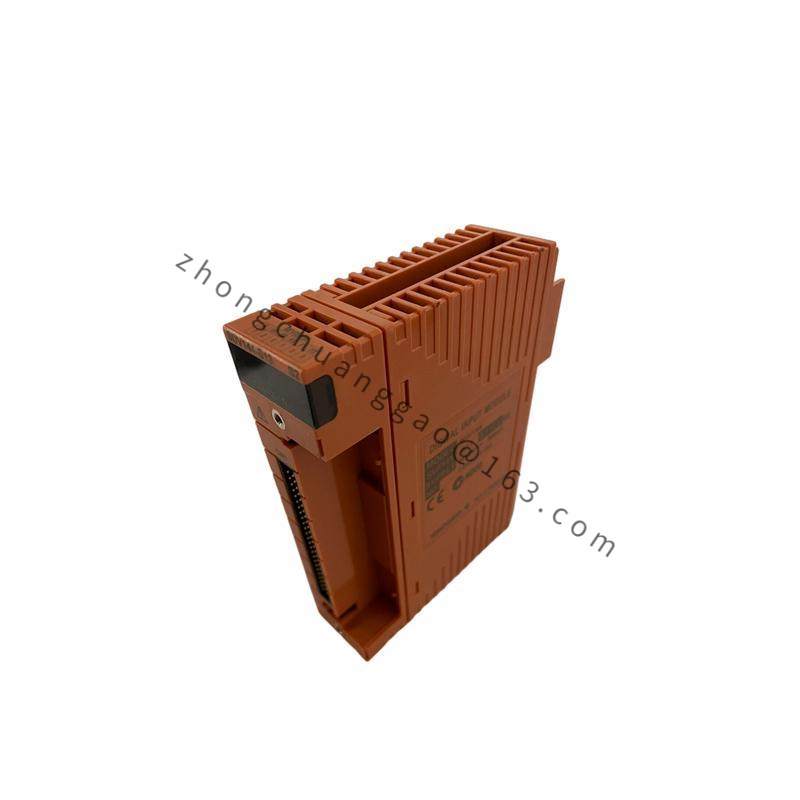
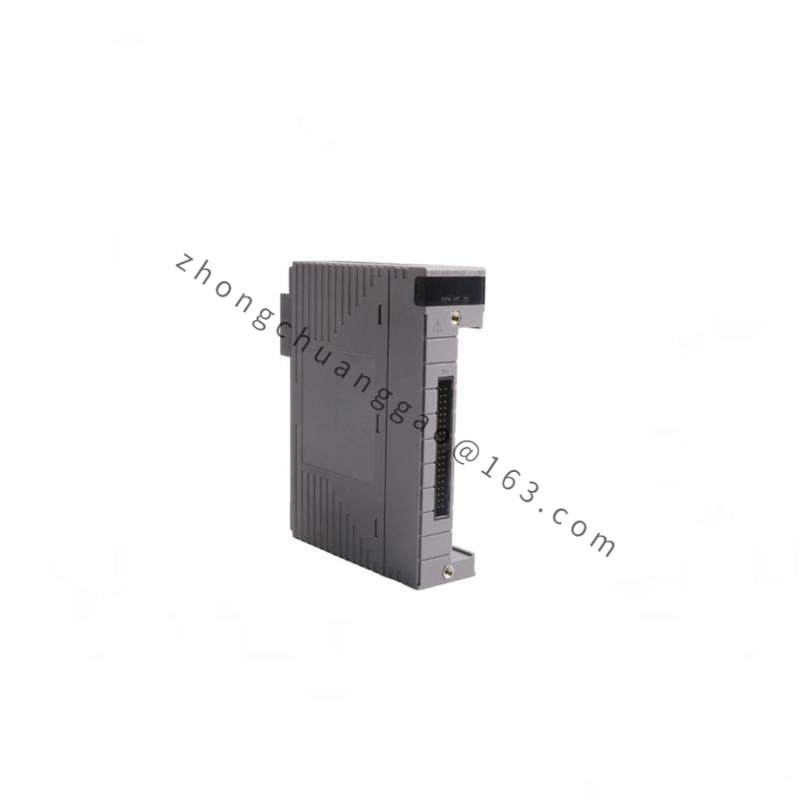
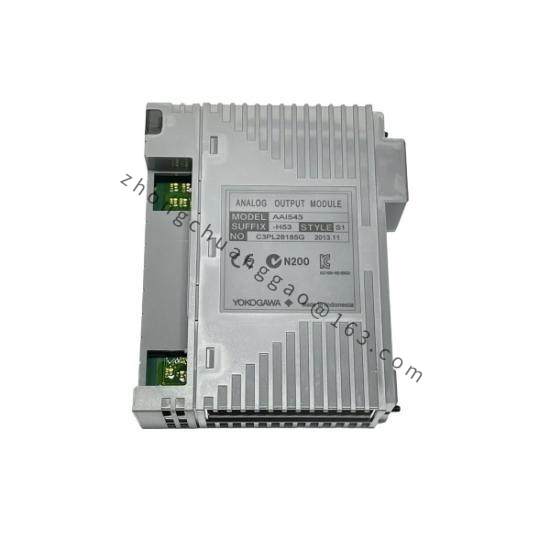
- Wall-mount / pipe-mount transmitter head with IP67 (NEMA 4X) enclosure
- BNC connector for pH/ORP sensor cable
- Screw terminal block for 2-wire 4–20mA loop, power supply, alarm relays, Pt1000 RTD
- Large LCD display with backlight and 4-button keypad for local operation
- Explosion-proof housing — cast aluminum alloy with flameproof enclosure (Ex d) or intrinsically safe barrier (Ex ia) depending on zone classification
- Cable gland entries — M20 × 1.5 or 3/4″ NPT for process connection
- DIN rail mount option available (separate bracket)
Working Principle:
The pH measurement is based on the Nernst equation: the pH glass electrode generates a millivolt potential proportional to the hydrogen ion activity in the solution. The potential follows: E = E₀ − (2.303RT/F) × pH, where the slope (2.303RT/F) is temperature-dependent (~59.16 mV/pH at 25°C). The transmitter measures this millivolt signal, applies automatic temperature compensation using the Pt1000 RTD input to correct the slope, and converts the result to a pH value displayed and output as 4–20mA.
The ORP measurement uses a platinum/gold sensing electrode and a Ag/AgCl reference electrode to measure the redox potential (mV) of the solution. The transmitter amplifies the millivolt signal, applies temperature compensation, and outputs as 4–20mA scaled to the configured ORP range.
Both channels share the same 2-wire loop power (12–35V DC). The transmitter modulates its current draw between 4mA (zero) and 20mA (full scale) to encode the measurement value on the loop.
Advantages & Highlights:
- Dual-channel in one transmitter — halves installation cost compared to two single-channel units
- 2-wire loop-powered — eliminates need for local power supply, simplifies wiring
- Intrinsically safe (Ex ia IIC T4 Ga) — safe for use in Zone 0 / Zone 1 hazardous areas without additional barriers
- ±0.02 pH accuracy — meets the most stringent process requirements
- Automatic temperature compensation — eliminates manual slope correction
- HART 7 compatible — seamless integration with any HART-enabled DCS/SCADA
- IP67 transmitter head + IP68 sensor — suitable for outdoor, submersion, and washdown environments
- Low maintenance — long-life pH electrode (up to 2 years), easy field replacement
Applicable Industries:
- Water & Wastewater — drinking water treatment, sewage, effluent monitoring
- Chemical & Petrochemical — acid/alkali process control, neutralization
- Pharmaceutical — WFI (Water for Injection) monitoring, clean-in-place (CIP) verification
- Food & Beverage — dairy, brewing, beverage pH control
- Power Generation — boiler water chemistry, cooling tower monitoring
- Pulp & Paper — bleach plant, white liquor pH control
- Mining — leach solution pH monitoring, tailings management
Installation Requirements:
- Mount transmitter head at a height accessible for maintenance — avoid direct sunlight and rain exposure (use sun shield if outdoor)
- Sensor installation — immerse sensor in process stream at sufficient depth (minimum 10cm immersion for pH; ensure flow past sensor for ORP)
- Cable routing — use shielded twisted-pair cable for 4–20mA signal; keep minimum 15cm separation from power cables (>400V)
- Grounding — connect cable shield to earth ground at one end only (transmitter end recommended)
- Process connection — use flanged, threaded, or sanitary (tri-clamp) fitting — ensure no air bubbles trapped at sensor tip
- Loop wiring — connect 24V DC power supply (+) → transmitter (+) → DCS/recorder input (+) → DCS/recorder input (−) → transmitter (−) → power supply (−)
- Verify loop power supply voltage is within 12V to 35V DC — below 12V the transmitter will not operate
Usage Precautions:
- Calibrate regularly — pH electrode requires 2-point calibration every 1–3 months; ORP electrode requires 1-point calibration every 1–6 months depending on process
- Never operate with dry pH electrode — the glass membrane must remain hydrated at all times; store in pH 4 buffer solution when not in use
- Clean sensor regularly — remove coating, fouling, or scaling using mild acid (HCl) or pepsin/HCl solution for protein fouling
- Do not exceed maximum process temperature of +120°C (standard) / +150°C (high-temp option) — will damage sensor
- Replace pH electrode when slope drops below 85% of theoretical Nernst slope or asymmetry potential exceeds ±30mV
- Check reference junction — clogged reference junction causes slow response and inaccurate readings; clean or replace as needed
- Do not apply voltage >35V DC to the transmitter — will cause permanent damage to internal electronics
- For HART communication, use a 250Ω resistor in series with the loop if the DCS does not provide HART termination