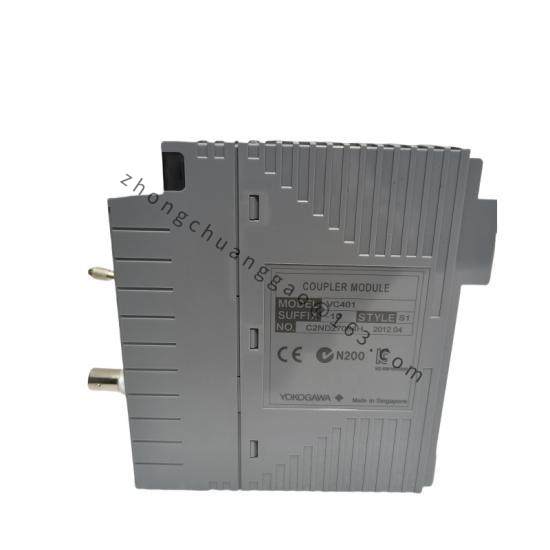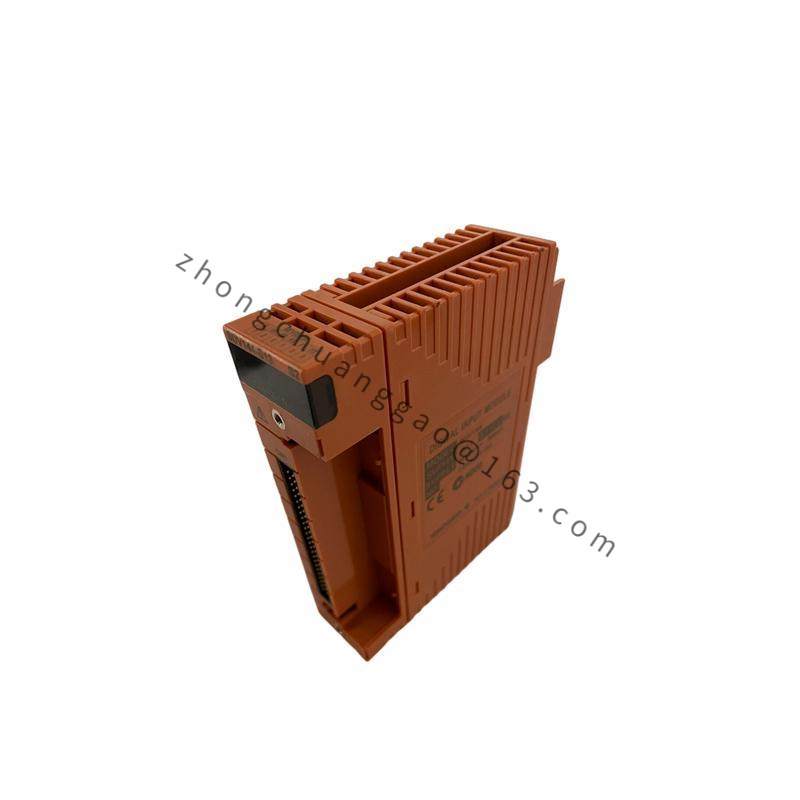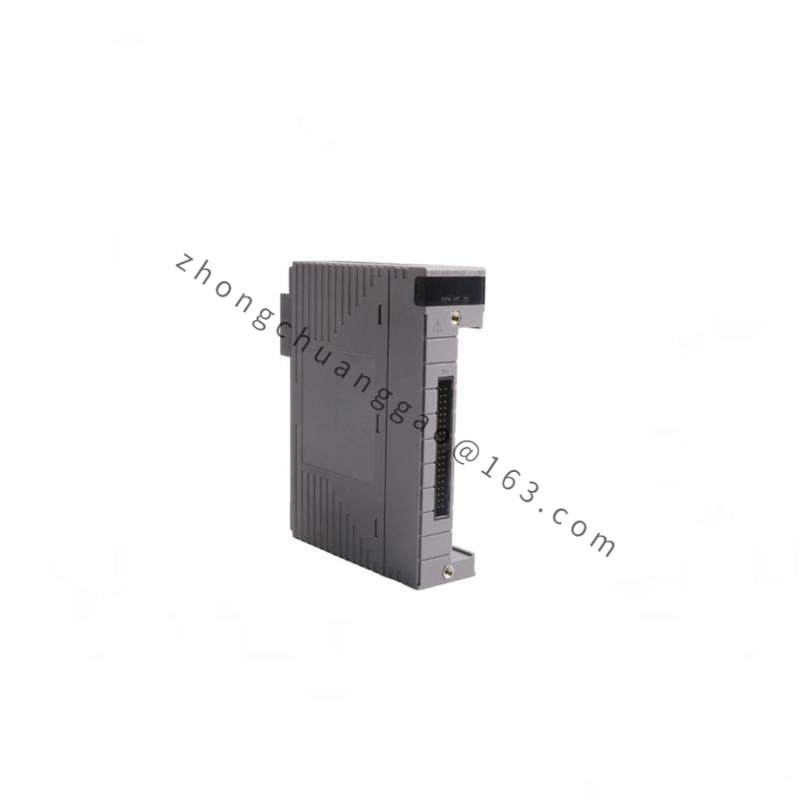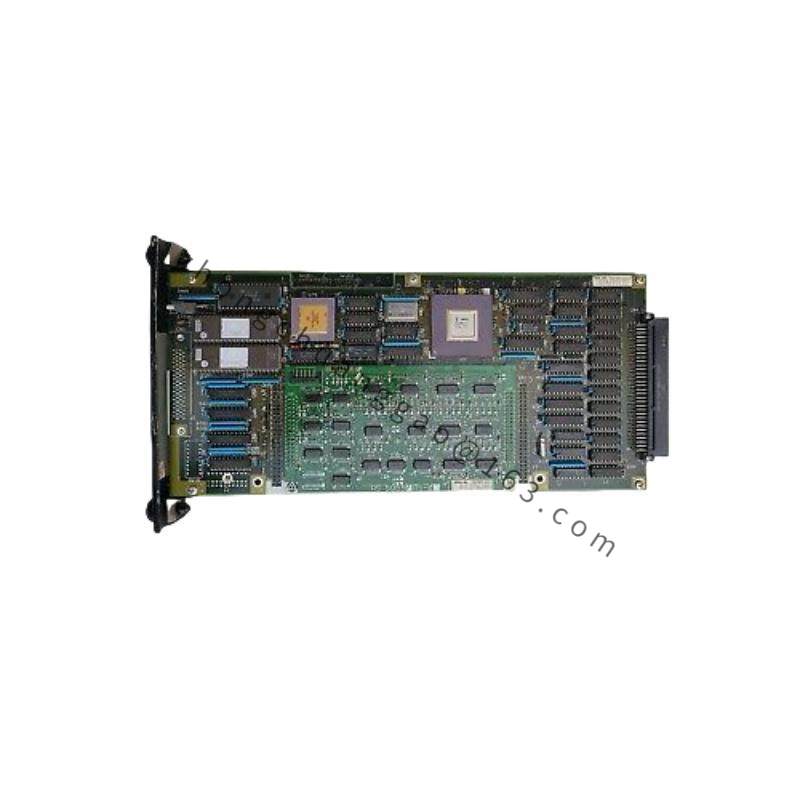
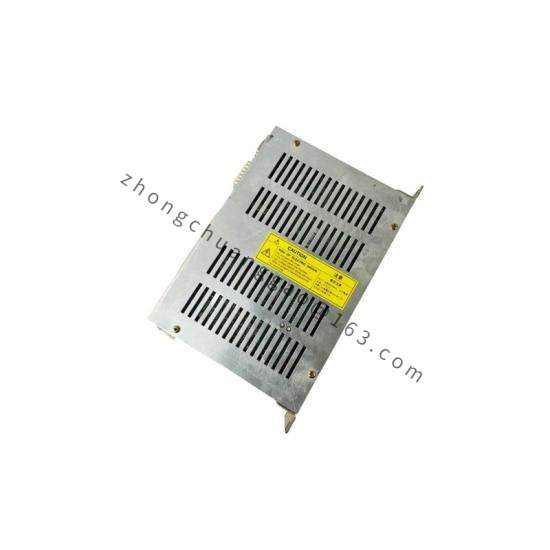
YOKOGAWA NFLR121-S51 S1 RS-422/RS-485
Product Introduction:
The NFLR121-S51 S1 RS-422/RS-485 is a large-bore electromagnetic flowmeter from Yokogawa’s ADMAG AXF (NFLR) series, configured for high-accuracy flow measurement of conductive liquids with RS-422/RS-485 serial communication. The “S51” denotes a specific size and lining/electrode configuration, “S1” denotes the sensor specification (PFA liner, SUS316L electrodes), and the communication option provides direct digital communication for integration with SCADA, DCS, or flow computers.
Detailed content
Measurement Principle:
Based on Faraday’s Law of Electromagnetic Induction. A magnetic field is generated across the flow tube by excitation coils. The voltage induced across the electrodes by the moving conductive fluid is proportional to the average flow velocity. The NFLR series uses dual-frequency rectangular wave excitation to eliminate noise from fluid conductivity variations and electrode coating effects.
Technical Specifications:
| Parameter | Specification |
|---|---|
| Model | NFLR121-S51 S1 RS-422/RS-485 |
| Pipe Size (S51) | DN300 to DN1200 (12″ to 48″) (verify exact size per S51 code) |
| Accuracy | ±0.5% of reading |
| Repeatability | ±0.2% of reading |
| Output | 4–20 mA DC + RS-422/RS-485 (Modbus RTU) |
| Communication | RS-422 (full-duplex) / RS-485 (half-duplex, Modbus RTU) |
| Liner (S1) | PFA (Perfluoroalkoxy) |
| Electrodes (S1) | SUS316L Stainless Steel (standard); Hastelloy C, Titanium, Tantalum optional |
| Fluid Conductivity | ≥ 5 μS/cm |
| Process Temperature (PFA) | -20°C to +180°C (-4°F to +356°F) |
| Process Pressure | Up to 1.0 MPa (145 psi) for DN300+; up to 1.6 MPa for smaller sizes |
| Protection Class | IP67 / IP68 (submersible) |
| Flange Standard | JIS 10K/20K, ANSI 150#/300#, DIN PN10/16, BS 10#/16# |
| Power Supply | 100–240 V AC, 50/60 Hz or 24 V DC |
| Communication Protocol | Modbus RTU over RS-422/RS-485 (9600/19200/38400 bps) |
| Approvals | ATEX, IECEx, FM, CSA, SIL2, JIS, JWWA, WRAS |
Structural Features:
- Flanged installation for large bore sizes (DN300 and above)
- PFA liner (S1) — chemically inert, suitable for aggressive chemicals
- SUS316L electrodes — general-purpose corrosion resistance
- IP67/IP68 rated — suitable for buried or submerged installations
- Integral converter with LCD display and keypad
- RS-422/RS-485 communication port — direct connection to flow computers or RTUs
Performance Parameters:
| Parameter | Value |
|---|---|
| Flow Velocity Range | 0.1 to 10 m/s |
| Minimum Conductivity | ≥ 5 μS/cm |
| Response Time | ≤ 1 second (95%) |
| Zero Stability | ±0.1% of span per year |
| Electrode Noise | ≤ ±0.5% of span (with dual-frequency excitation) |
| Display | 128 × 64 pixel LCD with backlight |
| Data Logging | Flow total, totalizer, alarm events |
| Alarm Outputs | 2 relay outputs (optional) |
| Ambient Temperature | -20°C to +60°C |
Key Advantages:
- Large bore capability (up to DN1200) — ideal for water mains, cooling water, and bulk chemical transfer
- PFA liner (S1) — excellent chemical resistance for aggressive process fluids
- RS-422/RS-485 communication — direct Modbus connection to flow computers, RTUs, and SCADA systems without protocol converters
- Dual-frequency excitation — stable measurement even with coating or varying conductivity
- IP68 submersible — suitable for underground vaults and sumps
- JWWA and WRAS approved — certified for potable water service
Applicable Industries:
- Municipal Water Supply (Large Mains)
- Industrial Cooling Water Systems
- Chemical Processing (Bulk Transfer)
- Mining Slurry and Tailings
- Power Plant Cooling Water
- Fire Protection Water Mains
- Pulp and Paper (White Water)
Installation Requirements:
- Install in full-pipe conditions only — the meter must be completely filled at all times
- Maintain minimum 5D upstream and 3D downstream straight pipe (D = pipe diameter)
- For flanged meters: use gaskets that do not protrude into the bore; bolt evenly in a star pattern
- Ground the flowmeter and both flanges to the pipeline ground system
- Use shielded twisted-pair cable for RS-422/RS-485 — maximum cable length: 1200 m (RS-485 at 9600 bps)
- Set the Modbus address and baud rate via the front panel keypad before connecting to the host system
- Install a surge protector on the communication line if the cable runs near high-voltage equipment
Usage Precautions:
- Never run the meter with an empty tube — PFA liner can be damaged by air exposure under pressure
- Verify the fluid conductivity exceeds 5 μS/cm — low-conductivity fluids cause unstable readings
- Clean PFA electrodes annually in fouling applications — use soft brush and distilled water
- Do not exceed +180°C process temperature for PFA liner — PFA softens above this temperature
- Terminate RS-485 bus with 120 Ω resistor at both ends of the bus
- Do not mix RS-422 and RS-485 devices on the same bus without proper conversion
- Perform zero calibration with the pipe full of stationary process fluid
ENTRY 10: YOKOGAWA SR1015B-1SN
Product Name: DX2000 / SR1000 Series Paperless Recorder (15-Channel)
Model Number: SR1015B-1SN
Product Series: DX2000 / SR1000
Manufacturer: Yokogawa Electric Corporation
Product Introduction:
The SR1015B-1SN is a 15-channel universal input paperless recorder from Yokogawa’s DX2000/SR1000 series. It is a 1/4 DIN (144 × 144 mm) panel-mount recorder providing high-speed, high-density data acquisition for complex process monitoring applications. The “15” denotes 15 input channels, “B” denotes the base configuration, “1” denotes 1 Ethernet port, and “SN” denotes specific power/communication configuration.
Measurement Principle:
The recorder employs 24-bit delta-sigma A/D converters to digitize inputs from thermocouples, RTDs, DC voltage, DC current, and frequency sensors at high speed. Data is processed by an embedded RISC processor, displayed on a color TFT LCD, stored in NAND flash memory, and transmitted via RS-232C, RS-485, Ethernet (Modbus TCP/EtherNet/IP), or USB to host systems.
Technical Specifications:
| Parameter | Specification |
|---|---|
| Model | SR1015B-1SN |
| Number of Channels | 15 Universal Input Channels |
| Input Types | TC (J, K, T, E, R, S, B, N, W, L, U), RTD (Pt100, Pt1000, Cu50, JPt100, Ni100), DC V (0–100 mV, 0–1 V, 0–5 V, 0–10 V), DC mA (0–20 mA, 4–20 mA), Frequency (0–1 kHz), Contact Input (DI) |
| Display | 320 × 240 pixel Color TFT LCD (65,536 colors) |
| Recording Interval | 0.1 sec to 3600 sec (selectable per channel group) |
| Recording Memory | 256 MB internal flash (approx. 60 days at 1 sec interval for 15 ch) |
| Accuracy (DC V) | ±0.1% of F.S. ±1 digit |
| Accuracy (DC mA) | ±0.1% of F.S. ±1 digit |
| Accuracy (TC/RTD) | ±0.1% of reading or ±1°C (whichever is greater) |
| Power Supply | 100–240 V AC, 50/60 Hz (SN) |
| Communication | RS-232C, RS-485 (Modbus RTU), Ethernet (Modbus TCP/EtherNet/IP), USB (front panel) |
| Alarm Outputs | 4 Relay Outputs (SPDT, 250 V AC / 3 A) |
| Analog Output | 2 Channels (4–20 mA DC, selectable) |
| Event Input | 8 Contact Inputs (for batch/event recording) |
| Protection Class | NEMA 4X / IP66 (front panel) |
| Dimensions | 144 × 144 × 179 mm (W × H × D) (1/4 DIN) |
| Cutout Size | 138 × 138 mm |
| Weight | Approx. 1.2 kg |
| Approvals | CE, UL, CSA, FM (hazardous area variants available) |
Structural Features:
- 1/4 DIN (144 × 144 mm) panel-mount form factor — larger than UP55A, accommodates 15 channels
- Color TFT LCD (320 × 240) — supports trend graphs, bar graphs, and custom displays
- Front panel USB port — for data backup and configuration
- SD card slot (rear panel) — for extended data logging and transfer
- 8 event input contacts — for batch start/stop, alarm acknowledge, etc.
- 2 analog outputs — for retransmission to local indicators or controllers
Performance Parameters:
| Parameter | Value |
|---|---|
| Sampling Rate | 100 ms per channel (15 ch), 50 ms per channel (8 ch), 20 ms per channel (4 ch) |
| Data Retention | 10 years (with SD card) |
| Number of Recordings | Up to 500 recording files |
| Batch Recording | Yes — up to 100 batches with event markers |
| Trend Recording | Yes — real-time trend display on LCD |
| Remote Display | Yes — via Web browser (Ethernet) |
| Web Server | Built-in — no software required for remote viewing |
| Power Consumption | ≤ 15 VA |
| Operating Temperature | 0°C to +50°C (32°F to +122°F) |
| Storage Temperature | -20°C to +60°C (-4°F to +140°F) |
Key Advantages:
- 15 universal input channels in 1/4 DIN — highest channel density for complex processes
- Color TFT display with trend graphs — visual process monitoring at a glance
- Built-in Web server — remote monitoring from any browser without additional software
- 8 event inputs + batch recording — ideal for batch chemical and pharmaceutical processes
- 2 analog outputs — retransmit key values to local indicators
- 256 MB flash memory — extended recording duration without external storage
- SD card + USB backup — multiple data archival options
Applicable Industries:
- Pharmaceutical Manufacturing (Batch Processes)
- Chemical Processing (Multi-reactor plants)
- Food and Beverage (Fermentation, Pasteurization)
- Power Generation (Multi-unit monitoring)
- Oil and Gas (Multi-well monitoring)
- Environmental Monitoring Stations
- Semiconductor Manufacturing
- Water and Wastewater (Multi-point monitoring)
Installation Requirements:
- Cut panel opening to 138 × 138 mm for 1/4 DIN mounting
- Secure with mounting clips or screws (provided with unit)
- Connect all input signals using appropriate sensor cable types (TC extension wire for thermocouples, shielded cable for mA/V)
- For RS-485 communication: use shielded twisted-pair cable; terminate with 120 Ω resistor at the last device
- For Ethernet: use Cat5e or higher cable; connect to a managed switch for optimal performance
- Ground the recorder chassis to the panel ground bus
- Install cable glands (PG21 or PG29) for all cable entries to maintain IP66 rating
Usage Precautions:
- Do not exceed the rated input voltage/current for any channel — maximum 10 V DC or 30 mA DC per input
- Use correct thermocouple type settings — mismatched types cause errors up to tens of degrees
- Verify cold junction compensation (CJC) accuracy — place CJC sensor close to the terminal block
- Back up data to SD card before any firmware update
- Do not block ventilation slots — the unit generates heat; ensure airflow
- Do not apply power with incorrect voltage — “SN” = 100–240 V AC only
- Replace the internal backup battery every 2 years to preserve clock and configuration
- Do not write to the flash memory during a power failure — use the SD card for critical data
- Configure the Ethernet IP address before connecting to the plant network to avoid IP conflicts