
Digital guide

You are here:

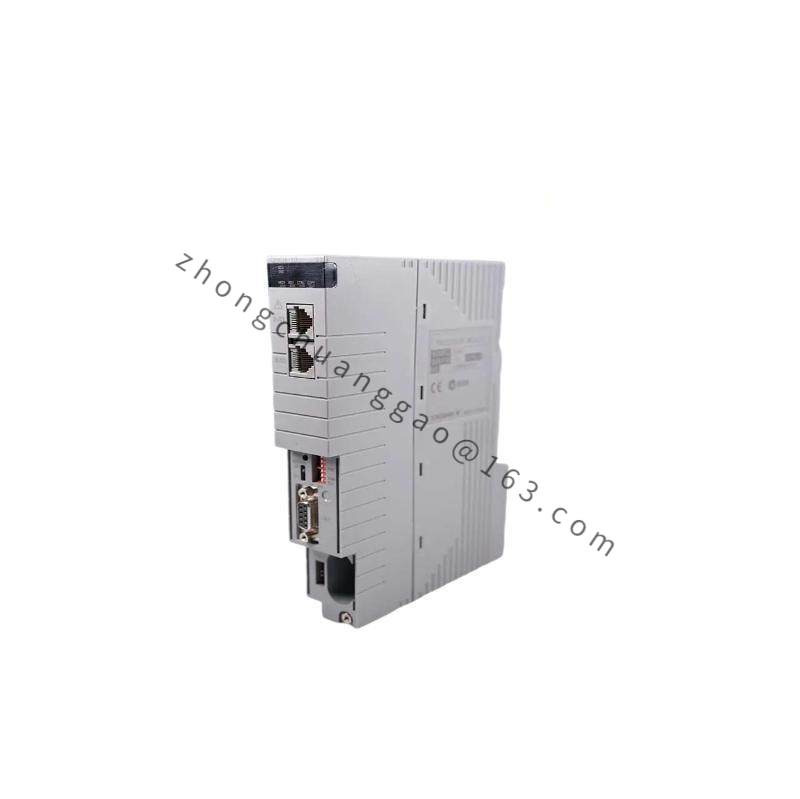
YOKOGAWA MX100-J-1M/DS

Product Introduction:
The MX100-J-1M/DS is Yokogawa’s enterprise-grade SCADA platform built on Java technology, designed for large-scale industrial process monitoring and control. It supports up to 1 million data points and features a dual-server architecture for high availability and redundancy. The platform provides real-time visualization, alarm management, historical data logging, and seamless integration with Yokogawa field instruments, DCS systems, and third-party devices via standard industrial protocols.

Detailed content

Technical Specifications:

  • Platform Type: SCADA Software
  • Edition: Java (J)
  • Point Capacity: 1,000,000 points (1M)
  • Server Configuration: Dual Server (/DS) — active-standby redundancy
  • Operating System Compatibility: Windows Server 2019/2022 (64-bit)
  • Display Resolution: Up to 3840 × 2160 (4K) support
  • Communication Protocols: OPC UA, OPC DA, Modbus TCP/RTU, PROFINET, EtherNet/IP, BACnet, MQTT
  • Database: Embedded relational database + SQL Server compatibility
  • Web Access: HTML5-based thin client (no plugin required)
  • Redundancy: Server failover with automatic switchover (< 5 seconds)
  • License Type: Named user / concurrent user licensing available

Functional Features:

  • Real-time and historical trend display with multi-axis charts
  • Configurable alarm management with priority-based filtering and escalation
  • Event logging with timestamped audit trail
  • Report generation (scheduled and on-demand) in PDF, Excel, CSV formats
  • Multi-site monitoring from a single console
  • Role-based access control (RBAC) with user authentication
  • Recipe management for batch processes
  • Integration with Yokogawa CENTUM VP, FA-M3, and PRM systems

Performance Parameters:

  • Data Acquisition Rate: Up to 100 ms scan cycle
  • Historical Data Retention: Unlimited (dependent on storage capacity)
  • Client Connections: Up to 200 simultaneous thin clients
  • Alarm Processing Rate: 10,000 alarms per second
  • System Availability: 99.99% (with dual-server configuration)

Material Composition:

  • Software-based product — no physical material composition
  • Runs on standard industrial PC hardware or virtual machines

Structural Features:

  • Client-server architecture with dedicated application server and historical database server
  • Dual-server configuration provides hot standby redundancy
  • Modular design allowing scalable expansion of point count and client connections

Working Principle:
The MX100 SCADA platform polls field devices and controllers via industrial communication protocols at configured scan intervals. Acquired data is stored in a real-time database and simultaneously written to a historical database. The visualization engine renders process graphics, trends, and alarms in real time. The dual-server architecture maintains a synchronized copy of all data on the standby server; upon detection of primary server failure, the standby server automatically assumes control with minimal data loss.

Advantages & Highlights:

  • 1 million point capacity supports the largest plant-wide deployments
  • Java-based architecture ensures cross-platform compatibility and future-proofing
  • Dual-server redundancy guarantees continuous operation even during server maintenance or failure
  • HTML5 thin client eliminates the need for software installation on operator workstations
  • Native integration with the entire Yokogawa automation ecosystem

Applicable Industries:

  • Oil and Gas (upstream, midstream, downstream)
  • Chemical and Petrochemical Plants
  • Power Generation and Distribution
  • Water and Wastewater Utilities
  • Pharmaceutical and Biotechnology
  • Pulp and Paper
  • Mining and Metals
  • Food and Beverage

Installation Requirements:

  • Install on dedicated Windows Server 2019 or 2022 (64-bit) with minimum 16 GB RAM (recommended 32 GB for 1M points)
  • Minimum 500 GB SSD storage for historical data (scalable)
  • Network bandwidth: minimum 1 Gbps Ethernet between servers and field devices
  • Configure firewall rules to allow SCADA communication ports (default: 4682, 4683, 4684)
  • Activate license key before commissioning
  • Dual servers must be on the same subnet for heartbeat communication

Usage Precautions:

  • Ensure the operating system and all security patches are up to date
  • Perform regular database backups (daily minimum)
  • Do not install unauthorized third-party software on the SCADA server
  • Monitor server CPU and memory utilization; set alerts at 80% threshold
  • Test failover procedure quarterly to verify redundancy functionality

You may also like