
Digital guide

You are here:

Yokogawa F3SP76-7S

Product Introduction:
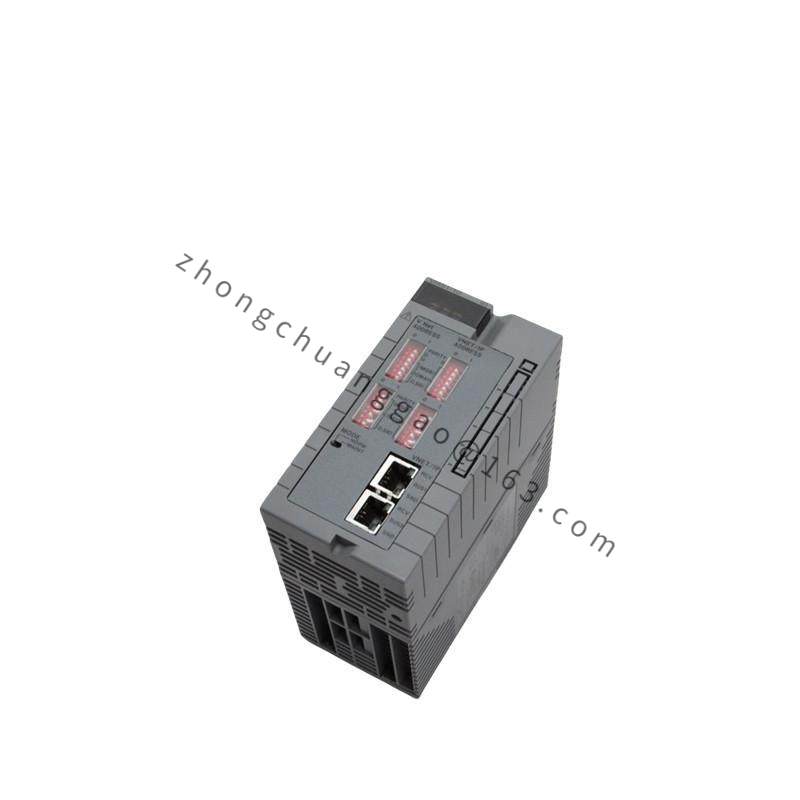
The F3SP76-7S is a safety-rated programmable logic controller (PLC) from Yokogawa’s F3SP series, specifically engineered for Safety Instrumented Systems (SIS). It is certified to SIL 2 (Single Fault Tolerant) and SIL 3 (High Integrity) per IEC 61508 and IEC 61511 standards. The unit executes safety logic for emergency shutdown (ESD), fire and gas detection, and critical process interlocks in hazardous environments. The suffix -7S denotes the standard (non-redundant) CPU configuration with 7 slots of I/O capacity.

Detailed content

Model Number Breakdown:

  • F3SP: F3 Safety PLC series
  • 76: CPU type designation — standard CPU, 7-slot rack
  • 7S: 7 slots, Standard (non-redundant) configuration

Key Specifications:

  • Safety Integrity LevelSIL 2 (SFT) and SIL 3 (HFT) certified per IEC 61508 Ed.2
  • CPU Type: 32-bit RISC processor
  • Program Memory: 512 KB (user program)
  • Data Memory2 MB RAM
  • I/O Capacity: Up to 64 I/O points (digital and analog combined) across 7 slots
  • Scan Time: ≤ 50 ms (typical, depends on program complexity)
  • CommunicationF Safety Bus (FSB) — proprietary Yokogawa safety communication protocol
  • Redundancy: Non-redundant (simplex) in -7S configuration; redundant variants available (-7R, -7D)
  • Operating Temperature: -20 °C to +70 °C (extended range)
  • Power Supply24 V DC (redundant dual supply supported)
  • Power Consumption: ≤ 8 W (CPU only)

Functional Features:

  • Safety Logic Execution: Supports ladder logic, function block diagram (FBD), and structured text (ST) per IEC 61131-3
  • Online Program Modification: Logic can be modified and downloaded while the system remains in safe state (with restrictions)
  • Diagnostic Coverage≥ 99% for CPU, memory, and I/O modules
  • Watchdog Timer: Hardware watchdog with 100 ms timeout
  • Self-Test: Periodic power-on self-test (POST) and runtime diagnostic scan
  • Event Logging: Up to 10,000 events stored in non-volatile memory with timestamp accuracy of ± 1 ms
  • Fail-Safe I/O: All digital I/O modules are energized-to-trip (de-energized = safe) or de-energized-to-trip configurable

Material Composition:

  • Housing: Die-cast aluminum alloy with anodized finish (corrosion-resistant)
  • PCB: Multi-layer FR-4 with gold-plated contacts for high reliability
  • ConnectorsLocking D-sub connectors for I/O bus; M12 circular connectors for field wiring
  • Front Panel: Polycarbonate with UV-resistant coating

Structural Characteristics:

  • Form Factor: 7-slot rack-mountable chassis (DIN rail or panel mount)
  • Dimensions: 482.6 mm (W) × 220 mm (H) × 250 mm (D) (with 7 slots populated)
  • Weight: Approximately 4.5 kg (empty chassis with CPU)
  • Slot Configuration: 1 CPU slot + 6 I/O slots (mix of digital/analog/communication)

Operating Principle:
The F3SP76-7S continuously executes the safety logic program stored in its non-volatile memory. Input signals from safety-rated field devices (e.g., emergency stop buttons, flame detectors, pressure switches) are scanned every ≤ 50 ms. The CPU evaluates the logic and drives safety-rated output modules to activate final elements (e.g., solenoid valves, motor starters). The F Safety Bus (FSB) provides a dedicated, deterministic communication channel between the CPU and I/O modules, ensuring no interference from non-safety network traffic. All safety functions are executed in a triple modular redundancy (TMR) or dual-channel voting architecture internally to achieve the required SIL rating.

Advantages & Highlights:

  • Dual SIL Certification: Certified to both SIL 2 and SIL 3 from a single hardware platform — reduces spares inventory
  • Fast Scan Time≤ 50 ms cycle time ensures rapid response to hazardous conditions
  • High Diagnostic Coverage: ≥ 99% detection of internal faults minimizes undetected dangerous failures
  • Seamless DCS Integration: Communicates with CENTUM VP/CS 3000 via F Fieldbus for non-safety data exchange

Applicable Industries:

  • Oil & Gas (Upstream/Midstream/Downstream)
  • Chemical & Petrochemical Plants
  • Nuclear Power (BOP systems)
  • Pharmaceutical Manufacturing
  • Mining & Minerals Processing

Installation Requirements:

  • Mount in a NEMA 4 / IP65 rated enclosure in hazardous areas (Zone 1 / Zone 2 or Class I Div. 1 / Div. 2)
  • Use safety-rated (SIL-certified) field devices only; do not connect non-safety devices to safety I/O
  • Provide redundant 24 V DC power supply (dual-channel) for maximum availability
  • Maintain minimum 100 mm clearance above and below the chassis for airflow
  • Ground the chassis to the plant earthing system with ≤ 1 Ω resistance

Usage Precautions:

  • Never modify safety logic without a formal Management of Change (MOC) procedure and safety review
  • Do not mix safety I/O and standard I/O on the same backplane — use dedicated F3SP safety chassis
  • Perform proof testing at intervals defined by the Safety Requirements Specification (SRS) — typically every 6 to 12 months
  • Do not operate the unit in ambient temperatures exceeding +70 °C
  • All field wiring must use shielded cable with shield grounded at the controller end only

You may also like