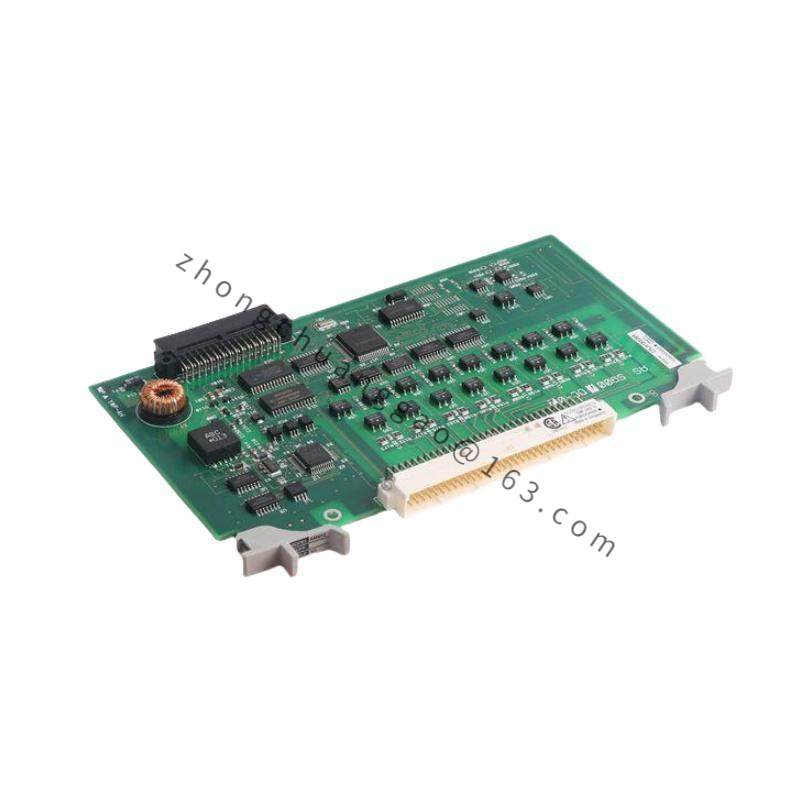
Yokogawa DX1006-1-4-2/A3/C3/M1/USB1
Product Overview:
The DX1006-1-4-2/A3/C3/M1/USB1 is a fully configured DX1000 series paperless recorder with 1 input, 4 outputs, enhanced alarm capability (A3), triple communication (C3), built-in modem (M1), and USB host port (USB1). It is designed for applications requiring remote monitoring, data export, and multi-path communication.
Detailed content
Technical Specifications:
| Parameter | Value |
|---|---|
| Display | Monochrome LCD (128 × 64 dots) with LED backlight |
| Number of Input Channels | 1 channel (universal input) |
| Input Types | TC (J, K, T, E, R, S, B, N), RTD (Pt100, JPt100, Cu50), DC mA (0-10mA, 4-20mA), DC V (0-1V, 1-5V), DC mV (0-100mV) |
| Number of Output Channels | 4 channels (4-20 mA DC, isolated) |
| Number of Alarm Outputs | 3 channels (A3 configuration: 3 relay outputs, 250V AC / 3A or 30V DC / 3A) |
| Recording Channels | 1 channel (simultaneous) |
| Recording Interval | 0.2 seconds to 60 minutes (adjustable) |
| Memory Capacity | Internal flash: approximately 2 MB (records approximately 60 days at 1-second interval for 1 channel) |
| Communication Ports | RS-232C (9-pin D-sub), RS-485 (terminal block), Ethernet (RJ-45, 10/100BASE-T), USB Host (Type A) |
| Communication Protocols | Modbus RTU (Master/Slave), Modbus TCP, Yokogawa CENTUM CS protocol (slave), HART (on input) |
| Modem | Built-in 56 kbps V.92 modem (M1) — for remote access via PSTN/telephone line |
| USB | USB 2.0 Host port (USB1) — for CSV data export to USB flash drive |
| Power Supply | 100-240 V AC, 50/60 Hz OR 24 V DC (dual power supply) |
| Power Consumption | Approximately 5 W (typical at 100 V AC) |
| Front Panel Size | 96 mm × 96 mm (DIN 96×96 standard, cutout: 92 mm × 92 mm) |
| Depth from Panel | Approximately 110 mm |
| Operating Temperature | 0°C to +50°C |
| Storage Temperature | -20°C to +70°C |
| Front Panel Protection | NEMA 4 / IP65 (from front) |
| Enclosure Material | Flame-retardant ABS plastic bezel, steel chassis |
| Weight | Approximately 0.8 kg |
| Isolation Voltage | Input to Output: 500 V AC, Output to Output: 250 V AC |
| Accuracy (Input) | ±0.2% of span (at 23°C ± 5°C) |
| Accuracy (Output) | ±0.1% of span (at 23°C ± 5°C) |
Functional Features:
- 1 universal input with full signal type flexibility
- 4 isolated 4-20 mA outputs for multi-loop control
- 3 alarm relay outputs (A3): Configurable as high, low, deviation, or rate-of-change alarms
- Triple communication (C3): RS-232C + RS-485 + Ethernet for maximum connectivity
- Built-in modem (M1): Enables remote monitoring and configuration via telephone line — no dedicated data line required
- USB host port (USB1): Export recorded data to USB flash drive in CSV format for spreadsheet analysis
- HART communication: Configure HART smart transmitters directly via the input channel
- Scheduled recording: Time-based and event-triggered recording modes
- Math functions: Addition, subtraction, multiplication, division, square root, moving average
- Linearizer: Up to 30-segment piecewise linearization
Working Principle:
The DX1006 uses a 16-bit microprocessor with a high-resolution ADC for the single input channel. Process data is sampled, converted to engineering units, displayed on the monochrome LCD, and written to internal flash memory. The 4-20 mA outputs are generated by 16-bit DACs with galvanic isolation. The built-in modem (M1) uses V.92 protocol at 56 kbps over a standard PSTN telephone line for remote access. The Ethernet port supports Modbus TCP for LAN-based SCADA integration. The USB host port allows direct CSV file export to a USB flash drive using the FAT32 file system.
Advantages and Highlights:
- Fully configured for remote access: Built-in modem eliminates need for separate communication gateway
- Triple communication paths: RS-232C, RS-485, and Ethernet provide redundancy and flexibility
- USB data export: Simple CSV export — no special software required
- 3 alarm outputs (A3): More alarm capacity than standard 2-alarm models
- 4 isolated outputs: Drives multiple control valves or indicators simultaneously
- Compact 96×96 mm form factor fits standard DIN cutouts
- Dual power supply (AC/DC) for maximum installation flexibility
Applicable Industries:
- Oil and Gas (remote well monitoring via modem)
- Water and Wastewater (remote pump station monitoring)
- Power Generation (remote substation monitoring)
- Chemical Processing
- Mining (remote site monitoring)
- Telecommunications (remote equipment monitoring)
Installation Requirements:
- Cut panel opening to 92 mm × 92 mm for flush mounting
- Secure with 4 × M4 mounting screws
- Connect power: 100-240 V AC or 24 V DC with proper grounding
- For modem (M1): Connect a standard PSTN telephone line to the RJ-11 modem jack
- For Ethernet (C3): Connect CAT5e/CAT6 cable to RJ-45 port
- Use shielded twisted-pair cable for RS-485 communication with 120Ω termination
- Connect USB flash drive (FAT32 formatted, max 32GB) to the USB host port for data export
Usage Precautions:
- For modem operation (M1): Use a standard analog telephone line — digital lines (ISDN) are not supported
- USB flash drive must be formatted as FAT32 — NTFS or exFAT is not recognized
- Do not exceed ±40V DC on any input or output terminal
- Perform modem configuration (phone number, baud rate, protocol) via the front panel menu before remote access
- Verify telephone line quality — modem requires a clean line with less than 40dB attenuation
- Back up recorded data to USB flash drive before the internal memory fills
- Do not connect non-isolated signals to the alarm outputs