
Digital guide

You are here:

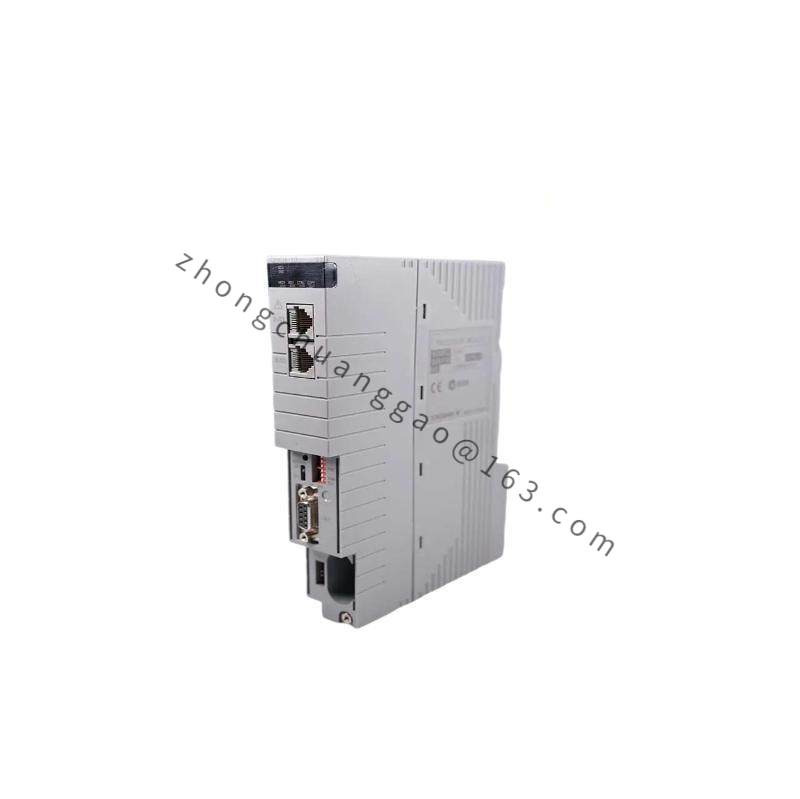
YOKOGAWA AXFA11G-D1-21

Product Introduction:
The AXFA11G-D1-21 is a full-spectrum vibration transmitter from Yokogawa’s AXFA product line, designed for continuous online vibration monitoring of rotating machinery. The “11G” indicates the standard vibration measurement range (0 to 11 mm/s velocity or equivalent), “D1” specifies the output configuration (4–20 mA + HART), and “21” denotes the mechanical mounting and process connection variant. This transmitter provides comprehensive spectral vibration data for predictive maintenance programs.

Detailed content

Technical Specifications:

  • Measurement TypeFull-spectrum vibration (velocity, acceleration, displacement)
  • Velocity Range0 to 11.2 mm/s RMS (unfiltered), 0 to 4.5 mm/s RMS (filtered)
  • Frequency Range: 10 Hz to 1000 Hz (full spectrum)
  • Output Signal: 4 to 20 mA DC (HART 7 protocol)
  • Accuracy±1% of full scale (velocity), ±5% of full scale (acceleration)
  • Temperature Range-40°C to +85°C
  • Protection RatingIP67 (IEC 60529)
  • Power Supply18 to 36 V DC (loop-powered)
  • Housing Material: 316L Stainless Steel

Functional Features:

  • Measures full vibration spectrum (10 Hz – 1000 Hz) — not just 1x RPM
  • Detects bearing defects, imbalance, misalignment, looseness, and resonance through spectral analysis
  • HART 7 communication for remote configuration, trending, and diagnostics
  • Built-in sensor diagnostics — detects cable break, sensor degradation, and mounting looseness
  • Two-stage alarm output (warning and danger) configurable via HART

Performance Parameters:

Parameter Value
Frequency Resolution 1 Hz (FFT-based, 400 line resolution)
Dynamic Range ≥60 dB
Sensitivity (Velocity) 20 mV/mm/s ±5%
Sensor Type Compatibility IEPE (ICP) accelerometer, velocity sensor (moving coil)
Maximum Shock Rating 100 g peak, 11 ms half-sine
MTBF ≥100,000 hours

Material Composition:

  • Housing: 316L Stainless Steel (electropolished finish, Ra ≤ 0.8 μm)
  • Cable Gland: Nickel-plated brass with Viton O-ring seal
  • Internal PCB: Conformal-coated, MIL-STD-810G compliant

Structural Characteristics:

  • Dimensions: 70 mm (diameter) × 145 mm (length)
  • Weight: Approximately 0.85 kg
  • Mounting: Magnetic base (included) or stud mount (M8 × 1.25 thread)
  • Connector: M12 × 1, 5-pin (power + signal + sensor)

Working Principle:
The AXFA11G-D1-21 receives vibration signals from an IEPE accelerometer or velocity sensor. The internal 24-bit sigma-delta A/D converter samples the signal at 25.6 kHz, then performs real-time FFT (Fast Fourier Transform) to decompose the signal into its frequency components. The RMS velocity is calculated across the full 10–1000 Hz band and output as a 4–20 mA signal. Simultaneously, HART FSK modulation carries diagnostic and spectral trend data to the host system.

Key Advantages:

  • Full-spectrum measurement (not just 1x RPM) — detects early-stage bearing faults missed by traditional transmitters
  • IP67 stainless steel housing — suitable for harsh industrial environments including offshore platforms
  • HART 7 with advanced diagnostics — reduces unplanned downtime by up to 50%
  • Magnetic base mounting — enables quick installation on ferrous machinery surfaces

Applicable Industries:

  • Oil and gas (pumps, compressors, turbines)
  • Power generation (steam turbines, generators, fans)
  • Mining and minerals processing (SAG mills, crushers)
  • Pulp and paper (refiners, fans, pumps)
  • Cement and steel production

Installation Requirements:

  • Mount on a flat, clean ferrous surface using the magnetic base (surface roughness Ra ≤ 6.3 μm)
  • Ensure sensor cable length does not exceed 100 meters (for IEPE sensors)
  • Connect 4–20 mA loop to a HART-compatible DCS/PLC or handheld communicator
  • Orient the transmitter so the M12 connector faces downward to prevent water ingress

Usage Precautions:

  • Do not exceed the maximum input acceleration of 50 g RMS — will saturate the A/D converter
  • Calibrate the sensor sensitivity in the transmitter configuration before commissioning
  • Do not install on surfaces with vibration amplitude exceeding 25 mm/s — mechanical damage risk
  • Perform spectral baseline measurement during commissioning for future trend comparison

You may also like