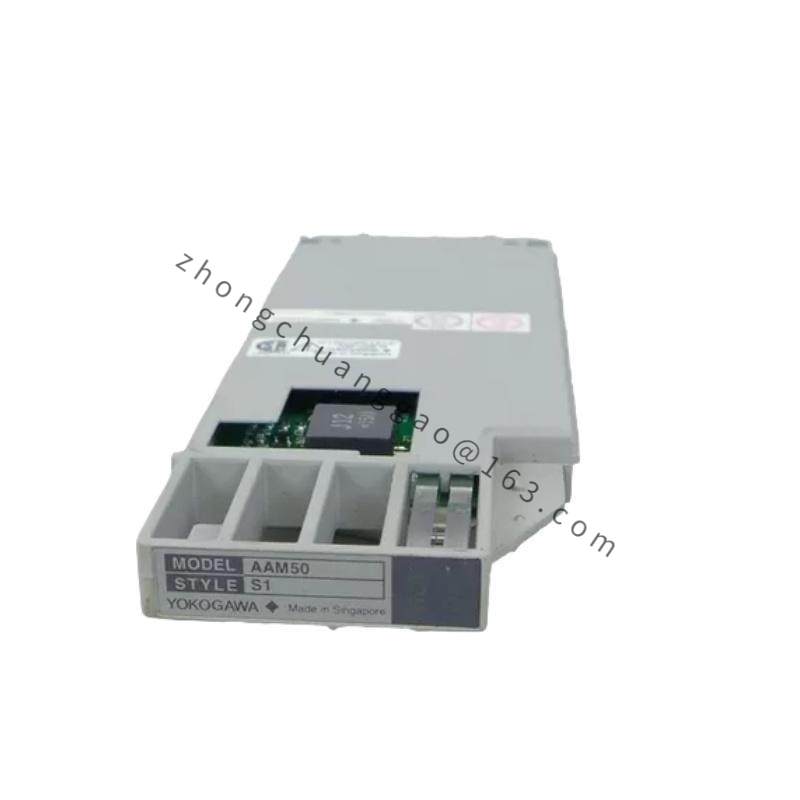

Yokogawa AQ6370D
Product Overview:
The Yokogawa AQ6370D is a benchtop optical spectrum analyzer covering the long-wavelength range from 1200 nm to 2400 nm. It is designed for characterization of optical components, fibers, and systems operating in the O, E, S, C, L, and U bands. The “D” suffix denotes the latest revision with enhanced performance and user interface.
Detailed content
Technical Specifications:
- Wavelength Range: 1200 nm to 2400 nm (extended range)
- Wavelength Resolution: 0.02 nm, 0.05 nm, 0.1 nm, 0.2 nm, 0.5 nm, 1 nm, 2 nm, 5 nm (selectable)
- Dynamic Range: 70 dB (typical at 0.05 nm resolution)
- Sensitivity: -70 dBm (typical at 1550 nm, 0.05 nm resolution)
- Amplitude Accuracy: ±0.5 dB
- Wavelength Accuracy: ±0.05 nm (calibrated)
- Wavelength Repeatability: ±0.02 nm
- Measurement Speed: 0.2 seconds (full span, 0.1 nm resolution)
- Display: 10.4-inch color LCD touchscreen (800 × 600)
- Interfaces: USB 2.0, LAN (100BASE-TX), GPIB (optional), RS-232C
- Power Supply: 100–240 V AC, 50/60 Hz
- Dimensions: 420 × 190 × 450 mm (W × H × D)
- Weight: Approximately 12 kg
- Operating Temperature: 5°C to 40°C
Functional Features:
- Auto-calibration using built-in reference light source
- PMD measurement capability
- OSNR measurement (in-band and out-of-band)
- WDM channel analysis with peak/valley detection
- Fiber Bragg Grating (FBG) measurement
- Optical level meter function
- Pass/Fail judgment with user-defined limits
- Data export in CSV, TXT, and PDF formats
- Remote control via SCPI commands over LAN or GPIB
Performance Parameters:
- Stray Light Suppression: >65 dB
- Polarization Dependent Loss (PDL) Measurement: ±0.1 dB
- Optical Input Connector: FC/PC (standard), SC/PC, LC/PC (optional adapters)
- Maximum Input Power: +20 dBm (with attenuator)
- Minimum Input Power: -70 dBm (sensitivity limit)
Material Composition:
- Chassis: Die-cast aluminum alloy
- Optical bench: Precision machined aluminum with blackened interior
- Grating: Holographic diffraction grating (gold-coated)
- Detector: InGaAs photodiode array (for 1200–1700 nm), extended InGaAs (for 1700–2400 nm)
- Housing: ABS resin with metal shielding
Structural Features:
- Benchtop form factor with integrated handle
- Front-panel FC/PC input port
- Rear-panel ventilation with dust filter
- Rubber feet for vibration damping
- Keyboard lock function for production environments
Working Principle:
The AQ6370D uses a monochromator-based design. Incoming light enters through the input port and is collimated by a mirror. A diffraction grating disperses the light spatially by wavelength. The dispersed light is focused onto a two-dimensional InGaAs detector array. Each pixel on the array corresponds to a specific wavelength. The analog signals from the detector are digitized, processed, and displayed as a power-versus-wavelength spectrum. The built-in reference source provides periodic wavelength calibration.
Advantages & Highlights:
- Widest wavelength coverage in its class (1200–2400 nm)
- Sub-0.02 nm resolution for detailed spectral analysis
- 70 dB dynamic range enables measurement of both strong and weak signals simultaneously
- Fast 0.2-second sweep speed for production-line testing
- Built-in analysis functions eliminate need for external software
- SCPI-compatible remote control for automated test systems
Applicable Industries:
- Telecommunications (fiber optic network deployment and maintenance)
- Data center interconnect testing
- Optical component manufacturing (laser, filter, WDM characterization)
- Research and development laboratories
- Fiber optic sensor manufacturing
- CATV and broadcast system testing
Installation Requirements:
- Place on a stable, level bench away from direct sunlight and vibration sources
- Ensure at least 100 mm clearance behind the unit for ventilation
- Connect to a grounded AC power outlet with stable voltage (±10%)
- Use clean, dry compressed air (if available) to blow dust from optical connectors before connection
- Connect the LAN cable for remote operation and data transfer
Usage Precautions:
- Never connect an optical fiber with the transmitter powered on without an attenuator (risk of detector damage)
- Maximum input power must not exceed +20 dBm without an inline attenuator
- Clean all optical connectors with lint-free wipes and isopropyl alcohol before each use
- Allow 15 minutes warm-up time for wavelength accuracy to stabilize
- Do not open the chassis; internal optical alignment is factory-set
- Store in a dry environment with desiccant packs to prevent detector degradation