
Digital guide

You are here:

Yokogawa AQ4321A

Full Model Number: AQ4321A

Product Introduction:
The AQ4321A is a high-precision optical wavelength meter manufactured by Yokogawa, designed for accurate measurement of optical wavelength in telecommunications, laser manufacturing, and optical component testing. It provides sub-picometer resolution with a wide measurement range covering the entire telecom C-band and L-band.

Detailed content

Technical Specifications:

  • Measurement Wavelength Range: 600 nm to 1,700 nm (extended range: 1,200 nm to 1,700 nm standard; 600–1,700 nm with optional filter)
  • Wavelength Resolution: 0.01 pm (10 femtometers)
  • Wavelength Accuracy: ±0.02 pm (calibrated)
  • Wavelength Repeatability: ±0.005 pm
  • Measurement Speed: 0.2 seconds (typical)
  • Input Optical Power Range: -60 dBm to +10 dBm (with ND filter: -80 dBm to +10 dBm)
  • Input Connector: FC/PC (standard); SC/PC, LC/PC available as options
  • Display: 5.7-inch color TFT LCD (VGA: 640 × 480 pixels)
  • Output Interfaces: GPIB (IEEE-488.2), RS-232C, USB 2.0, Ethernet (100BASE-TX)
  • Trigger Input: TTL level (for external trigger)
  • Analog Output: 0–5 V DC (wavelength proportional)
  • Power Supply: AC 100 V to 240 V, 50/60 Hz
  • Power Consumption: Approximately 25 VA
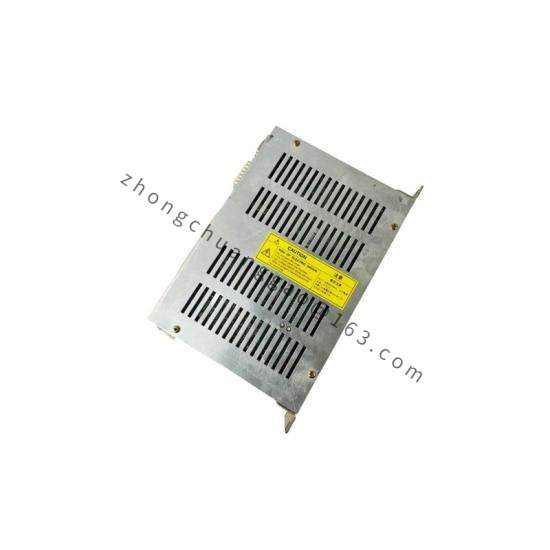
  • Dimensions: 210 mm (W) × 85 mm (H) × 320 mm (D) (approximately)
  • Weight: Approximately 2.8 kg

Material Composition:

  • Housing: Aluminum alloy with matte black anodized finish
  • Optical Bench: Zerodur glass ceramic (ultra-low thermal expansion)
  • Diffraction Grating: Holographic grating, gold-coated
  • Detector: InGaAs photodiode array (for 1,200–1,700 nm); Si photodiode (for 600–1,100 nm with optional filter)
  • Connectors: Precision FC/PC with ceramic ferrule

Structural Features:

  • Benchtop form factor with built-in handle for portability
  • Front panel with large color LCD and membrane keypad
  • Optical input port on top of unit for easy fiber connection
  • Ventilation slots on rear panel for fan-less passive cooling

Working Principle:
Uses a Michelson interferometer with a moving reference mirror (Fourier transform spectroscopy). The input optical signal is split into two paths — one through a fixed reference arm and one through a moving measurement arm. The recombined beams produce an interference pattern (interferogram) that is detected by a photodiode array. A Fast Fourier Transform (FFT) algorithm converts the interferogram into the optical spectrum, from which the peak wavelength is determined with sub-picometer accuracy using a center-of-gravity algorithm.

Advantages & Highlights:

  • 0.01 pm resolution — the highest in its class for telecom wavelength measurement
  • ±0.02 pm accuracy eliminates the need for external calibration in most applications
  • Wide range (600–1,700 nm) covers visible, O-band, C-band, L-band, and U-band
  • Fast 0.2-second measurement speed for production line testing
  • Analog output enables real-time wavelength monitoring in feedback control loops

Applicable Industries:

  • Telecommunications (DWDM system testing, laser wavelength verification)
  • Laser manufacturing (wavelength sorting, quality control)
  • Optical component testing (filter characterization, grating analysis)
  • Spectroscopy research
  • Fiber optic sensor calibration

Installation Requirements:

  • Place on a stable, vibration-free optical bench or table
  • Avoid direct sunlight and strong ambient light on the optical input port
  • Use single-mode fiber for wavelength measurement (multimode fiber reduces accuracy)
  • Connect GPIB or Ethernet for remote control in automated test systems

Usage Precautions:

  • Do not exceed the maximum input optical power of +10 dBm — use an ND filter for high-power lasers
  • Clean the FC/PC connector with lint-free wipes and isopropyl alcohol before each connection
  • Allow 15-minute warm-up for best accuracy (the interferometer requires thermal stabilization)
  • Do not expose the unit to temperatures outside the 5°C to 35°C operating range

You may also like