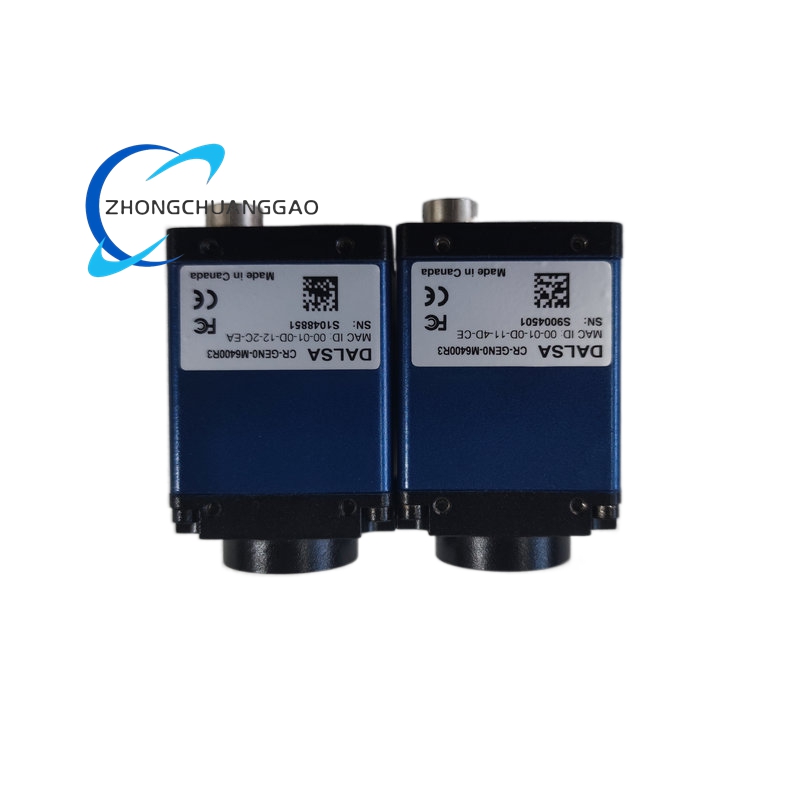
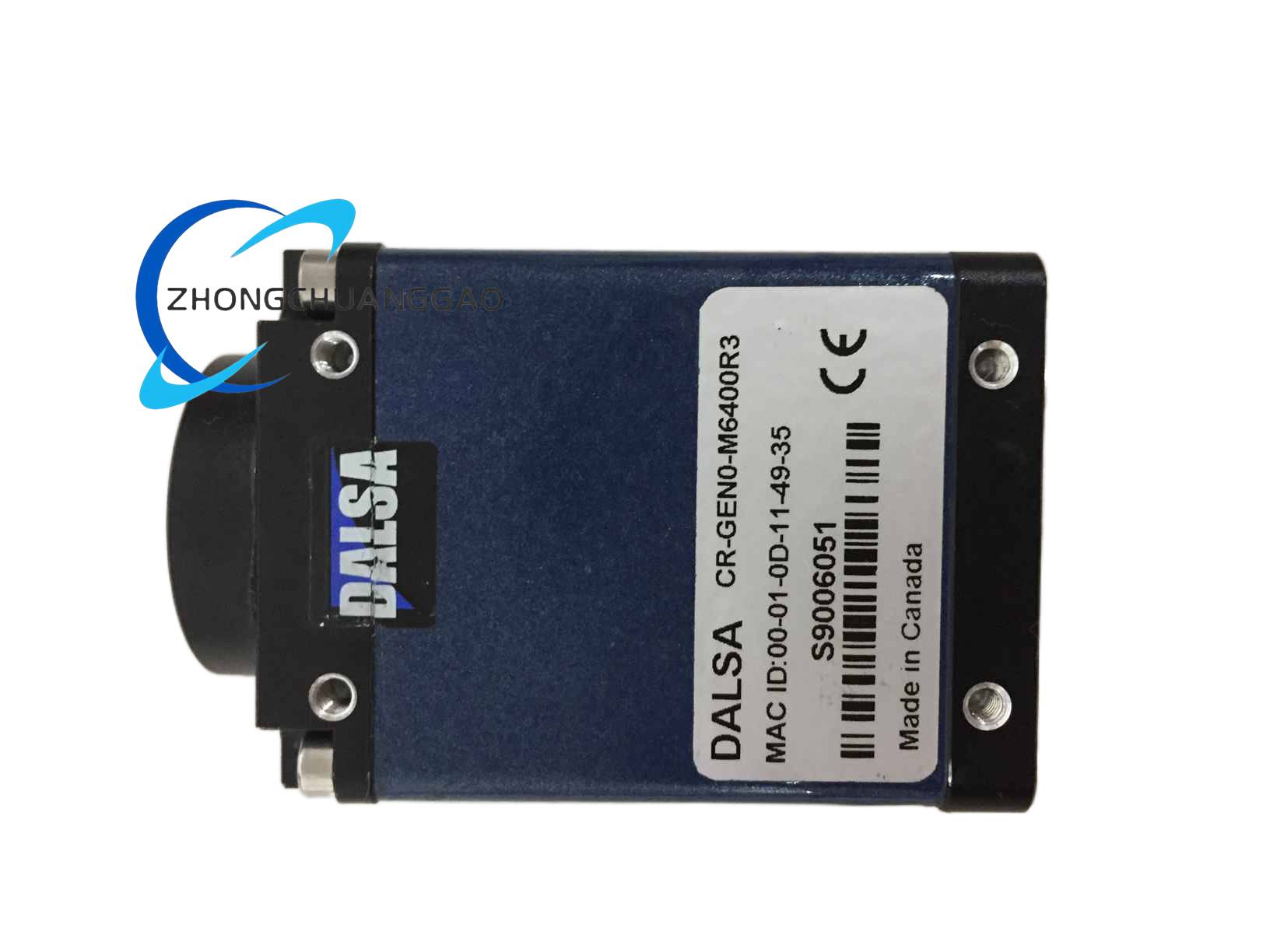
Technical Specifications: Documented physical and environmental data include dimensions of 64 mm × 64 mm × 30 mm, an operating temperature of 0 °C to +50 °C, storage temperature of −20 °C to +60 °C, and relative humidity of 5% to 95% non-condensing. The exact sensor resolution, pixel size, line rate, lens mount, and interface are defined in the manufacturer’s datasheet for this specific order code.
Functional Features: The camera provides high-resolution line-by-line image acquisition synchronized to encoder or trigger signals, supports interchangeable lenses, delivers digital output over a standard machine-vision interface, and is engineered for continuous 24/7 operation with stable radiometric response.
Application Scenarios: Deployment targets include printing and packaging inspection, web and textile defect detection, paper and film surface inspection, lumber and panel grading, label and barcode reading on moving webs, semiconductor wafer inspection, document scanning, and robotics-guided sorting.
Performance Parameters: Line-scan architecture eliminates motion blur on continuously moving material and enables effectively unlimited image length in the transport direction. The design tolerates industrial vibration, dust, and temperature variation within its specified envelope.
Material Composition: The housing is a machined aluminum body providing rigidity and passive heat dissipation, enclosing a CCD or CMOS line-sensor array, timing and conversion electronics, and an industrial-grade multi-pin connector.
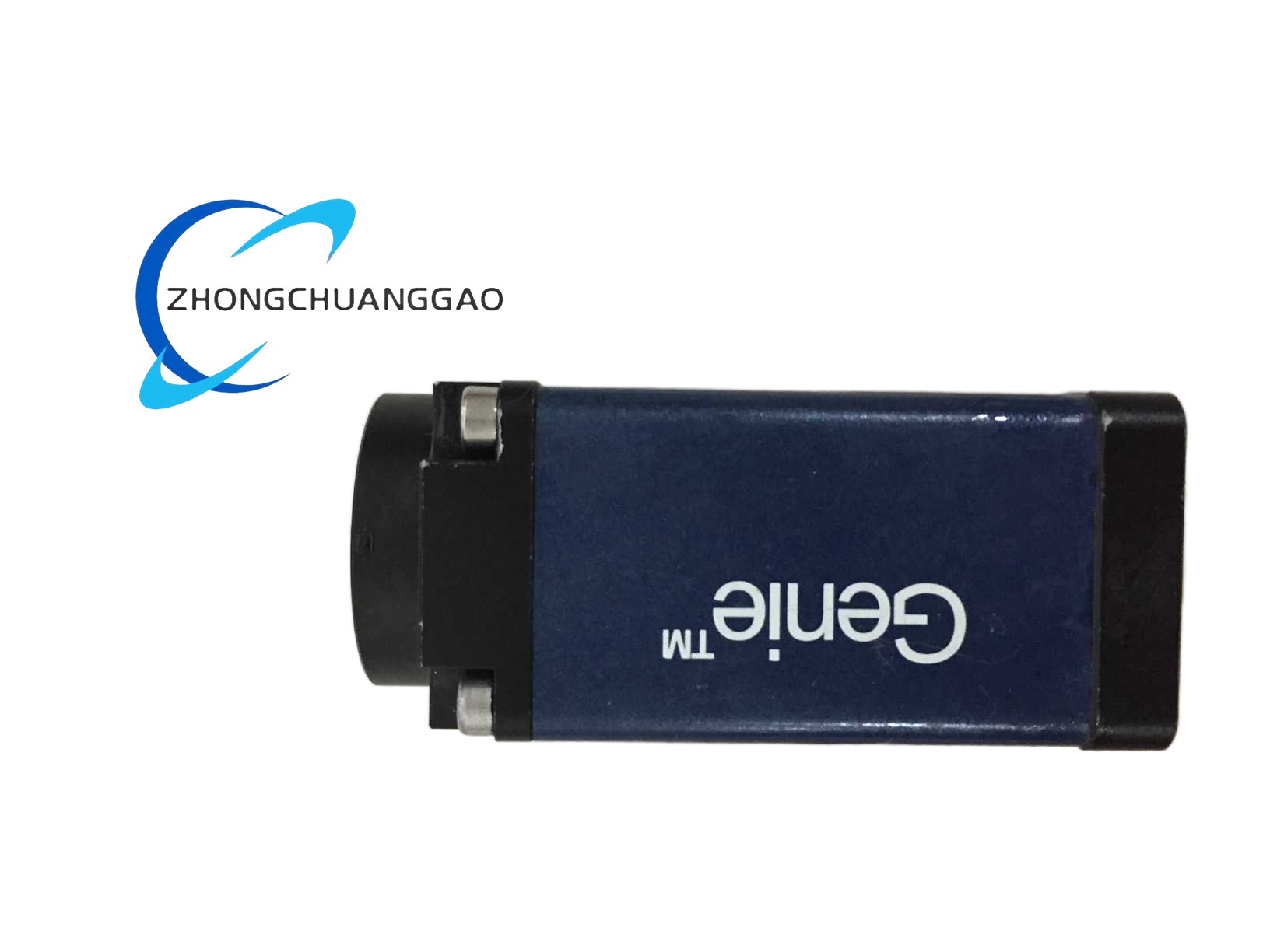
Structural Characteristics: Its compact cuboid form factor carries a front-mounted lens thread, side or rear connector, and standardized mounting holes. The small 64 × 64 × 30 mm envelope allows tight integration into gantries and inspection frames.
Working Principle: Instead of capturing frames, the sensor reads one or more pixel lines at a precise rate synchronized to object motion. Successive lines are assembled into a 2D image in the frame grabber or PC, producing geometrically accurate images of continuously moving webs.
Installation Requirements: Rigidly mount the camera perpendicular to the web, provide stable illumination such as LED line lights, synchronize with an encoder for constant pixel aspect ratio, connect through a compatible frame grabber or GigE Vision interface, and maintain the specified operating temperature with adequate ventilation.
Usage Precautions: Match the lens image circle to the sensor format, keep optics clean, avoid exceeding the 0–50 °C operating range, shield cables from electromagnetic interference, verify driver and SDK compatibility with the host OS, and set exposure and line rate to prevent saturation or line stretching.