Technical Specifications
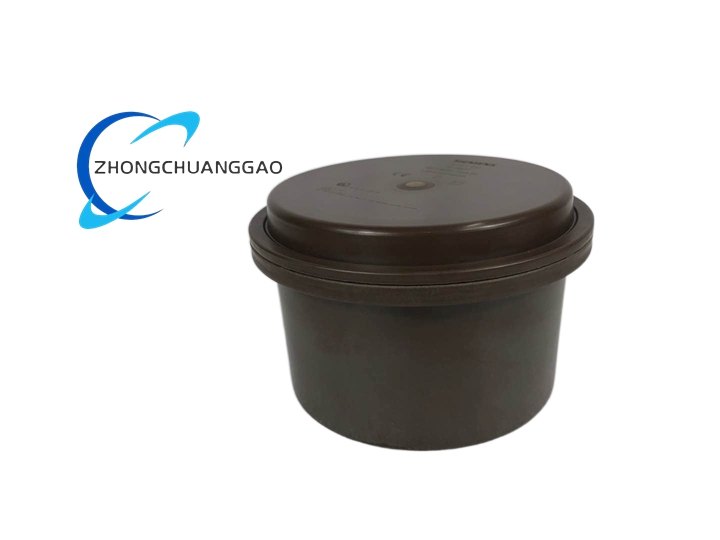
Operating frequency is 13.56 MHz. RF technology family is RF300, transponder type RF380T. Maximum wireless transfer rate is 106 kbit/s using RF300-specific protocol. Maximum read/write range is 160 mm, reader-dependent. User memory is 32,765 bytes FRAM/EEPROM. UID is 4 bytes fixed code. OTP memory is 20 bytes. No backup battery is required. Operating temperature is -25 °C to +110 °C during read/write access and up to +220 °C cyclically for heat-resistant operation. Diameter is 114 mm. Height is 83 mm. Weight is 900 g. Protection rating is IP68. Shock resistance is 500 m/s² according to DIN EN 60721-3-7 Class 7M3. Vibration resistance is 200 m/s². Silicon-free construction is provided. Approvals include cULus and IECEx marking II 3G Ex nC IIB T5.
Functional Features
The tag provides nonvolatile FRAM storage, high-temperature cycling, water and dust sealing, multitag operation limitation per RF300 reader rules, and fixed UID for unique identification. Data remains stored without battery power. The heat-resistant package supports primer, basecoat, clearcoat, washing and oven process tracking.
Application Scenarios
Paint shop skids, car body carriers, cataphoresis tanks with associated drying ovens, primer and top-coat lines, high-temperature washing zones above +85 °C, and general RF300 asset identification where tags must survive thermal cycles up to +220 °C.
Performance Parameters
Memory organization comprises 4-byte UID, 32,765-byte user memory and 20-byte OTP memory. Communication uses 13.56 MHz inductive RFID with maximum 106 kbit/s throughput. Read distance depends on antenna type, tag orientation and metal surroundings. Cyclic thermal performance requires controlled heating and cooling; for example, 200 °C for 2 hours can be followed by cooling to 25 °C for more than 8 hours, while 180 °C for 2 hours can be followed by cooling to 25 °C for more than 5.5 hours according to Siemens thermal-cycle examples. Internal transponder temperature must be managed so critical limits are not exceeded during sustained high-temperature phases.
Material Composition
Body uses industrial high-temperature polymer/phenolic-compatible materials according to RF380T construction, with PPS references in some distributor data and silicone-free formulation for paint-shop compatibility. Internal antenna and electronics use FR-4 or high-temperature PCB, bonded semiconductor memory and sealed metallic/ceramic shielding components suitable for IP68 service.
Structural Characteristics
Cylindrical sealed transponder with 114 mm diameter and 83 mm height. Mounting uses skid holder, shrouding cover or universal holder accessories. No external battery compartment is provided. The sealed enclosure resists water jets, dust, paint chemicals and thermal shock when installed with approved holders.
Working Principle
The RF300 reader emits 13.56 MHz energy. The transponder draws operating power from the electromagnetic field, executes anti-collision and protocol handling, and transfers UID plus FRAM data to the reader. Written data is stored in nonvolatile FRAM/EEPROM. In heat-resistant operation, the tag remains passive and retains memory through thermal cycles; the host system updates skid history, process step and quality data at each read point.
Installation Requirements
Mount the transponder with Siemens skid holder, shrouding cover or universal holder according to the process fixture. Keep reader-to-tag distance within the antenna-specific range, maximum 160 mm under optimal conditions. Avoid metal surfaces that reduce coupling unless the mounting accessory defines a minimum metal spacing. Install readers, cables and controllers per SIMATIC RF300 system manual. Validate read performance before production tracking begins.
Usage Precautions
During cyclic operation above +100 °C, ensure each heating phase is followed by a cooling phase so internal tag temperature stays within the specified critical threshold. Do not expose the tag to mechanical shock beyond 500 m/s² or vibration beyond 200 m/s² in the rated class. Use only compatible RF300 readers and antennas. Keep transponder and holder free from paint buildup that may affect thermal transfer. Follow IECEx/cULus installation limits when used in hazardous zones.