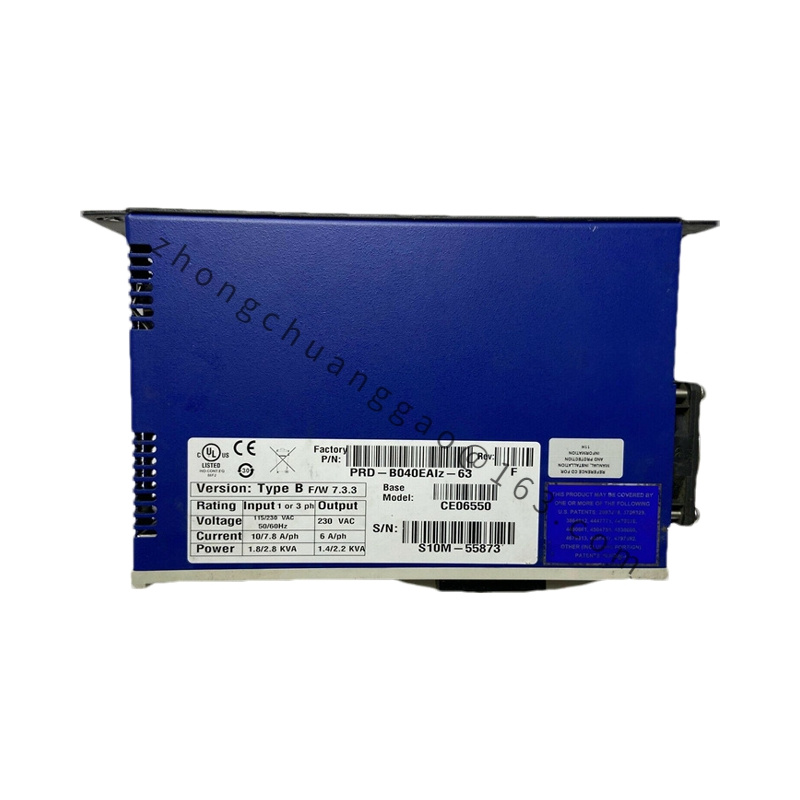
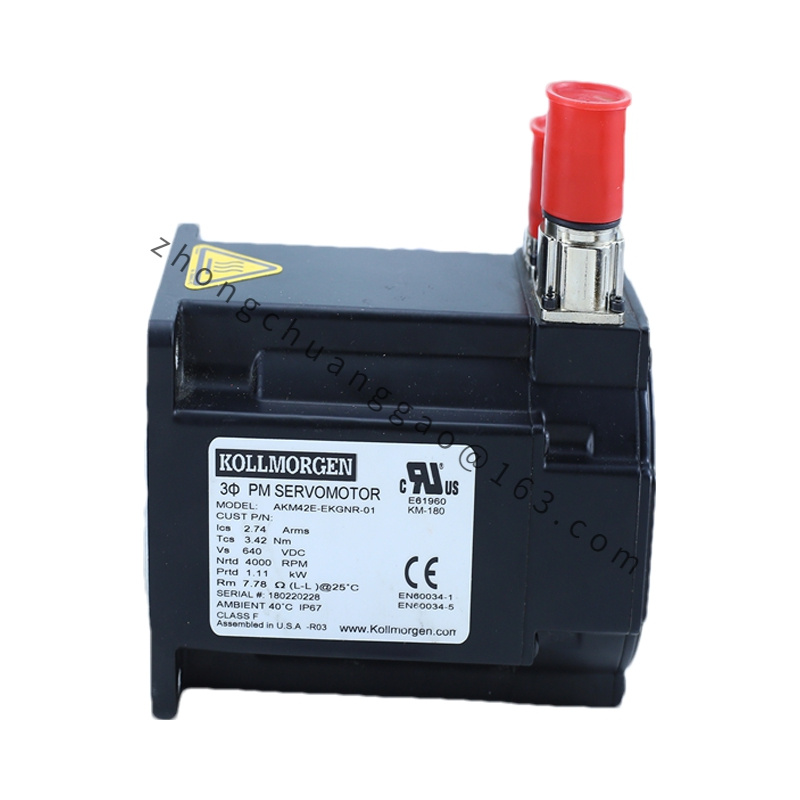
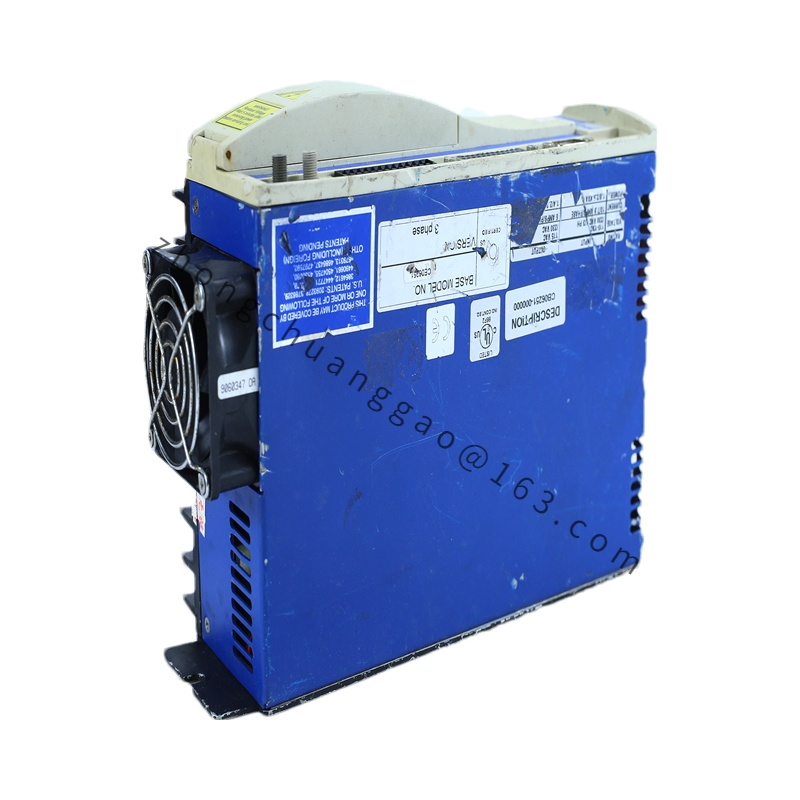
Product Name: MMC Series Smart Digital Servo Drive with DeviceNet
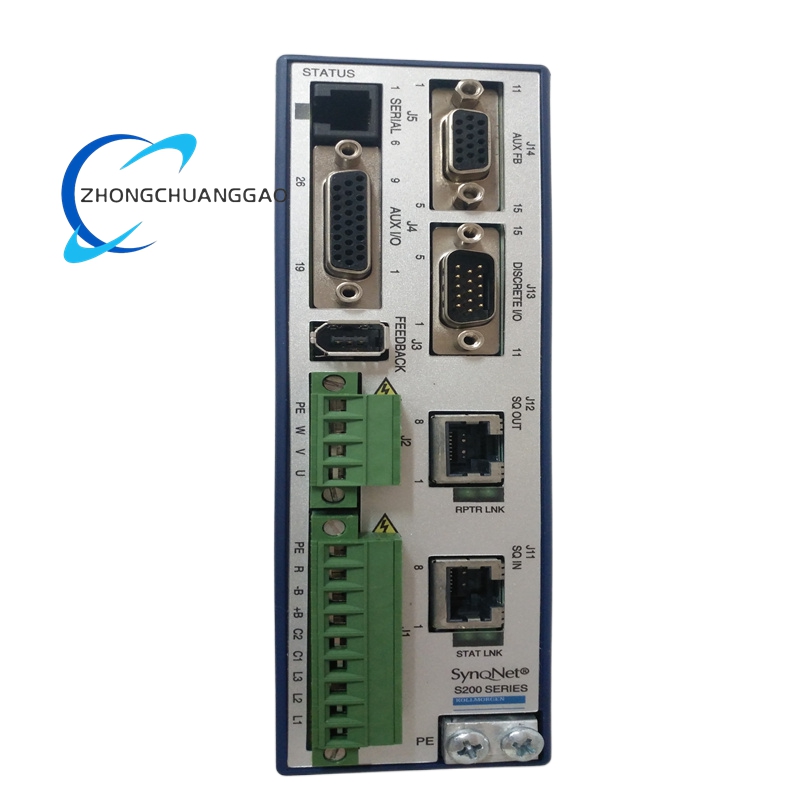
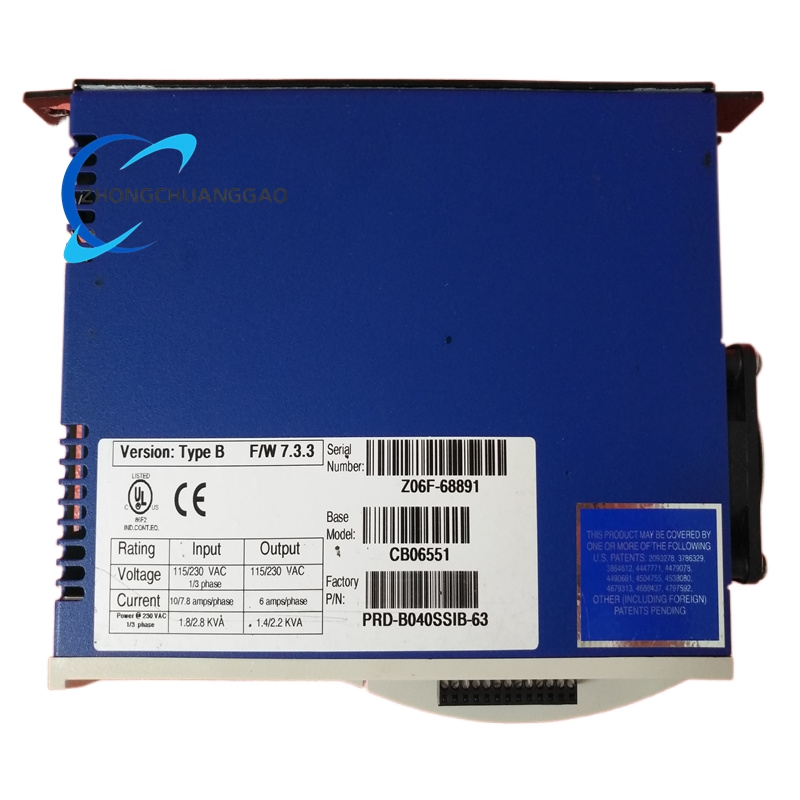
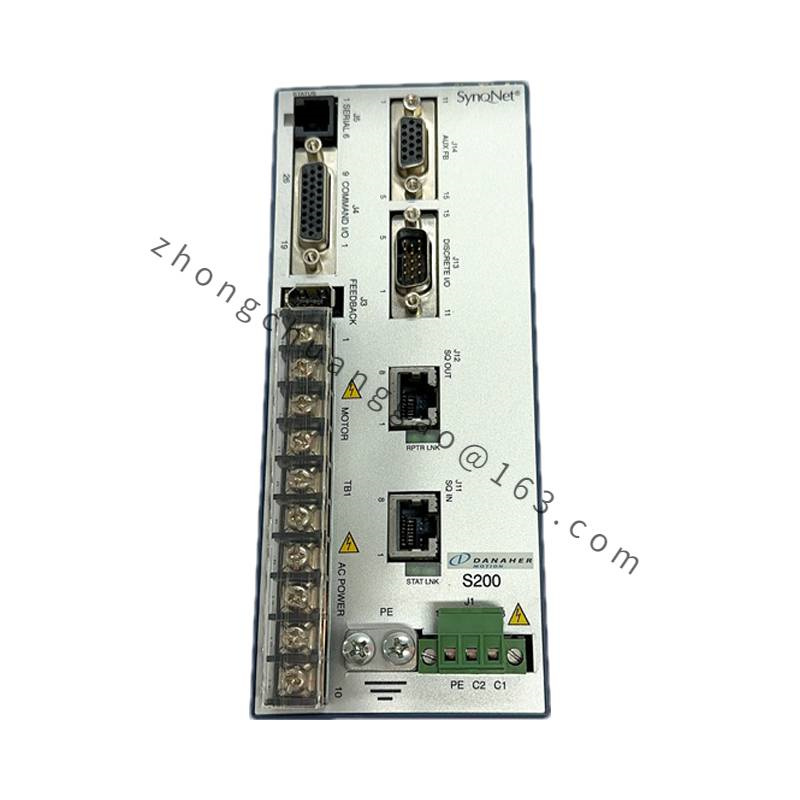
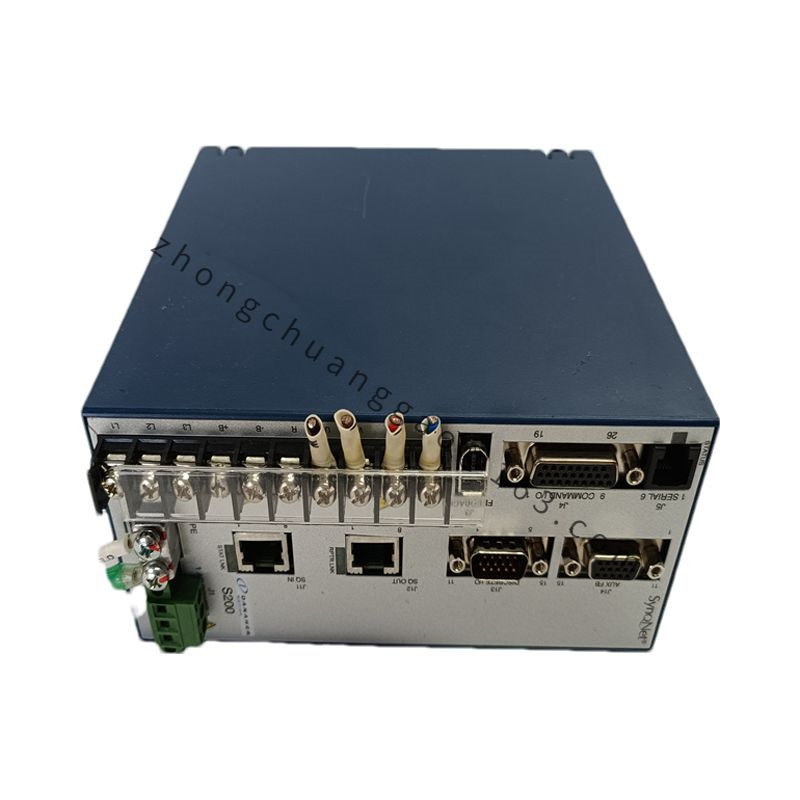
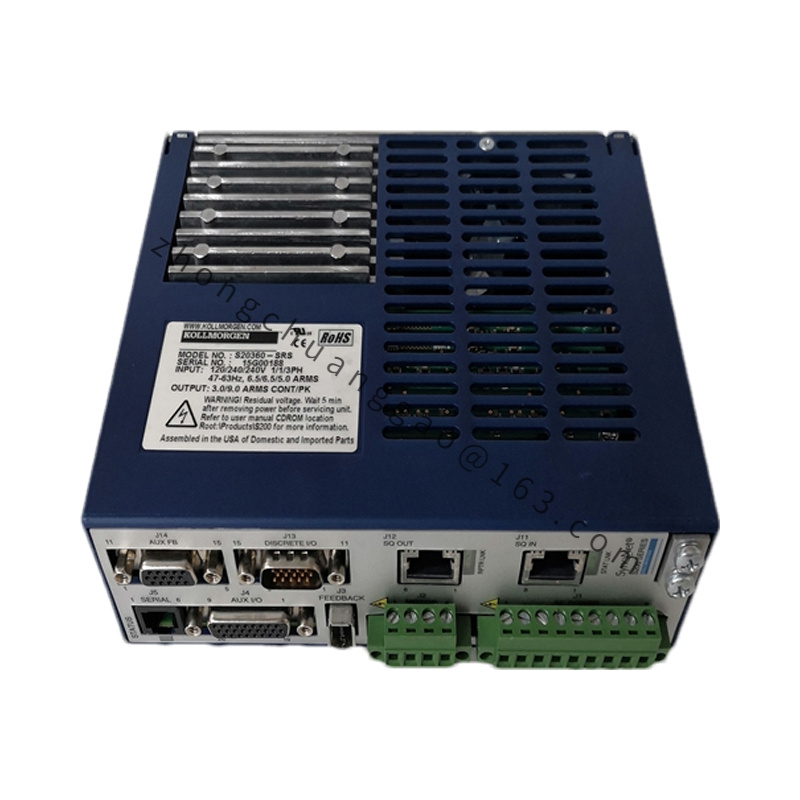
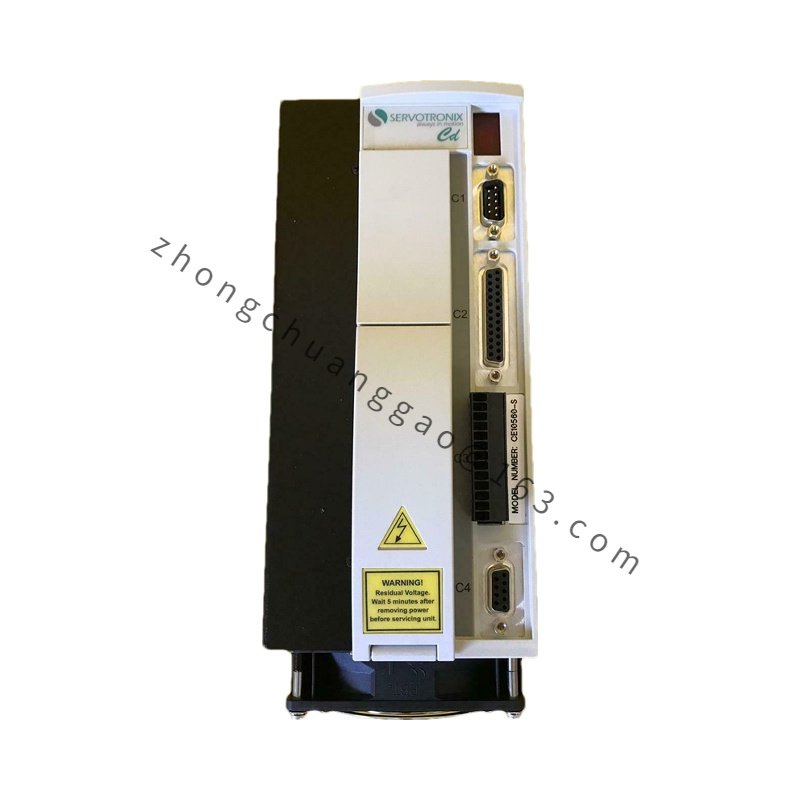
Product Introduction: This is a compact, single-axis intelligent servo drive belonging to Kollmorgen’s MMC (Multi-Axis Motion Control) platform, integrating a DeviceNet communication interface for real-time industrial networking.
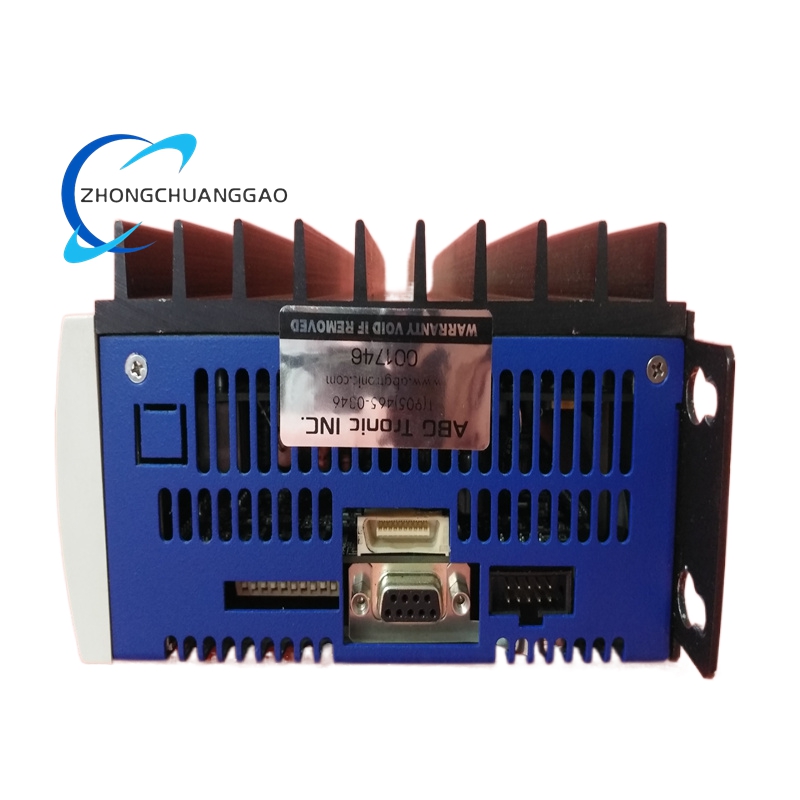
Chassis: Metal enclosure with integral heat dissipation surfaces.
Internal: 32-bit RISC processor with digital coprocessor, DC bus capacitance ~1880 µF, BR2032 coin cell backup.
Mounting: Panel mount within enclosed cabinet.
Working Principle:
The drive receives motion commands via DeviceNet, processes them through its DSP/RISC core to generate PWM sine-wave outputs, and closes current, speed, and position loops using motor feedback signals for precise torque, velocity, or position control.
Application Scenarios:
Small-scale automation axes, packaging machines, lab automation, textile machinery, medical diagnostic equipment where DeviceNet networking is required.
Installation Requirements:
Install inside a closed control cabinet with adequate ventilation.
Ensure proper grounding of chassis and shield termination.
Maintain clearance for airflow; avoid high-vibration locations.
Connect 24 V DC control power independently if needed for holdup.
Usage Precautions:
Do not operate above 1500 m altitude without accounting for power derating.
Avoid condensation (5%–95% RH non-condensing).
Verify DeviceNet node address and baud rate before commissioning.
Use only specified external shunts for regenerative energy management.