Digital guide
You are here:
- Home
- Kollmorgen
- Kollmorgen AKD-T02407-NBA
Detailed content
Continuous Output Current: 24 A RMS (per phase)
Peak Output Current: 72 A (3× continuous, 10 seconds)
DC Bus Voltage Rating: 70 VDC (nominal) — Range: 48 VDC to 310 VDC
Maximum Bus Voltage: 310 VDC
Rated Power Output: 3.4 kW (at 70 VDC bus, 24 A continuous)
Peak Power Output: 10.2 kW (short-duration)
Control Mode: Torque, Velocity, Position, Cyclic Synchronous Position (CSP), Electronic Cam, Electronic Gear, Jog, PVT (Point-to-Point Trajectory), FFTs (Feed-Forward Terms), Torque Feed-Forward, Velocity Feed-Forward, Acceleration Feed-Forward, Disturbance Observer, notch filter, adaptive tuning
Position Loop Update Rate: 31.25 μs (32 kHz) — Double the bandwidth of AKD-P series
Velocity Loop Update Rate: 31.25 μs (32 kHz)
Current Loop Update Rate: 15.625 μs (64 kHz) — Highest in AKD family
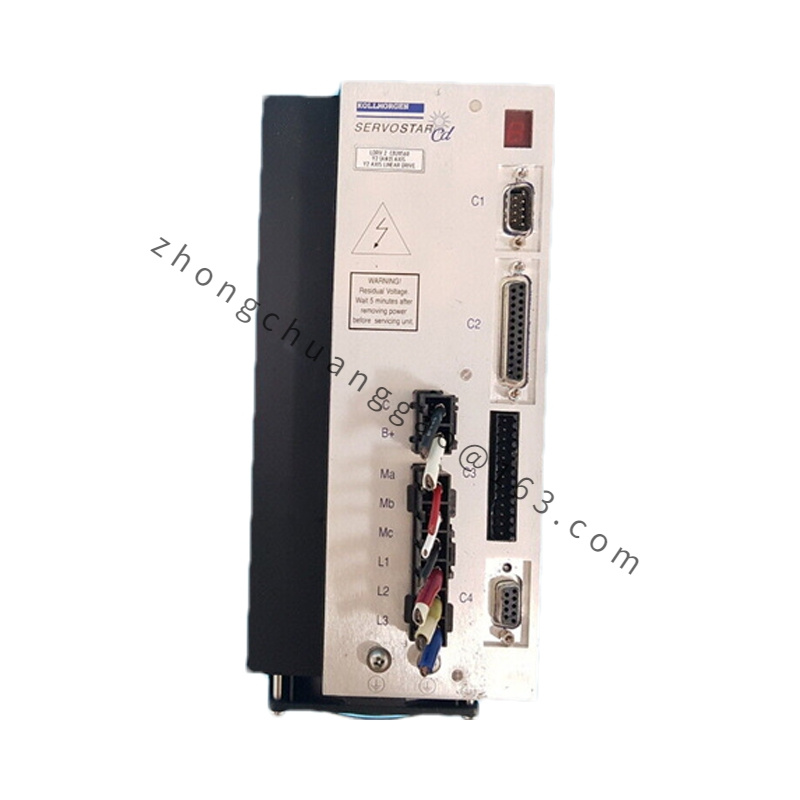
Feedback Inputs: EnDat 2.2, Hiperface DSL, BiSS-C, Resolver, SSI, Incremental (A/B/Z)
Encoder Supply: 5 VDC (EnDat), 5 VDC (Hiperface), 5 VDC (BiSS-C), 10 VAC/VDC (Resolver)
Communication Interfaces:
- EtherCAT (primary, 100 Mbps) — Supports Distributed Clocks (DC) for synchronized multi-axis motion
- CANopen (DS-301, CiA 402)
- Profibus DP (optional module)
- Modbus TCP/RTU (optional)
- USB 2.0 (service port)
Digital I/O: 16 inputs + 8 outputs (24 VDC, opto-isolated) — Double I/O of AKD-P
Analog I/O: 4 analog inputs (0–10 V, ±10 V, 0–20 mA) + 2 analog outputs (0–10 V) — Double analog channels of AKD-P
Safety Features: STO (Safe Torque Off) — SIL 3 / PL e certified, SOS, SS1, SS2, SLS, SLP, SBC, SLP (Safely Limited Position) with dual-channel monitoring
Braking Option: Regenerative braking — Up to 100% of rated power fed back to bus; requires external braking resistor for bus overvoltage (>310 VDC)
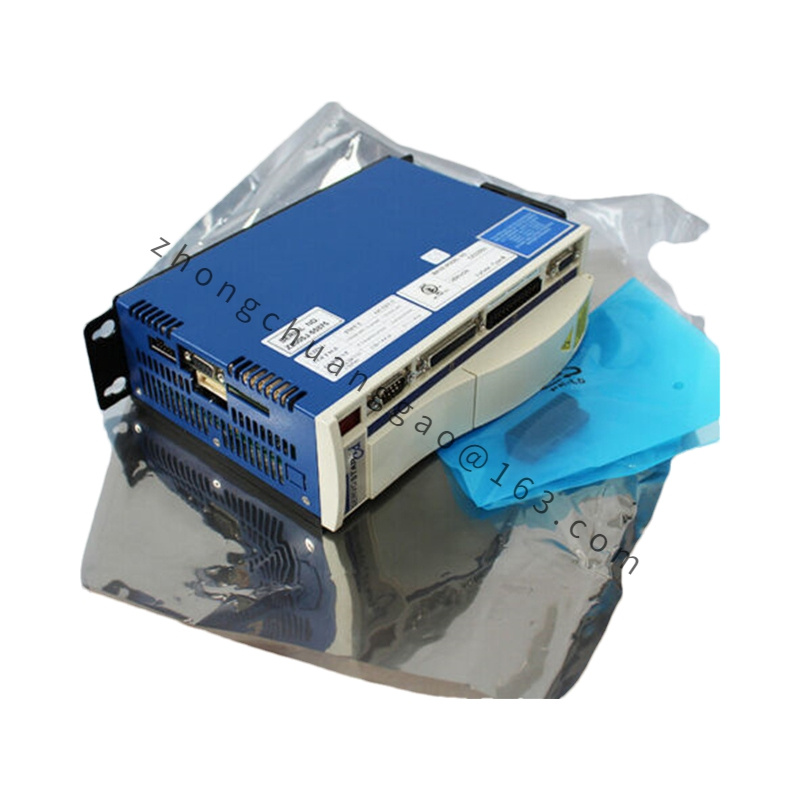
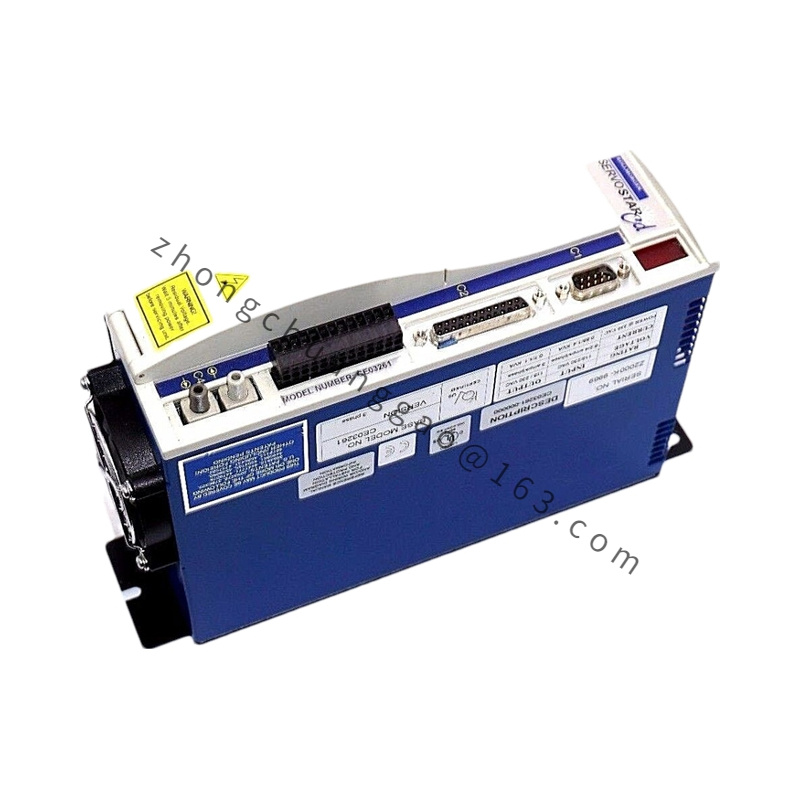
Dimensions (W × H × D): 140 mm × 220 mm × 195 mm
Weight: 3.4 kg
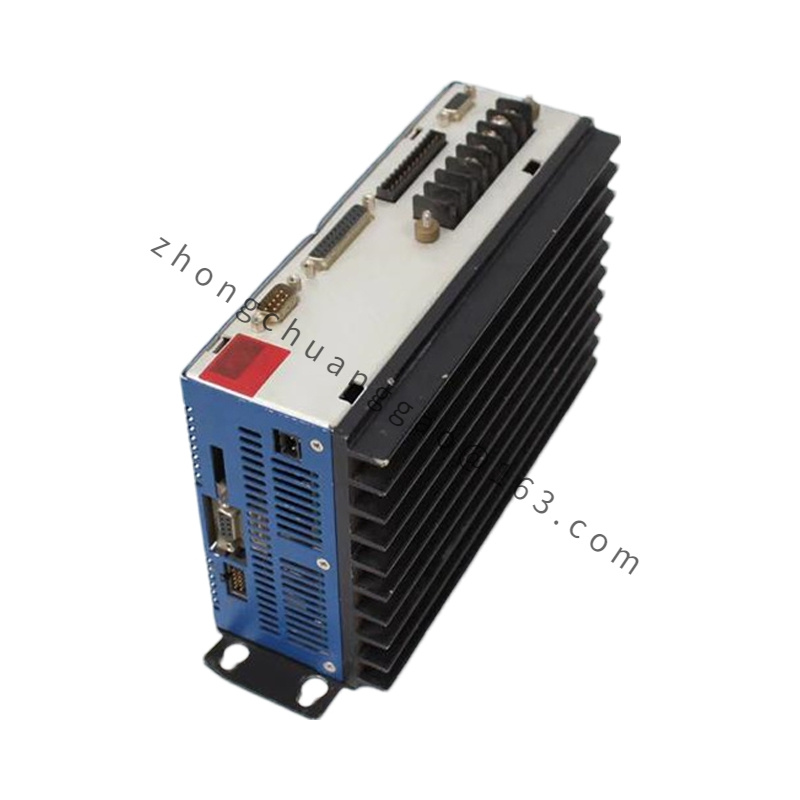
Cooling Method: Forced air (internal fan) — Higher thermal capacity for sustained high-current operation
Protection Rating: IP20 (chassis mounted, front panel IP54 with cover)
Operating Temperature: 0°C to +45°C (derating above 40°C: -2.5% per °C)
Storage Temperature: -20°C to +70°C
Altitude: Up to 1000 m (derating above 1000 m: -1% per 100 m)
EMC Compliance: EN 61800-3, EN 61000-6-2, EN 61000-6-4
Certifications: CE, UL 508C, cUL, RoHS Compliant, SIL 3 / PL e
Key Features:
- 24 A continuous current — Same power as AKD-P, but 2× servo loop bandwidth (32 kHz vs 16 kHz)
- 64 kHz current loop — Enables ultra-precise torque control for high-dynamic applications
- SIL 3 / PL e safety — Highest safety rating in AKD family — Suitable for safety-critical applications
- 16 I/O + 4 analog channels — Expanded I/O for complex machine integration
- Disturbance Observer + notch filter — Active vibration suppression without external sensors
- PVT trajectory planner — On-drive point-to-point motion profiling
- Dual-channel STO monitoring — Redundant safety for collaborative robots and human-machine interaction
Applicable Industries: High-speed CNC, semiconductor equipment, collaborative robots (cobots), packaging (high-speed), printing (registration control), aerospace test rigs, high-dynamic robotics, metal forming
Installation Requirements:
- Mount on DIN rail (35 mm) or panel mount with M4 screws
- Ensure minimum 100 mm clearance above and below for forced-air cooling
- Connect EtherCAT cable (shielded, CAT5e or better) — Maximum segment length 100 m
- Connect braking resistor (DBL3N00300-0R2-00K-S40 recommended) if bus voltage exceeds 310 VDC
- Ground chassis to < 1 Ω earth
- For SIL 3 / PL e: Use dual-channel STO wiring per IEC 61800-5-2
Precautions:
- Do not exceed 24 A continuous current without derating at elevated temperature
- Do not exceed 310 VDC bus voltage
- For SIL 3 / PL e: Do not bridge or short STO channels — Must use dual-channel safety relay
- Ensure forced-air cooling is unobstructed — Fan must have free airflow
.jpg)