Technical Specifications
Measurement range: 5×10⁻¹⁰ to 1500 mbar, equal to 3.75×10⁻¹⁰ to 1125 Torr.
Accuracy: ±15% of reading from 10⁻⁸ to 50 mbar, ±5% from 50 to 950 mbar, ±2.5% from 950 to 1050 mbar.
Repeatability: 5% of reading from 10⁻⁸ to 10⁻² mbar.
Filament emission: 2×10⁻² mbar high setting, 8×10⁻³ mbar low setting, switchable by RS232 or fieldbus.
Degas: electron bombardment, maximum 3 minutes when pressure is below 7.2×10⁻⁶ mbar.
Maximum pressure: 5 bar absolute.
Operating temperature: 0 to +50°C ambient.
Storage temperature: −20 to +70°C.
Flange bakeout: 80°C with electronics fitted, 150°C after removing bakeout electronics.
Supply voltage: 20 to 28 V DC.
Analog output: 0 to 10.3 V.
Digital interface: RS232C via 15-pin D-sub male, DeviceNet fieldbus for SD version.
Maximum bus cable length: 100 m.
Vacuum connection: DN 25 ISO-KF.
Protection class: IP30.
Functional Features
Pirani interlock protects hot filament from premature burnout.
Automatic Pirani adjustment at high vacuum and atmospheric pressure removes manual switching.
Differential measurement versus atmosphere compensates ambient pressure variation.
Sensor element is replaceable and stores onboard calibration data.
Optional graphic display and multiple fieldbus versions are available.
Application Scenarios
Semiconductor process chambers, load locks and transfer chambers.
PVD, CVD and general thin-film coating systems.
Research vacuum rigs, surface-analysis instruments and ultra-high-vacuum laboratories.
Performance Parameters
Response is gas-type independent above 10 mbar for the capacitance channel.
Pirani channel covers rough and medium vacuum with automatic range transition.
Hot-cathode ionization channel covers ultra-high vacuum with controlled emission and degas cycle.
Material Composition
Vacuum-exposed parts use Y₂O₃, iridium, molybdenum, copper, tungsten, NiFe, NiCr, Al₂O₃, SnAg, stainless steel and glass.
Structural Characteristics
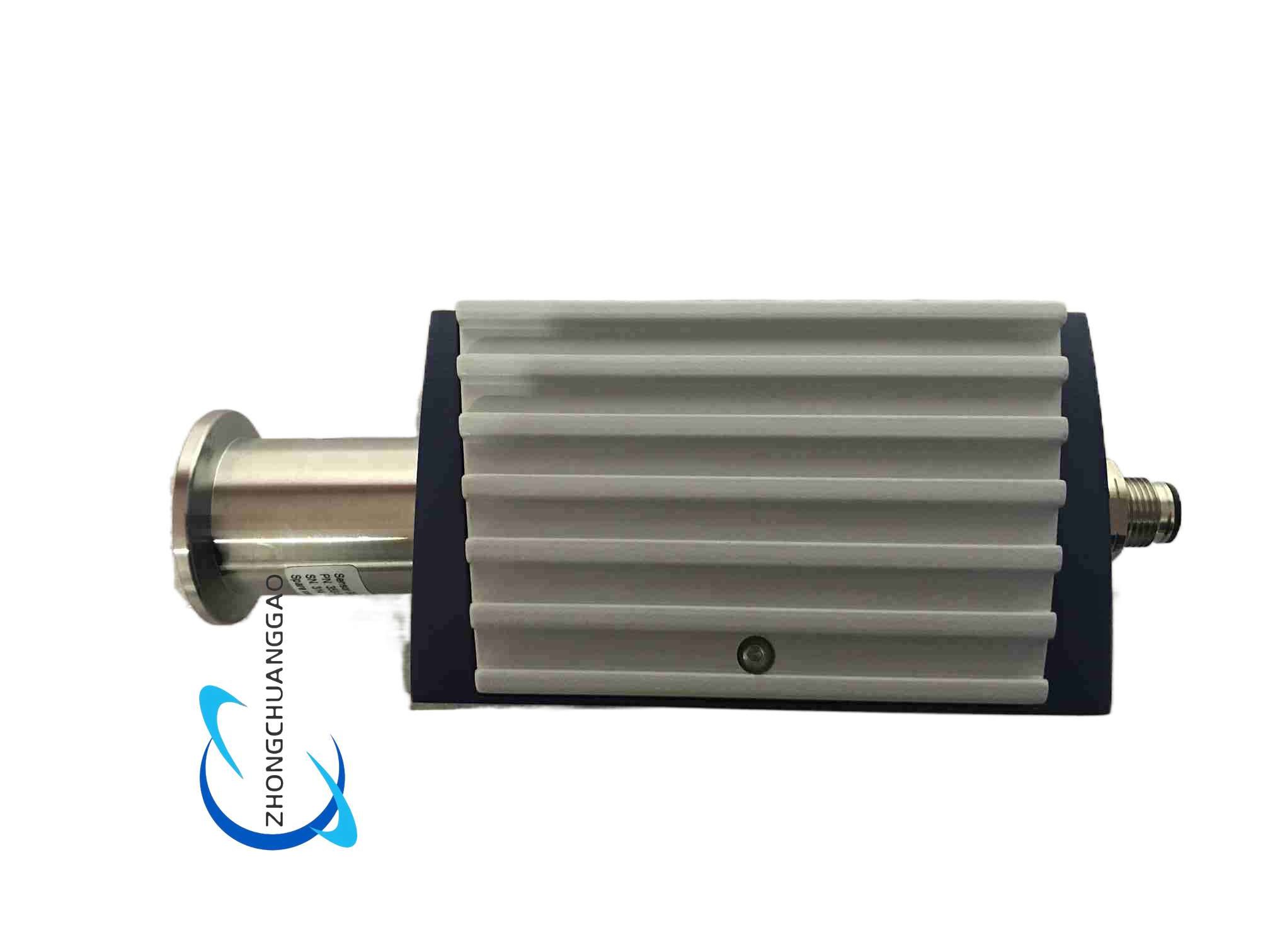
Single compact gauge head with integrated capacitance diaphragm, Pirani element and hot-cathode assembly.
KF flange allows quick installation and sensor head replacement.
Electronic driver section provides power, signal conditioning, fieldbus communication and stored calibration.
Working Principle
The capacitance diaphragm cell measures absolute pressure independently of gas type at higher pressure.
The Pirani cell measures thermal conductivity of gas in the rough vacuum band.
The hot-cathode ionization cell measures very low pressure by collecting ions produced from emitted electrons.
The controller fuses the three signals, applies calibration data and outputs one continuous pressure value.
Installation Requirements
Mount the KF flange with correct centering ring and clamp torque.
Provide 20 to 28 V DC isolated supply with sufficient current for filament and degas.
Connect DeviceNet wiring with proper termination and node address.
Keep analog cable separated from power cables to reduce noise.
Perform leak check and preliminary pumpdown before enabling high emission or degas.
Usage Precautions
Do not energize filament at pressure above the configured emission safety limit.
Do not start degas unless pressure is below 7.2×10⁻⁶ mbar.
Avoid exceeding 5 bar absolute or specified bakeout temperature with electronics attached.
Replace sensor element using calibrated spare head only.
Verify fieldbus configuration after power cycle and before process use.