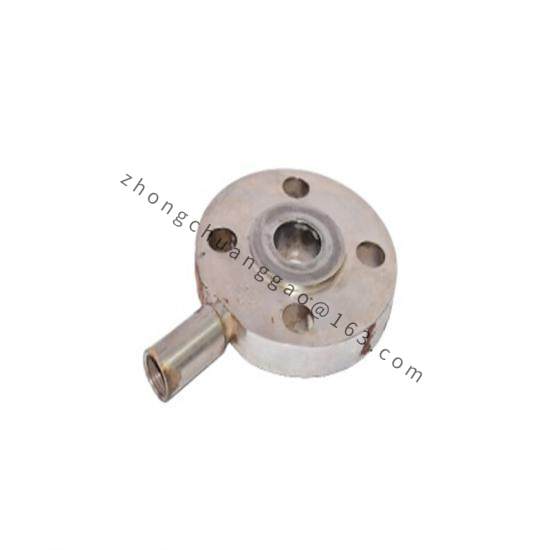
Product Name: VSV (Variable Stator Vane) Hydraulic Control Mechanism
Product Introduction: The 9902-337 is part of Woodward’s VSV variable stator vane control series, specifically designed for adjusting the vane angle of the compressor stage in non-aviation gas turbines (such as GE LM series aeroderivative gas turbines). It drives vane rotation via a hydraulic servo mechanism to prevent compressor stall and ensure efficient operation under partial-load and variable-speed conditions.
Hydraulic fluid: US MIL-L-23699 or MIL-L-7808, filtration 10 µm
Normal oil temperature: 4 to 82 °C
Ambient temperature: –7 to +93 °C (normal); –29 to +121 °C (extreme, ≤ 2% of total service life)
Altitude: Sea level to 2500 m
Dry weight: Approximately 12 kg (26 lb)
Functional Features: Precise compressor VSV angle control; prevention of low-condition stall; improved part-load efficiency; integrated tachometer pump for speed sensing.
Application Scenarios: GE LM6000 aeroderivative gas turbine compressor VSV regulation; industrial gas turbine variable geometry inlet guide vane/stator vane control; gas turbine systems requiring anti-surge and variable operating condition optimization.
Working Principle: The electronic controller outputs a hydraulic command. The servovalve inside the VSV control receives the command and regulates hydraulic oil flow direction and volume, driving the actuator piston to rotate the variable stator vanes to the target angle. The tachometer pump provides real-time speed feedback, forming a closed loop.
Installation Requirements:
Use lifting straps/hoists for placement; manual handling is prohibited
Align the tachometer pump serrated drive shaft correctly to ensure unimpeded rotation
Connect hydraulic lines per drawing, ensuring correct oil flow direction
Perform zero and stroke calibration after installation per manual
Usage Precautions:
Confirm independent overspeed trip is in place before startup
Maintain hydraulic oil cleanliness; replace filter elements periodically
Not an electrical device but a pressure-bearing component; comply with Machinery Directive and PED
Zero and stroke calibration must be completed before commissioning
Do not operate beyond the maximum outlet pressure rating