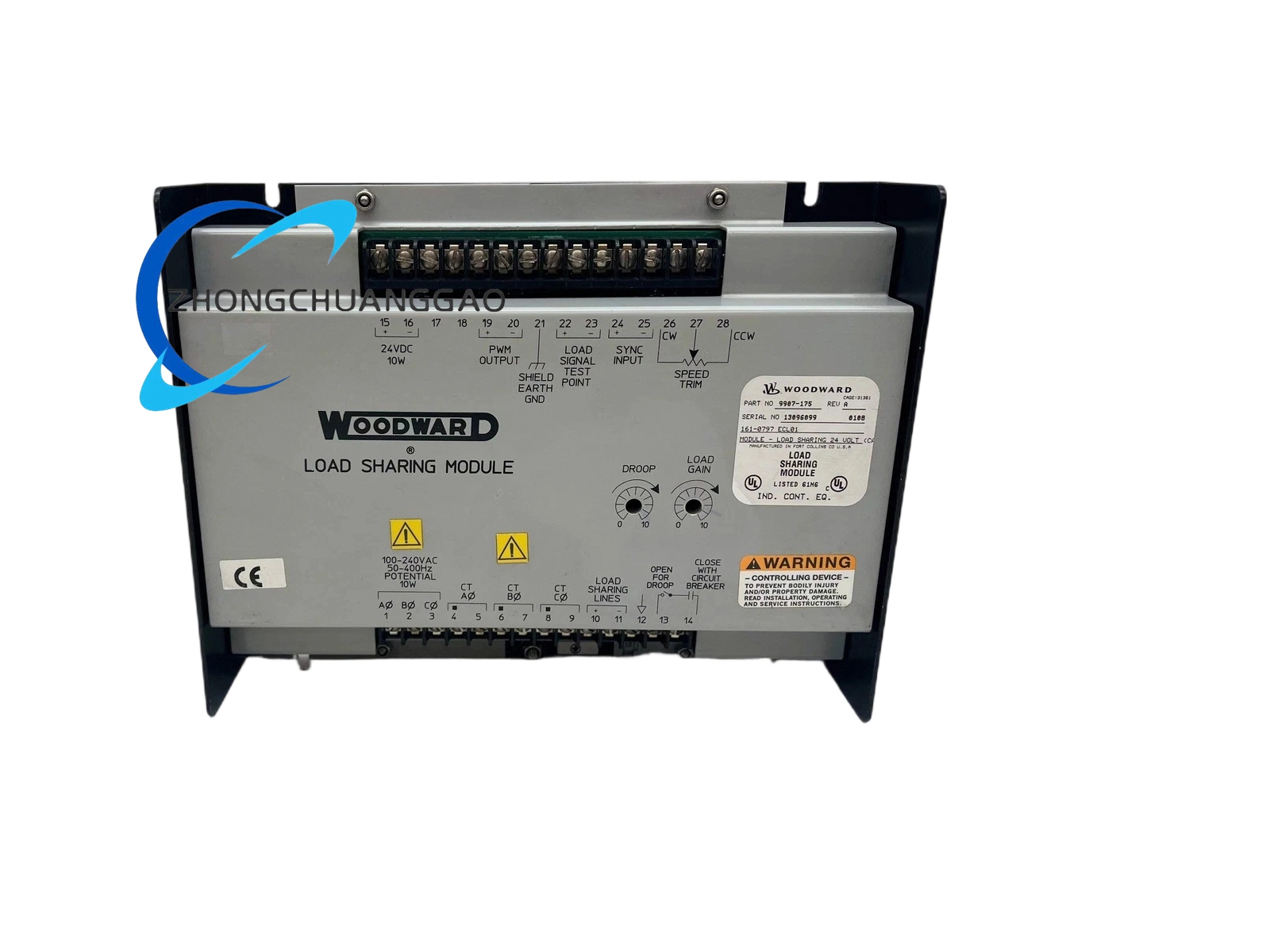
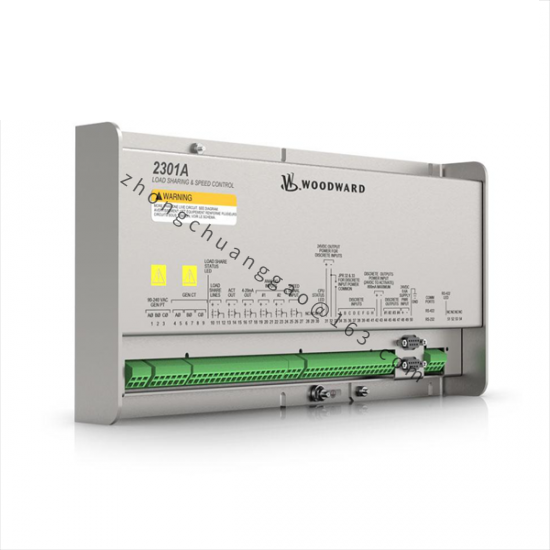
Technical Specifications: (Based on ProAct Gen 3 platform family documentation)
-
Output Shaft: 0.625-36 serrated tooth terminal shaft
-
Rotary Output Travel: 72.5° allowing direct coupling to butterfly valves without linkage
-
Command Signal Input: Analog 0–5 Vdc or 4–20 mA, CAN, or PWM; primary and backup command inputs with automatic failover
-
Position Indication Output: Analog 0–25 mA
-
Communication: CAN-based communications for control and service port
-
Configuration: Field-programmable via PC using Woodward ProAct Service Tool (P/N 9927-2636)
-
Torque Output (Model II reference): 5.2 N·m transient / 2.6 N·m continuous
-
Max Input Power (Model II reference): 251 W transient / 65 W continuous
-
Max Current (Model II reference): 13 A transient / 3.5 A steady-state
-
Mounting: Base- or flange-mounted on-engine; withstands high vibration and temperature extremes
-
Diagnostics: Eleven-point curve function for non-linear output; diagnostic event log; driver-electronics-temperature-based current limiting
Functional Features: Extremely fast bidirectional actuation, electronically positioned in both directions; fully electric with no external drive or hydraulic supply; integral driver compatible with a broad range of control systems; configurable parameters for varied applications; advanced diagnostics with fault annunciation via discrete output; optional rotation scale and indicator for visible travel detection.
Application Scenarios: Fuel rack positioning, timing control, throttle valve, and wastegate positioning on industrial gas engines, diesel engines, generator sets, and gas turbines.
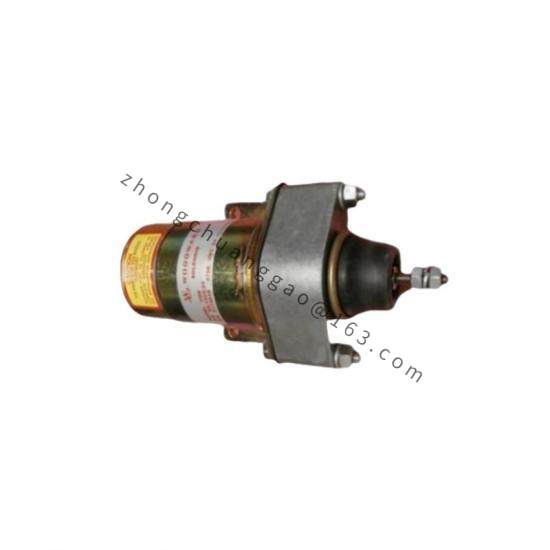
Material Composition: Metallic stepping-motor construction with visible shaft and mounting holes; industrial electronic device with central connector and mounting bracket (per manufacturer released figures).
Structural Characteristics: On-engine mountable design (base or flange); 0.625-36 serrated tooth terminal shaft; optional rotation scale and indicator; Model IV is base-mounted only.
Working Principle: The actuator accepts a position command signal from an external speed control or system controller. Its integral digital driver positions the output shaft electronically in both directions, providing closed-loop rotary motion. An eleven-point curve function can be configured to create non-linear output behavior tailored to the specific application.
Installation Requirements: Mount on-engine per Woodward ProAct mechanical drawings; wiring must follow the prescribed analog/PWM/CAN signal wiring practice with shielded cable; configure and calibrate to the specific engine using the Woodward ProAct Service Tool communicating via CAN bus with the appropriate USB-to-CAN adapter; the Woodward ToolKit service tool can be used to create configuration files for offline loading into multiple identical units.
Usage Notes: Must be configured and calibrated to the specific engine before operation; unauthorized modification or operation outside specified mechanical, electrical, or other operating limits constitutes misuse and excludes warranty coverage; the engine/turbine must be equipped with an independent overspeed shutdown device totally independent of the prime mover control system; wear appropriate personal protective equipment (PPE) including eye protection, hearing protection, gloves, and safety boots during installation and service.