Digital guide

You are here:

Woodward 8904-732

Product Overview
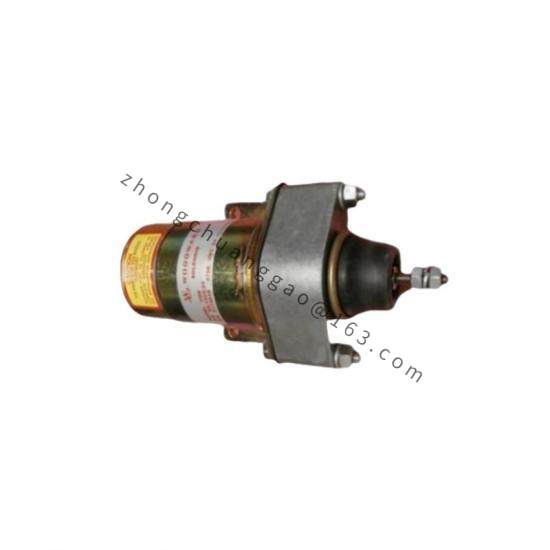
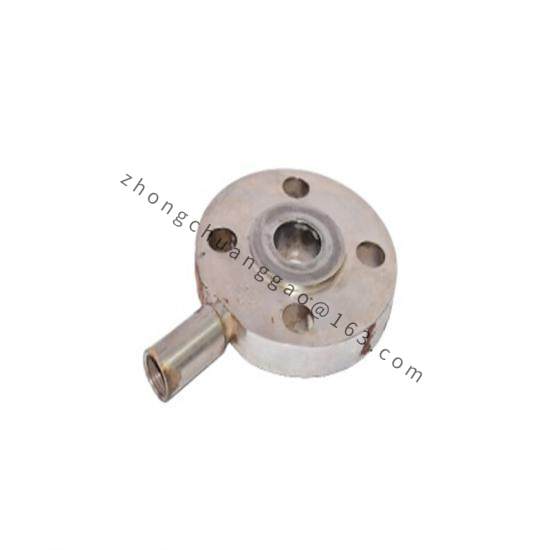
The Woodward 8904-732 is an actuator-and-valve combination unit that integrates the TM-55P proportional electrohydraulic actuator with the 3103 series stainless steel gas valve. The component is specifically designed for industrial gas turbine fuel control applications. The TM-55P actuator receives command signals from the electronic controller and precisely controls the opening of the 3103 gas valve’s rotary metering sleeve via an electrohydraulic proportional drive system, achieving high-precision metering and regulation of gas flow.

Detailed content

Technical Specifications
  • Part number: 8904-732
  • Manufacturer: Woodward
  • Equipment type: Actuator and valve combination unit
  • Valve type: 3103 series stainless steel gas valve
  • Actuator type: TM-55P proportional electrohydraulic actuator
  • Drive method: Electrohydraulic proportional drive
  • Position feedback: Built-in electrical position sensor
  • Companion cable: MADISON CABLE 20626 series, 12-foot length
Performance Parameters
  • Actuator output torque: 30 to 75 N·m (22 to 55 lb-ft)
  • Actuator weight: Approx. 6.6 kg (14.5 lb)
  • Valve flow range: 23 to 18144 kg/h (50 to 40000 lb/h)
  • Gas supply pressure: Up to 600 psig (4137 kPa)
  • Differential pressure range: 25 to 600 psi (172 to 4137 kPa)
  • Gas temperature range: -40 °C to +149 °C (-40 °F to +300 °F)
  • Hydraulic oil supply pressure: 400 to 1000 psig (2758 to 6895 kPa), with ±20% allowable fluctuation
  • Hydraulic oil viscosity range: 0.6 to 400 cSt
  • Hydraulic oil filtration accuracy: 10 micron nominal
  • Ambient temperature range: -40 °C to +121 °C (-40 °F to +250 °F)
  • Explosion-proof certification: UL Listed Class I, Division 1, Groups C & D; CSA Listed C22.2
Functional Features
  • Actuator and valve are pre-matched at the factory with calibration completed, reducing on-site commissioning workload
  • TM-55P proportional actuator uses a torque motor servovalve drive, offering rapid response and high control precision
  • The 3103 gas valve adopts a rotary sleeve and shoe-type throttling structure, providing excellent contamination resistance
  • The valve design includes an inlet guide tube that directs gas impurities toward the metering port, reducing impurity accumulation within the valve body
  • The metering sleeve support bearing is completely sealed from the gas, protecting internal mechanisms
  • The actuator automatically biases toward the minimum fuel direction upon power loss, providing fail-safe protection
  • Internal components are made of fully hardened stainless steel, offering both corrosion and wear resistance
Application Scenarios
  • Fuel control for industrial gas turbine generator sets
  • Fuel management for gas compressor drive units
  • Gas supply regulation in combined heat and power (CHP) systems
  • Gas flow control in distributed energy stations
  • Marine and offshore platform gas power units
Material Composition
  • Actuator housing: High-strength aluminum alloy
  • Actuator internal parts: Fully hardened stainless steel
  • Valve body: Precision-cast stainless steel
  • Metering sleeve and shoe: Fully hardened stainless steel, precision-ground
  • Seals: Fluoroelastomer (FKM) or other gas-resistant elastomers
  • Hydraulic seals: Preformed packing rings to prevent magnetic contaminant accumulation
Structural Characteristics
  • Direct connection between actuator and valve via adapter with no intermediate transmission links
  • Rotary sleeve and shoe metering structure with excellent flow resistance characteristics
  • Double-acting servo piston provides powerful driving force
  • 40-micron filtration mesh built into the hydraulic inlet fitting for additional contamination protection
  • Electrical position feedback sensor built into the actuator for closed-loop control
  • Compact overall structure facilitating installation within turbine compartments
Working Principle
The electronic controller sends an electrical command signal to the torque motor servovalve within the TM-55P actuator. The servovalve generates a differential pressure that drives the second-stage spool valve, regulating the flow of hydraulic oil to both ends of the double-acting servo piston. Piston movement drives the final output shaft to rotate, which in turn drives the metering sleeve of the 3103 gas valve to change its opening.
You may also like