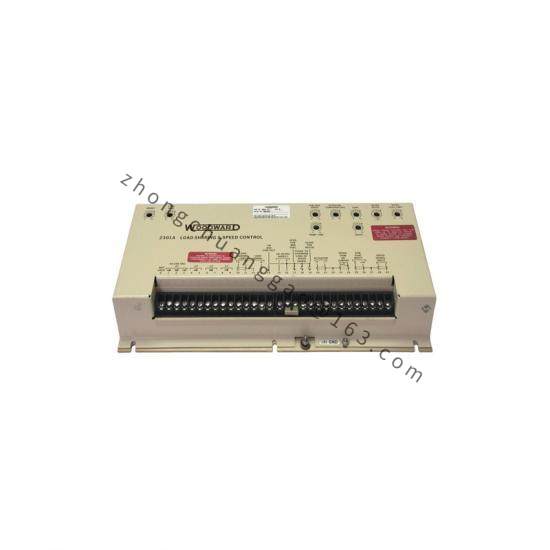
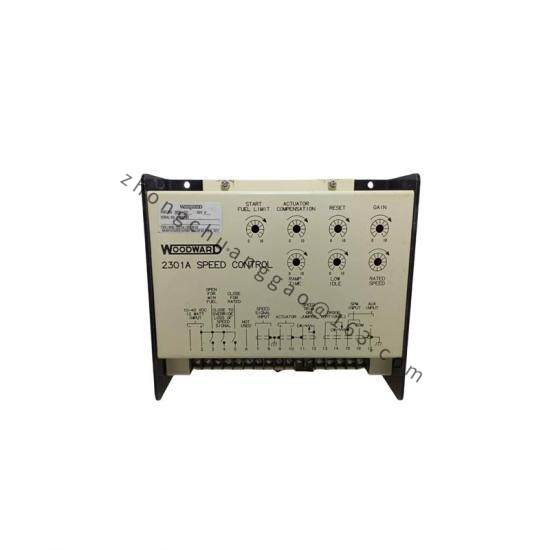
Product Name: 505 Series Digital Governor for Steam Turbines
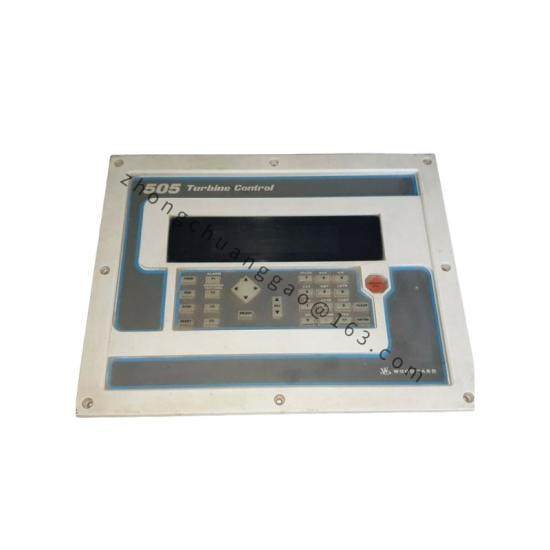
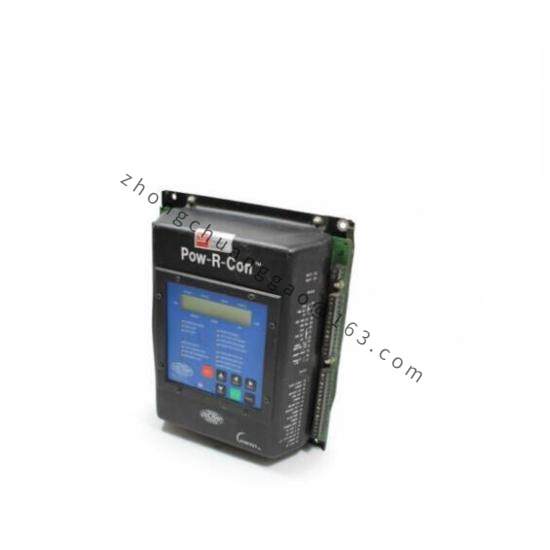
Product Introduction: This model belongs to the Woodward 8904 series and is part of the renowned 505 Digital Governor product line. The 505 is a microprocessor-based digital governor designed specifically for controlling steam turbines, turbine generators, and turbine expanders. It provides precise speed and load control with high accuracy, stability, and simple operation.
Output Signal: 4-20 mA manipulation signal to electrohydraulic converter
Communication: Equipped with communication interface for data transmission and remote monitoring
Self-Diagnostics: Built-in self-diagnostic function for fault detection and alarm generation
Control Modules: Three PID modules (Speed PID, Auxiliary PID, Cascade PID)
Industrial Grade: Designed for reliable operation in harsh industrial environments
Functional Features: High control accuracy and stability; simple operation; configurable for different turbine applications; critical speed avoidance; speed remote control; overspeed testing; valve position limiting; frequency control; cascade control; auxiliary control; communication capabilities.
Application Scenarios: Control of steam turbines driving generators, compressors, or pumps. Suitable for industrial steam turbine applications requiring precise speed and load regulation.
Performance Parameters: Speed PID control modes; frequency and unit load relationship management; critical speed range setting with fast ramp rate capability; overspeed protection function.
Material Composition: Industrial-grade electronic control enclosure designed for harsh industrial environments.
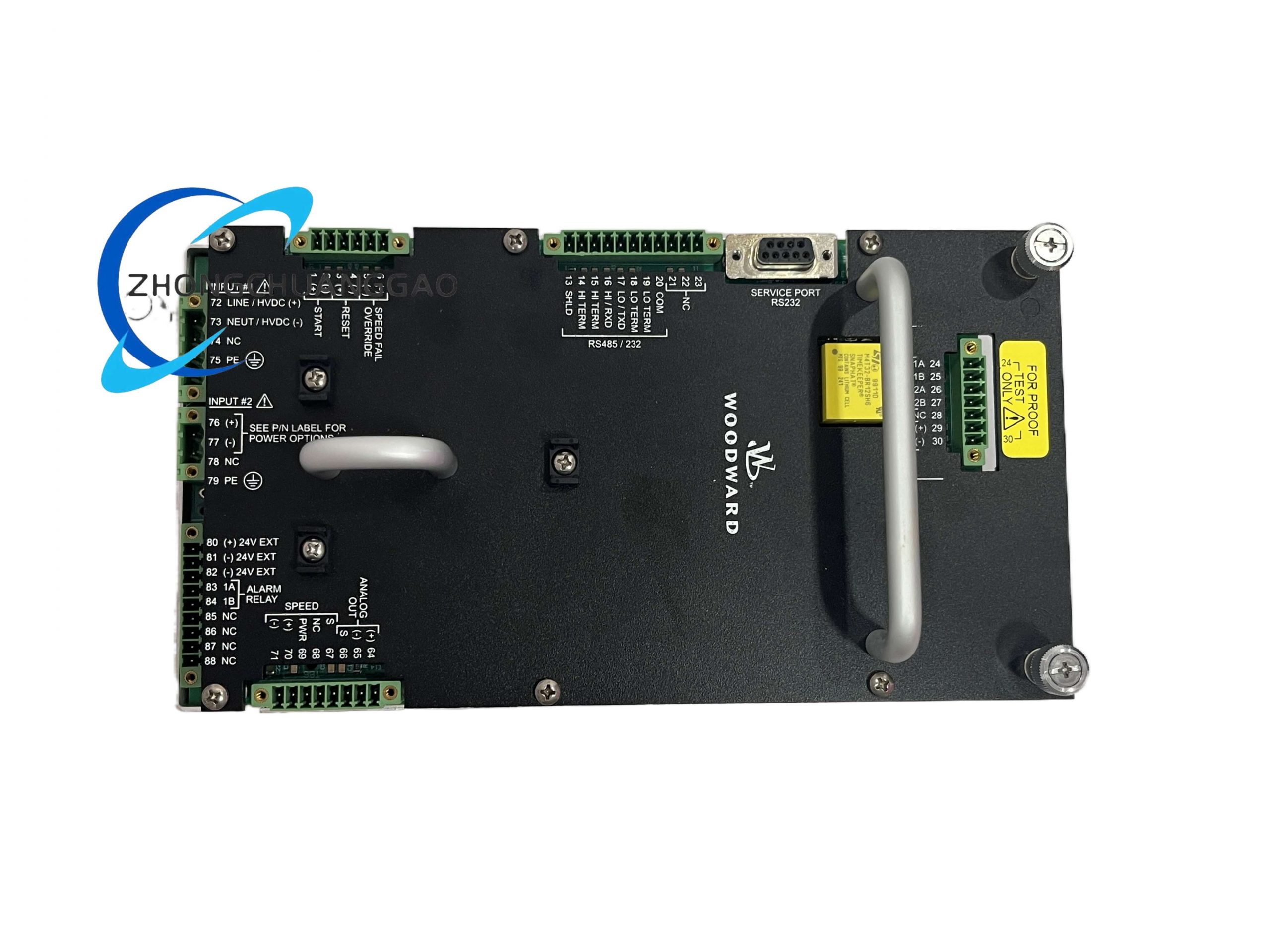
Structural Features: Standard enclosure or bulkhead-mounted enclosure configuration; keypad and display interface; CageClamp terminal blocks; jumper options for configuration; fuse location; shielded wire connections; RS-232, RS-422, and RS-485 communication interfaces.
Working Principle: The 505 accepts speed signals from two magnetic pickups (SE) monitoring turbine speed (frequency signals), compares with internal speed setpoint, and through speed PID amplifier action, outputs 4-20 mA manipulation signals. These signals are sent to an electrohydraulic converter (IH) which converts to secondary oil pressure signal (1.5-4.5 bar). The secondary oil drives the servo cylinder (1910) to control the regulating valve (0801) opening, adjusting steam intake to regulate turbine output and maintain speed stability at the setpoint.
Installation Requirements:
Standard enclosure or bulkhead-mounted enclosure configuration
CageClamp terminal block connections
Jumper configuration per application requirements
Shielded wire connections for signal integrity
Communication wiring: RS-232, RS-422, or RS-485 per system architecture
Separate signal ground wire for multipoint wiring configurations
Install in suitable industrial control environment