Technical Specifications
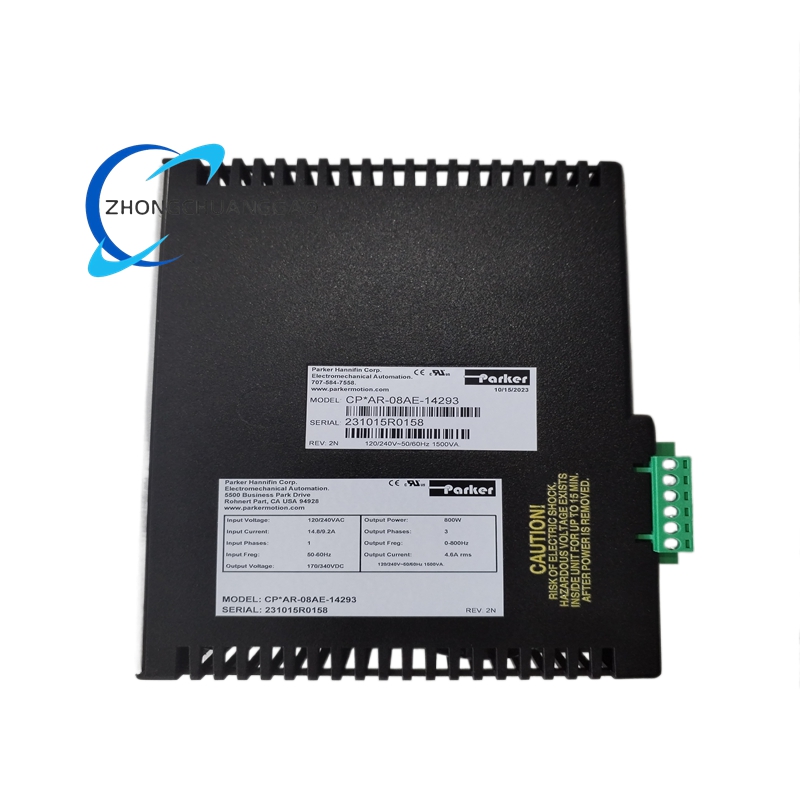
Mains / Bus: AC single-phase or shared DC-bus rack configuration according to rack variant.
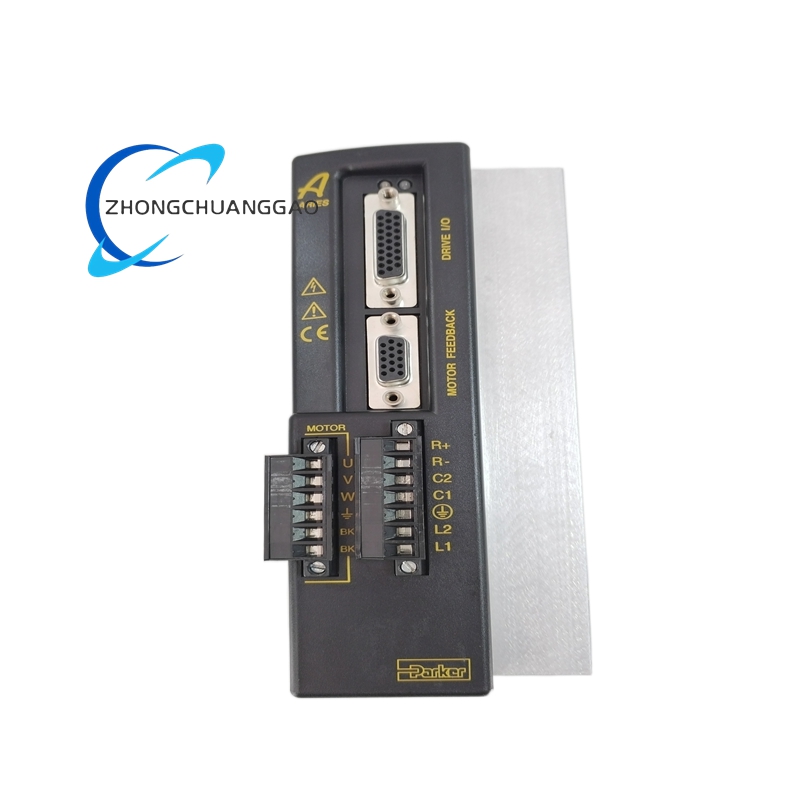
Output Current: continuous and peak values vary by variant; supplier Aries references list approximately 4.5 A continuous and 13.5 A peak for an 08AE-class drive, while AR-rack references list different current ratings.
Control Modes: position, speed and torque closed-loop.
Feedback: incremental encoder, absolute encoder such as EnDat, Hiperface, TTL or sin/cos according to drive variant.
Command Interfaces: ±10 V analog, pulse/direction, RS232 commissioning, and fieldbus options according to configuration.
Protection: overcurrent, overvoltage, overtemperature, encoder-loss and enable/interlock monitoring.
Functional Features
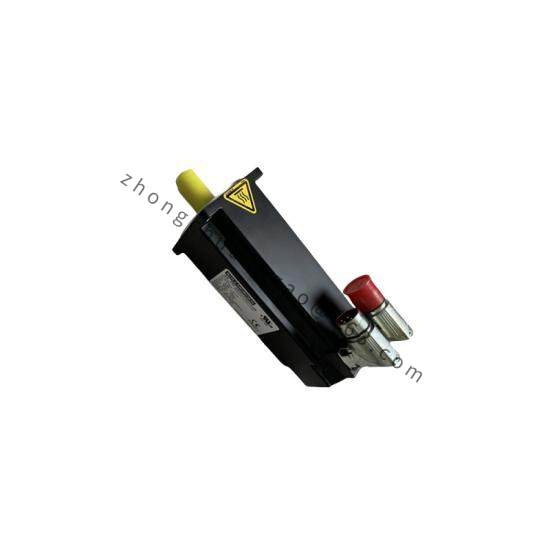
Auto motor-parameter detection with supported Parker smart encoders.
Field-oriented control for smooth torque and speed regulation.
Electronic gearing, homing, indexing and fault logging.
Status LEDs for power, enable, communication and fault conditions.
Scalable communication from analog/pulse to CANopen or other buses according to variant.
Application Scenarios
Packaging machines and printing presses.
Machine tools, robotics and gantry systems.
Semiconductor and assembly automation.
Tension, pressing and precision positioning stations.
Material and Structure
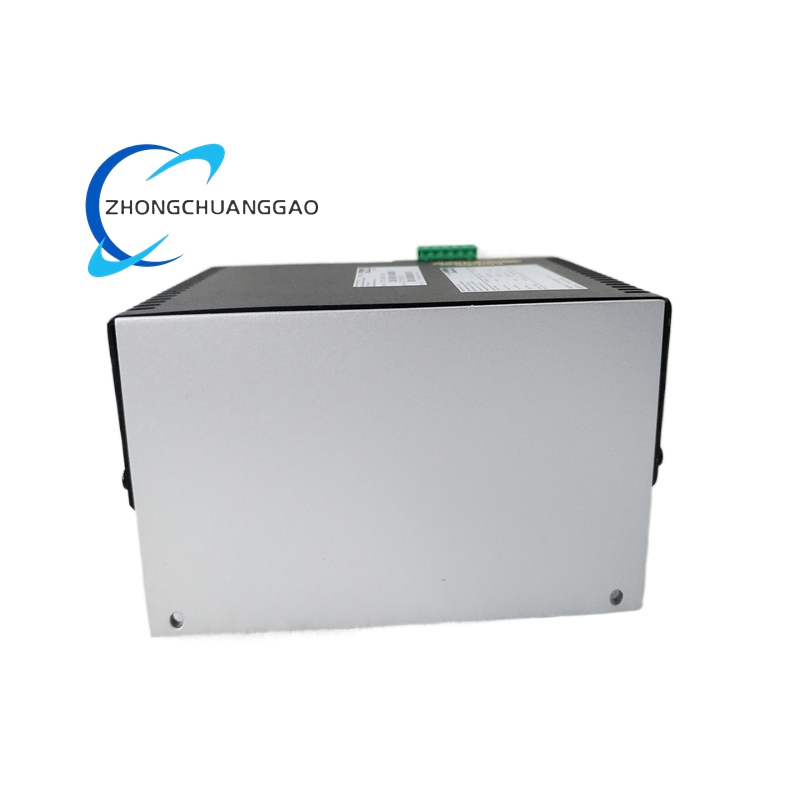
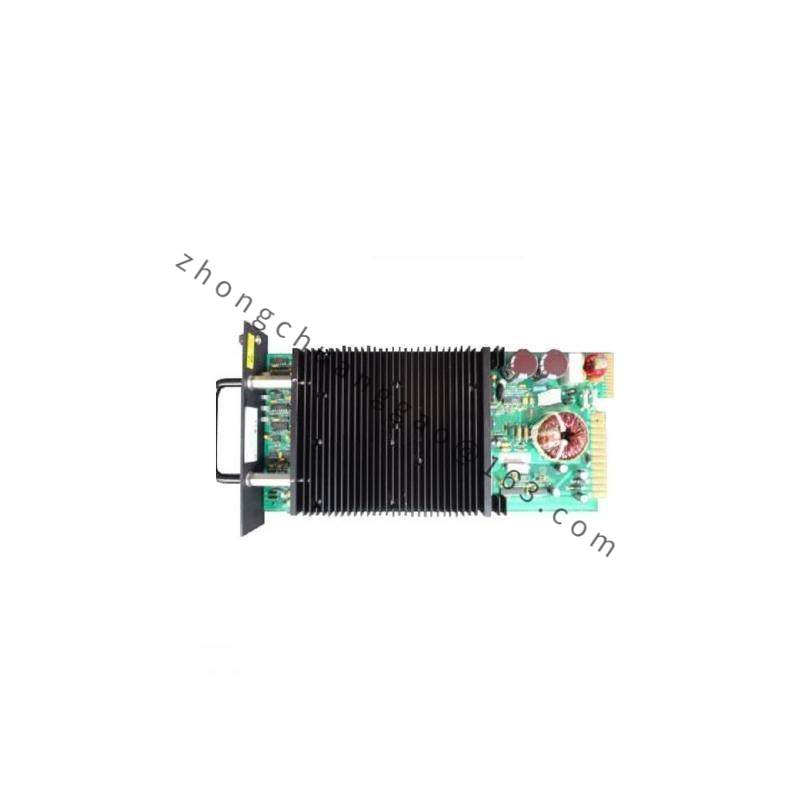
Aluminum or steel drive chassis with finned heatsink.
PCB power stage, DSP or microcontroller control board.
Encoder, motor-power and I/O connectors.
Fan or convection cooling according to enclosure and current rating.
Working Principle
The drive rectifies or shares DC-bus power, measures motor currents and rotor position from the encoder, and runs field-oriented algorithms to produce three-phase PWM output. The controller compares commanded position, speed or torque with feedback and adjusts output until the error is minimized.
Installation Requirements
Mount vertically with specified top/bottom ventilation clearance.
Ground the drive chassis and motor frame to the same equipotential system.
Use shielded motor and encoder cables with proper cable clamps.
Set motor parameters, feedback type and safety limits before first run.
Usage Precautions
Confirm single-axis, rack-module or multi-axis variant before applying ratings.
Never energize with incorrect encoder type or undefined motor parameters.
Observe emergency-stop, enable and safe-torque-off requirements.
Perform insulation and current-tests after any power-stage replacement.