GE DS3800NECA1B1A
Product Name: GE Speedtronic Mark IV Ethernet Communications Board with Enhanced Diagnostics
Product Introduction: The DS3800NECA1B1A is a communication module for GE Speedtronic Mark IV turbine control systems. The “1B1A” suffix reveals a board that has been through multiple field revisions: the first “1” adds the 1 MB memory upgrade, the “B” adds an RS-485 port alongside the RS-232, the second “1” indicates a firmware revision that fixes the packet-loss bug, and the final “A” is the PCB revision with improved power-supply decoupling. This is the most reliable NECA variant and the one to specify when experiencing communication timeouts or HMI freezes.
Detailed content
Technical Specifications:
- Physical Interface: 10Base2 (thin coax, BNC connector)
- Serial Ports: RS-232 (DB9 male, console) + RS-485 (terminal block, multi-drop)
- Serial Baud Rates: 9600, 19200, 38400, 57600 (software selectable)
- Protocol Stack: GE proprietary TCP/IP with enhanced retransmission
- Effective Data Rate: 3.5 Mbps (versus 2 Mbps on the base NECA)
- Address Configuration: 8-position DIP switch (node ID 1–255)
- Memory: 1 MB SRAM (upgraded from 512 KB), 512 KB Flash
- Backplane Interface: GE I/O bus (parallel, 16-bit)
- CPU Compatibility: DS3800DMP series (v4.0 firmware or later)
- Packet Buffer: 256 packet queue (versus 64 on the base board)
- Backplane Current Draw: +5 VDC @ 1.9 A, +12 VDC @ 0.5 A
- Operating Temperature: 0 to 60 °C (non-condensing)
- Dimensions: 328 mm × 185 mm × 35 mm (full-length Mark IV)
- Diagnostic LEDs: Six LEDs—Power, Link, Act, Fault, Serial1, Serial2
- Configuration: DIP switch + serial console menu interface
Functional Features:
- Serves as the Mark IV system’s Ethernet interface over 10Base2 coax, while simultaneously providing two serial ports for local diagnostics.
- Caches network packets more effectively than the base board, raising effective throughput from 2 Mbps to 3.5 Mbps—critical when polling 200+ data points to a historian.
- The “A” PCB revision changes the power-supply decoupling capacitors to reduce noise on the +5 V rail, improving stability in electrically noisy turbine cabinets.
- Drop-in compatible with DS3800NECA1B1; software compatible with earlier DS3800NECA and DS3800NECA1.
Application Scenarios:
Mark IV turbine control cabinets requiring reliable Ethernet connectivity to plant HMIs and historians; retrofits of base NECA boards suffering packet loss; dual-access debugging where an HMI runs over coax while a laptop connects to the DB9 serial console.
Structural Characteristics:
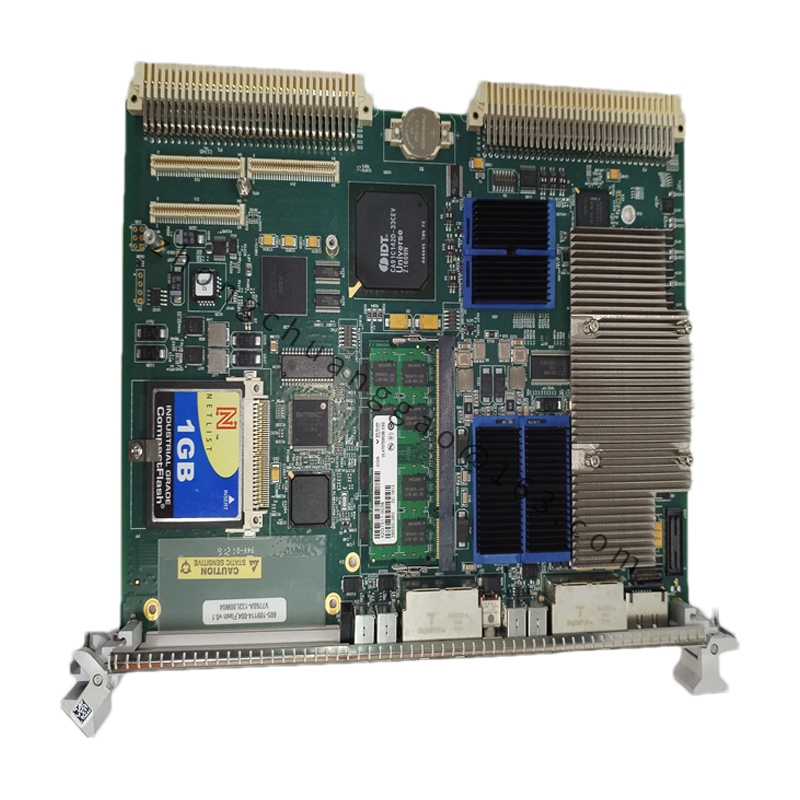
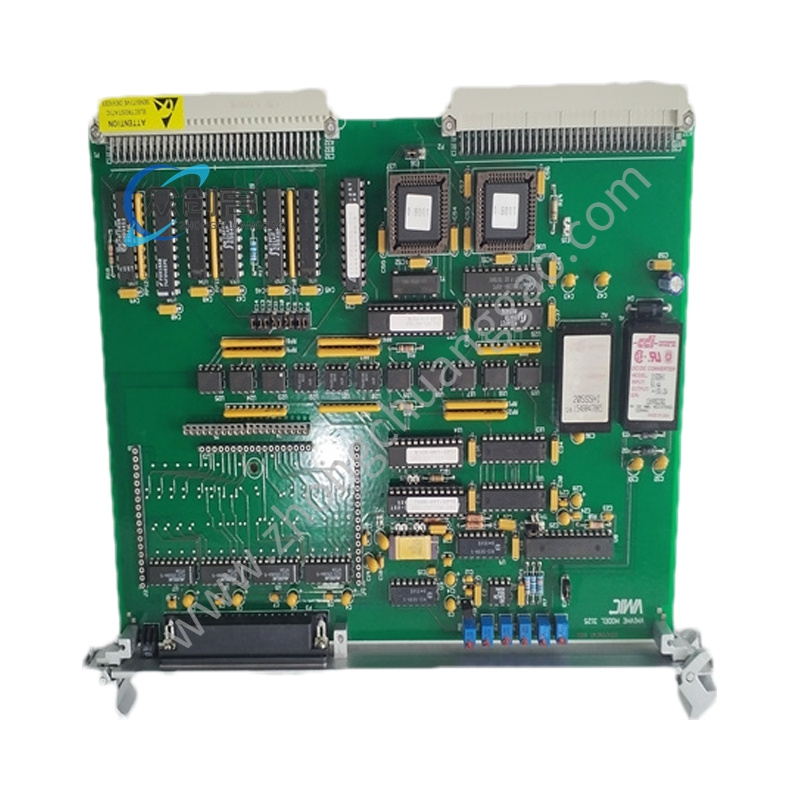
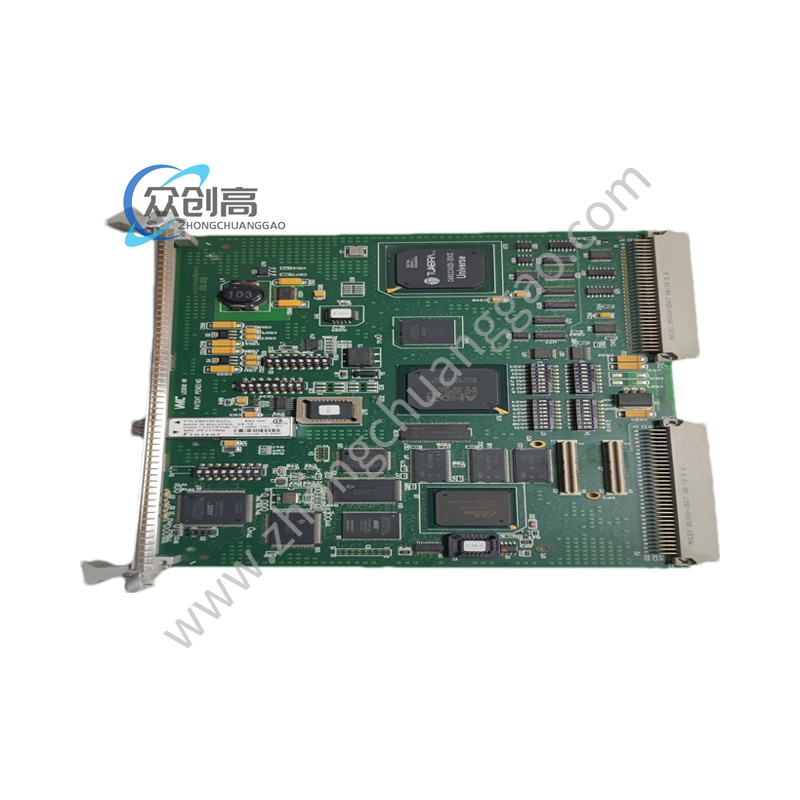
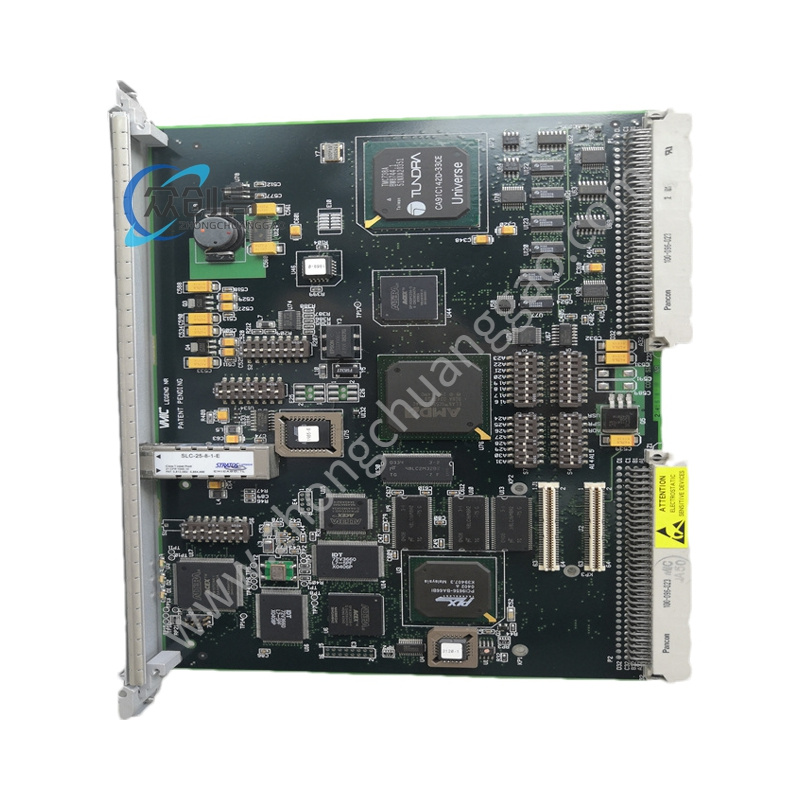
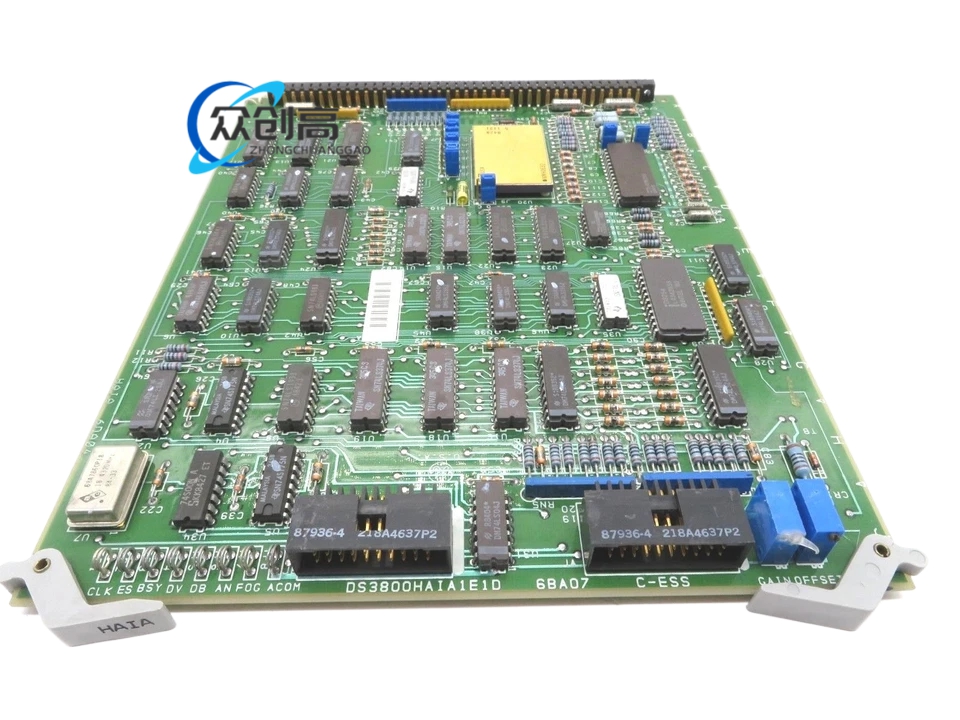
Full-length Mark IV board format (328 mm × 185 mm). The faceplate carries six diagnostic LEDs and an 8-position DIP switch for node-ID configuration. The rear edge connector plugs into the GE 16-bit parallel I/O bus. A BNC connector provides the 10Base2 coax Ethernet interface.
Working Principle:
Turbine data from the Mark IV backplane is buffered in the 1 MB SRAM packet queue and framed according to GE’s proprietary TCP/IP stack with enhanced retransmission. The packet is driven out over the 10Base2 coax interface. Simultaneously, the RS-232 and RS-485 ports allow console access and multi-drop serial communications. The “1”-revision firmware eliminates the retransmission bug present in earlier builds, ensuring no packet loss on large transfers.
Installation Requirements:
Install in a vacant full-length Mark IV slot. Set the node ID via the 8-position DIP switch (1–255). Connect the BNC 10Base2 coax to the plant network. For console access, attach a laptop to the DB9 RS-232 port. Ensure the DS3800DMP host CPU runs firmware v4.0 or later. Verify all six LEDs—Power, Link, Act, Fault, Serial1, Serial2—behave as expected during power-up.
Usage Precautions:
This board is new surplus and obsolete/discontinued by the OEM. The DS3800NECB and DS3800NECA1B1 are drop-in replacements; the Mark VIe IC695LRE001 is hardware incompatible. The “A” PCB revision is mandatory for electrically noisy environments with 125 VDC solenoids switching nearby. Avoid mixing with base NECA boards that have a “0” in the third suffix position—those carry the older firmware that will drop packets on large transfers.