Product Name: GE 17 Series Industrial Miniature Circuit Breaker (MCB)
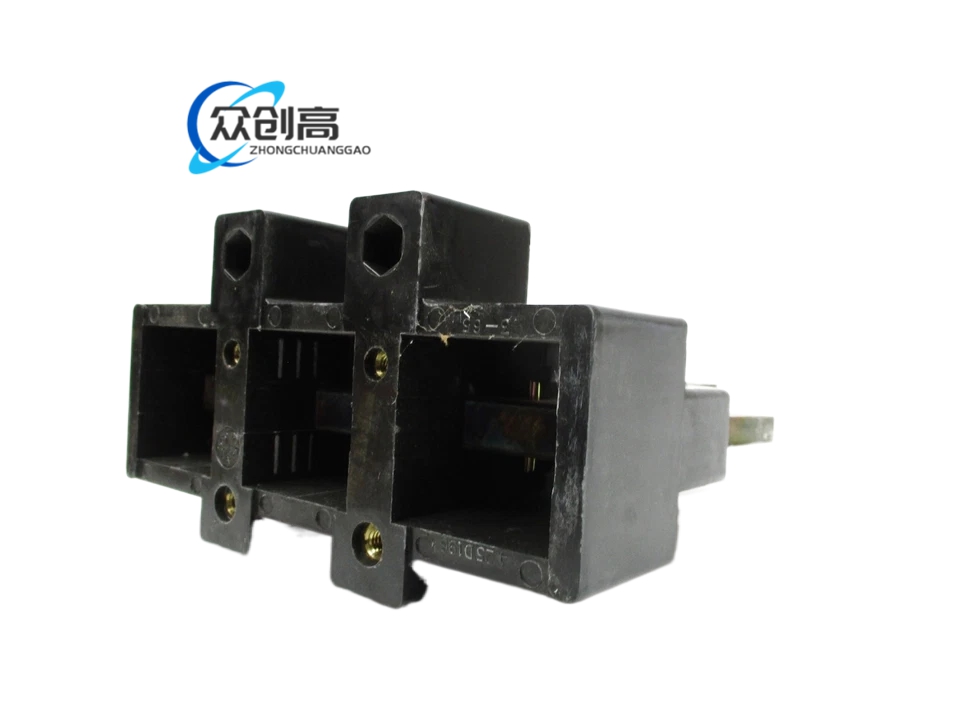
Product Introduction: The GE 17FB160C1 is a miniature circuit breaker from GE’s industrial distribution product line. Rated at 160 A with a Type C trip curve, it provides overload and short-circuit protection for AC distribution systems, primarily used in low-voltage main distribution and high-current branch circuit protection.
Functional Features: Type C trip curve suits lighting, distribution and general resistive load protection. Three-position handle operation (ON / OFF / TRIP). DIN rail mounting (35 mm). Optional electrical interlocking interface. Mechanical life ≥ 6,000 operations; electrical life ≥ 4,000 operations at Icu.
Performance Parameters: Instantaneous trip time < 0.1 s at 8×In; thermal trip time < 2 hours at 1.5×In; contact resistance < 1.5 mΩ; power consumption < 1.8 W per pole at rated current.
Material Composition: Housing in flame-retardant PA66 nylon (UL94 V-0); contacts in silver-nickel alloy (AgNi); handle in ABS engineering plastic; terminals in copper (C11000) with silver plating; arc chute using narrow-slit metal arc-extinguishing grid.
Working Principle: Normal current passes through AgNi contacts and a bimetallic thermal element. When current exceeds the Type C instantaneous threshold (800–1600 A), the electromagnetic release trips instantly. When current stays in the overload range (160–320 A) for a sustained period, the bimetallic element bends and actuates the trip mechanism for delayed interruption.