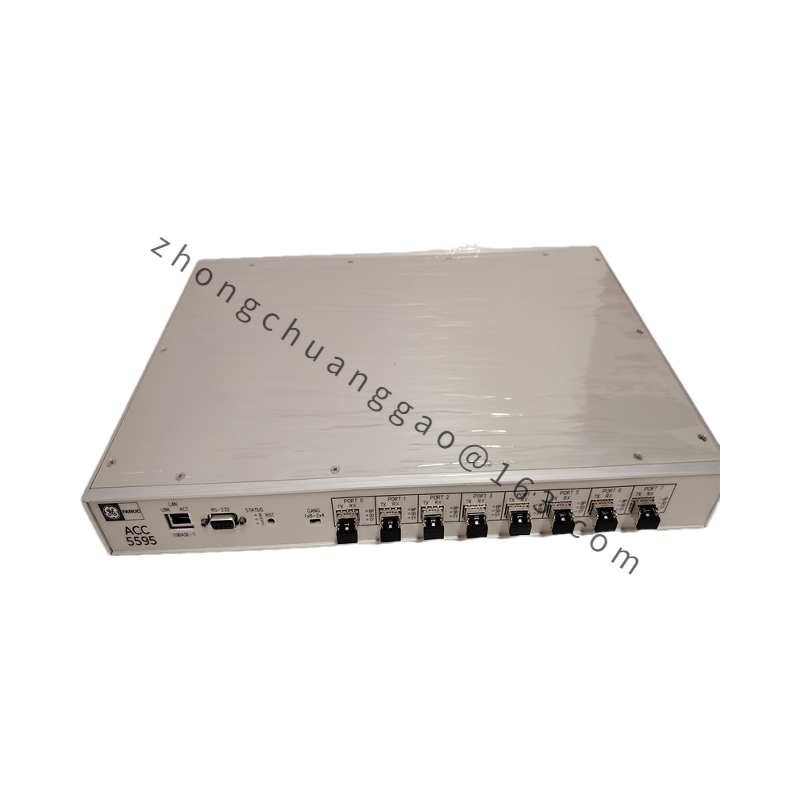
Product Name: GE Type SGC 12SGC21A1A — Negative-Sequence Time Overcurrent Relay.
Product Introduction: This is a three-phase negative-sequence time overcurrent relay from GE’s Type SGC family, designed to protect generators against possible damage from unbalanced phase currents resulting from prolonged faults or unbalanced-load conditions.
Type: SGC Negative-Sequence Time Overcurrent Relay
Configuration: Three-phase
Supply Voltage: 48 / 110 / 125 VDC
Current Input: 5A
Tap Range: 2–40
Target Seal-In Unit: 0.2–2.0
Instantaneous Unit: No external DB-40 instantaneous
Trip Threshold: Continuously adjustable between 0.04 and 0.4 per unit
Alarm Threshold: Continuously adjustable between 0.02 and 0.2 per unit
Minimum Trip Delay: 0.2 second
Alarm Delay: 3 seconds
Continuous Operating Ambient: -20°C to +65°C
Functional Features: Responds to the negative-sequence component (I₂) of generator current; separate alarm and trip functions; target seal-in indication; protects against unbalanced current damage.
Application Scenarios: Generator protection in power plants; protecting machines from unbalanced faults and unbalanced-load conditions; used where negative-sequence overcurrent protection is required.
Working Principle: The relay calculates the negative-sequence component of the three-phase current. When this component exceeds the adjustable trip threshold (expressed in per-unit relative to the tap setting), the relay operates after a time delay determined by the selected “K” characteristic, issuing a trip command. An alarm function responds at a lower threshold.
Usage Notes: Essential that the time characteristic (“K” value) be selected so the machine is cleared before suffering damage; correct selection of tap-switch setting establishes per-unit reference; the relay will be damaged if stored at ambient temperatures below -40°C or above +85°C (trip level will shift more than 0.5%).