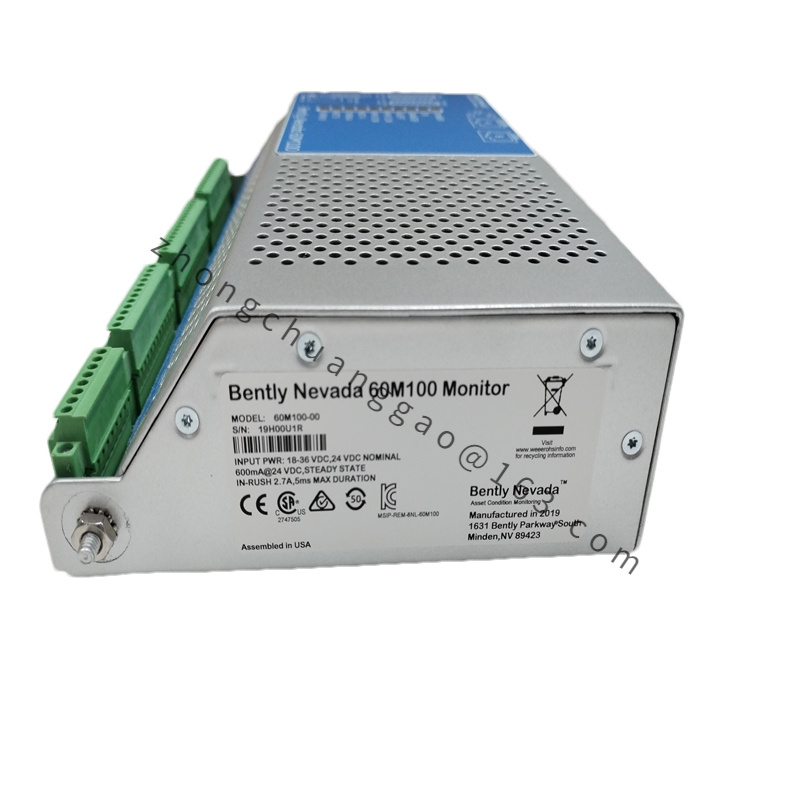
Technical Specifications
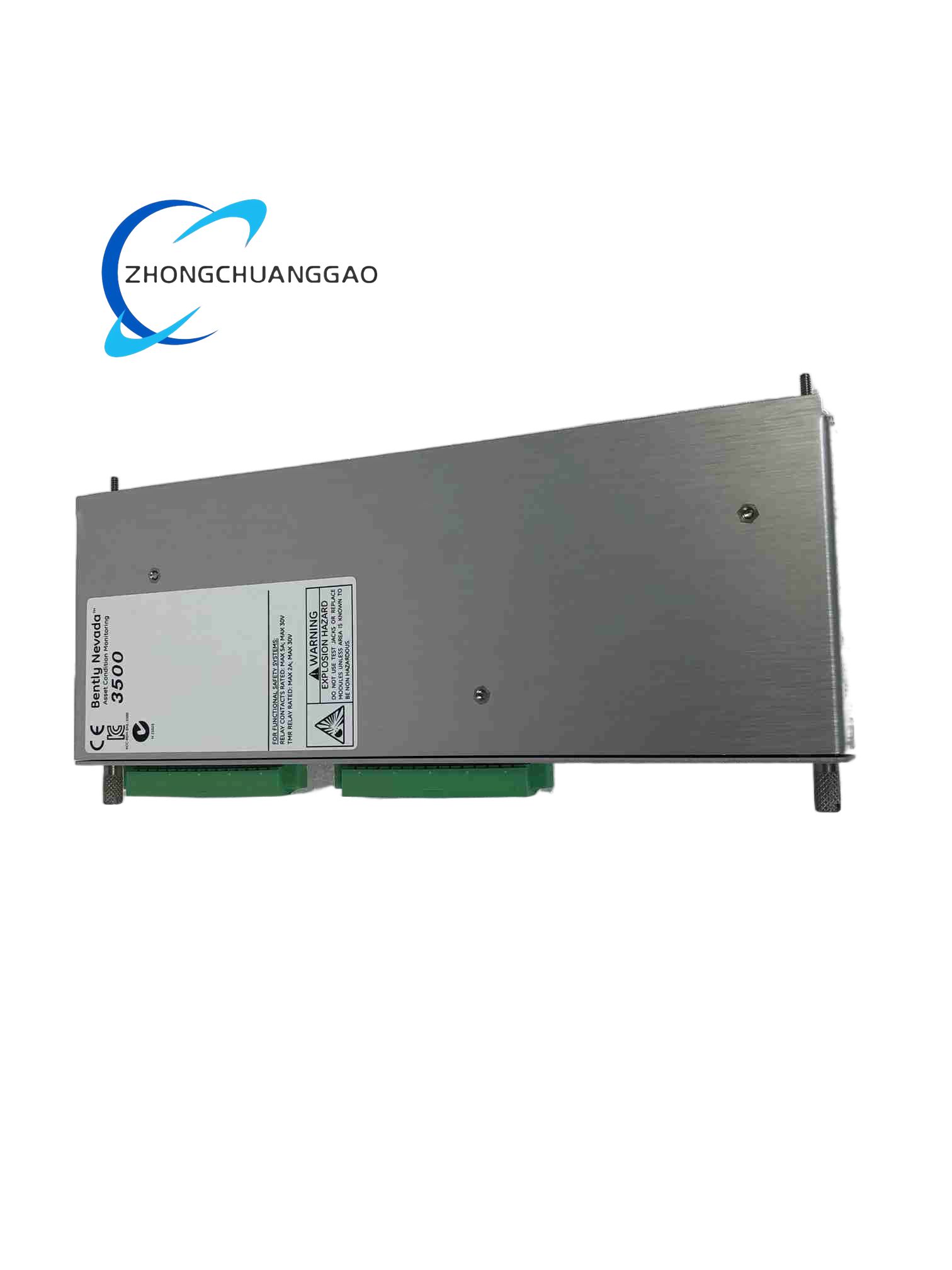
Supported sensor types include RTDs and thermocouples. 3500/60 temperature monitor configurations provide six or twelve input channels depending on the module arrangement. Accuracy is approximately ±0.1% of full scale. Rack power is supplied through the 3500 backplane. Operating temperature is 0°C to +60°C for the six-channel monitor configuration and -30°C to +65°C for selected十二-channel configurations found in distributor records.
Functional Features
The system performs linearization, cold-junction compensation for thermocouples, open and short sensor detection, and configurable alarm set points. Relay and communication outputs are managed through the 3500 rack framework.
Application Scenarios
Use the module in turbine, compressor, pump, generator, and motor protection systems. It is applicable in power generation, oil and gas, petrochemical, and heavy industrial plants where thermal limits must be monitored continuously.
Structural Characteristics
The module uses a rack-mounted printed circuit construction with screw terminals or internal termination, front status indication where provided, and backplane power and communication connection.
Installation Requirements
Install only in a compatible 3500 rack slot. Verify sensor type, wiring method, and I/O assignment before power-up. Use proper RTD lead configuration and thermocouple compensation wiring. Ground the rack according to Bently Nevada and site electrical standards.
Usage Precautions
Confirm the exact 3500/60 monitor and I/O variant before replacement. Do not mix intrinsically safe and general-purpose I/O variants without verifying hazard-area requirements. Perform sensor fault diagnostics after installation to avoid false alarms.