Technical Specifications
Auxiliary input voltage: 85-265 VAC according to general DECS-250 listings; selected CN1CN1N technical data lists 85-277 VAC auxiliary supply, so confirm nameplate before connection.
Output frequency support: 50/60 Hz adaptive according to configuration.
Voltage regulation accuracy: ±0.5% full scale according to general controller listing; expanded DECS-250 redundant versions document ±0.15% with higher hardware configuration.
Excitation regulation response: below 20 ms according to general CN1CN1N listing.
Operating temperature: -40°C to +65°C according to CN1CN1N technical data.
Storage temperature: -40°C to +85°C.
Humidity: 5%-95% non-condensing.
Protection class: IP20 panel-mount enclosure.
Dimensions: approximately 220 × 160 × 65 mm.
Weight: approximately 1.7 kg.
Functional Features
Automatic voltage regulation with true RMS generator sensing.
Overvoltage, undervoltage, over/underfrequency and field limiting functions.
Remote parameter setting and real-time status monitoring through communication interface.
Event and fault recording according to configuration.
Applicable to shunt, PMG or auxiliary-winding excited generators according to excitation design.
Performance Parameters
Response time supports fast correction of generator terminal voltage during load changes.
Regulation accuracy maintains stable voltage under varying reactive load when CT/PT ratios are correctly configured.
Communication distance and node count depend on interface type, cable and termination.
Material Composition
Industrial control enclosure with PCB control assemblies.
Field power stage using thyristors or switched devices according to output class.
Sensing, isolation, protection and communication circuits.
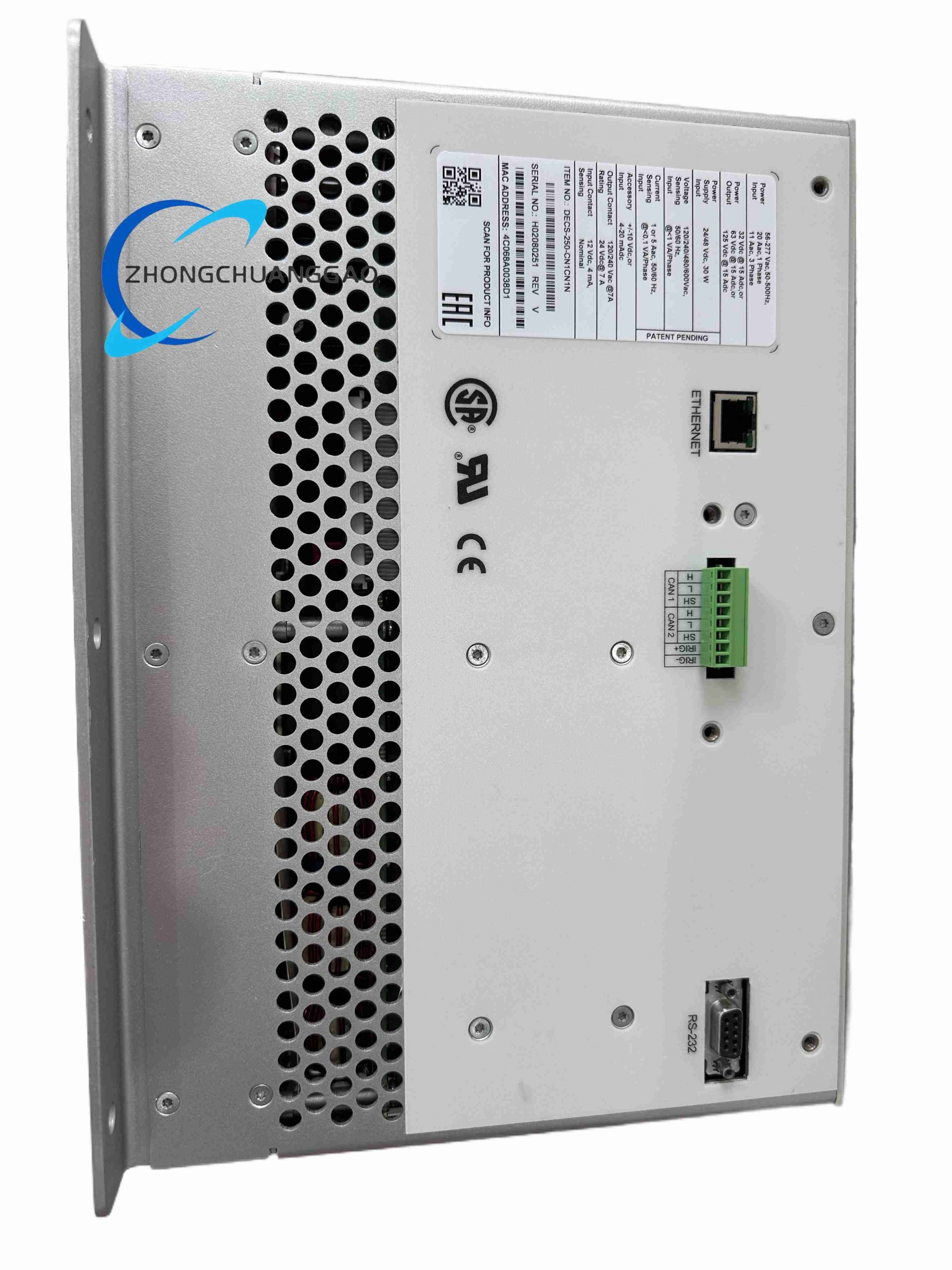
Screw terminals for PT, CT, field and control wiring.
Structural Features
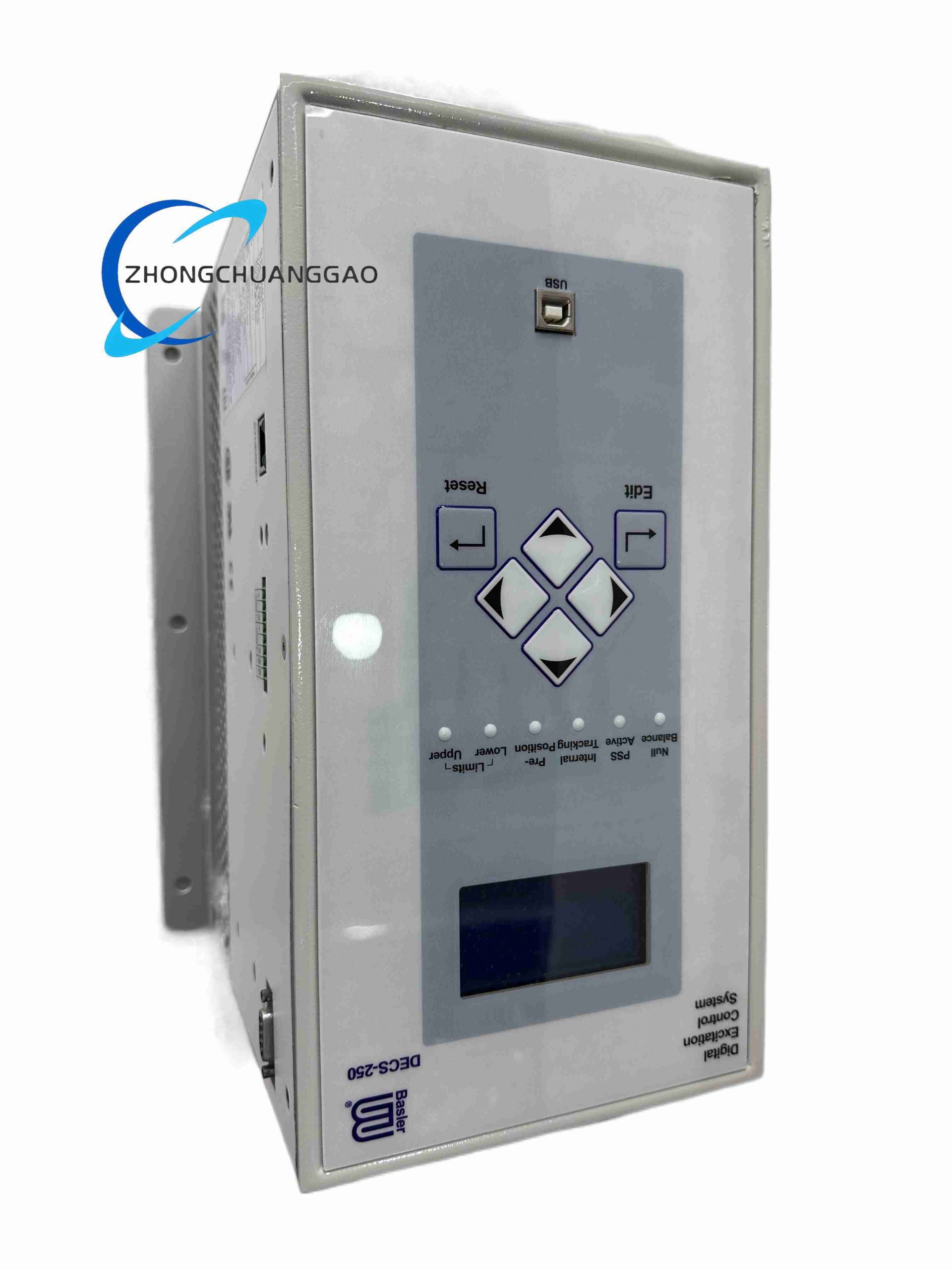
Panel-mount excitation controller with front status and configuration access.
Separated sensing, field output, control input and communication terminal groups.
Compact enclosure suitable for generator control panel integration.
Working Principle
The controller measures generator terminal voltage and current, compares actual values with the voltage setpoint and adjusts field excitation. Limiters prevent over/underexcitation, V/Hz violation and field faults. Communication functions allow external systems to read metering, change setpoints and receive alarm or trip status.
Installation Requirements
Mount in a ventilated generator control panel with IP20 or better surrounding enclosure.
Verify auxiliary supply, PT ratio, CT ratio and field winding parameters.
Use shielded cable for sensing circuits and ground shield at one point.
Set communication protocol, address and baud rate before network integration.
Confirm excitation output class against generator field resistance and required forcing.
Usage Precautions
Do not connect auxiliary power outside the nameplate voltage range.
Validate all protection setpoints before generator paralleling.
Isolate auxiliary power from main generator high-current circuits during service.
Disconnect field and sensing circuits before terminal maintenance.
Keep configuration backup after commissioning.