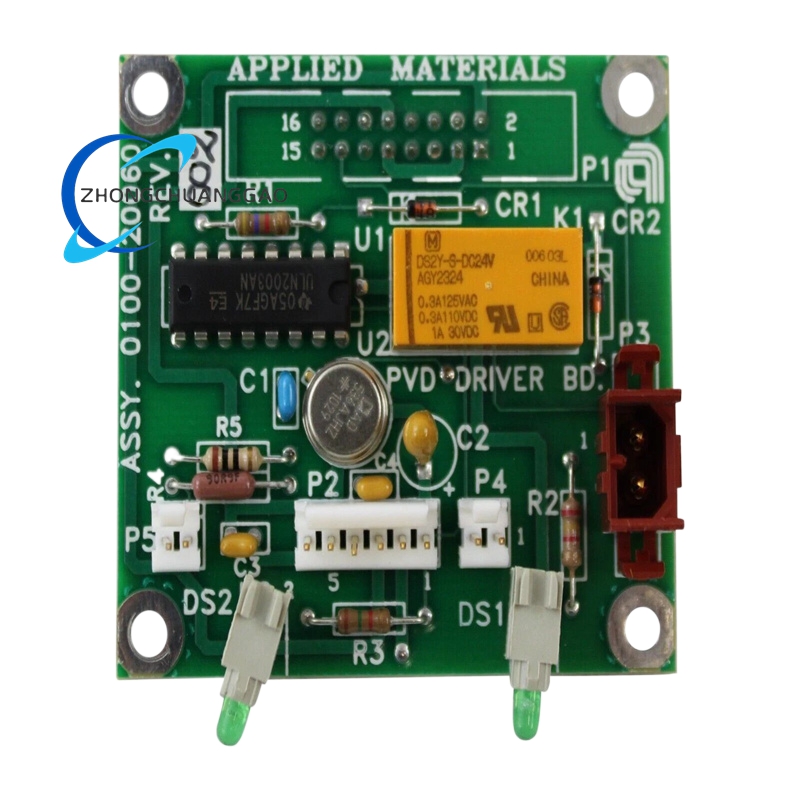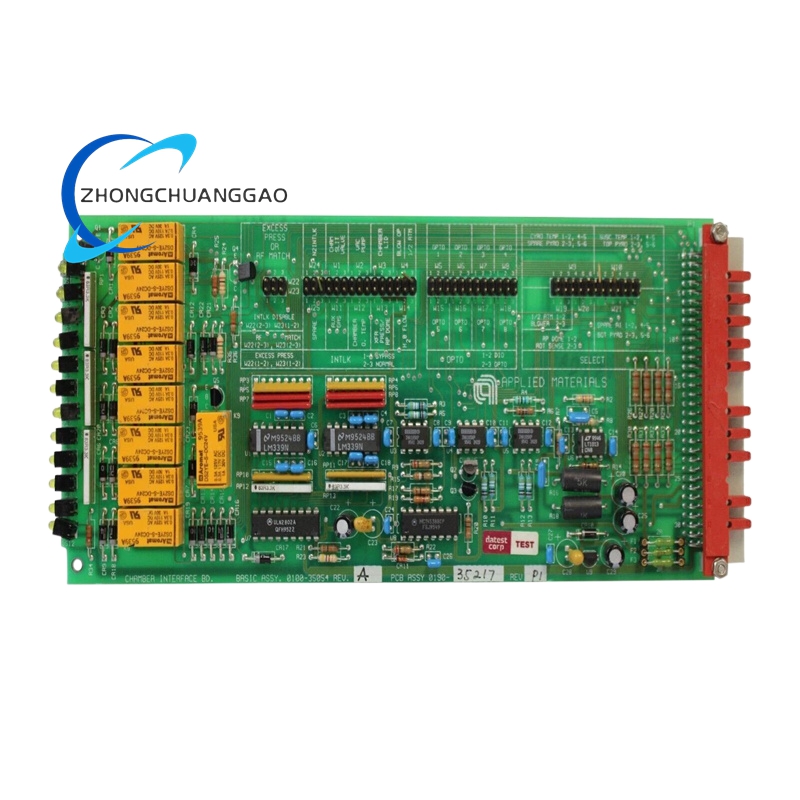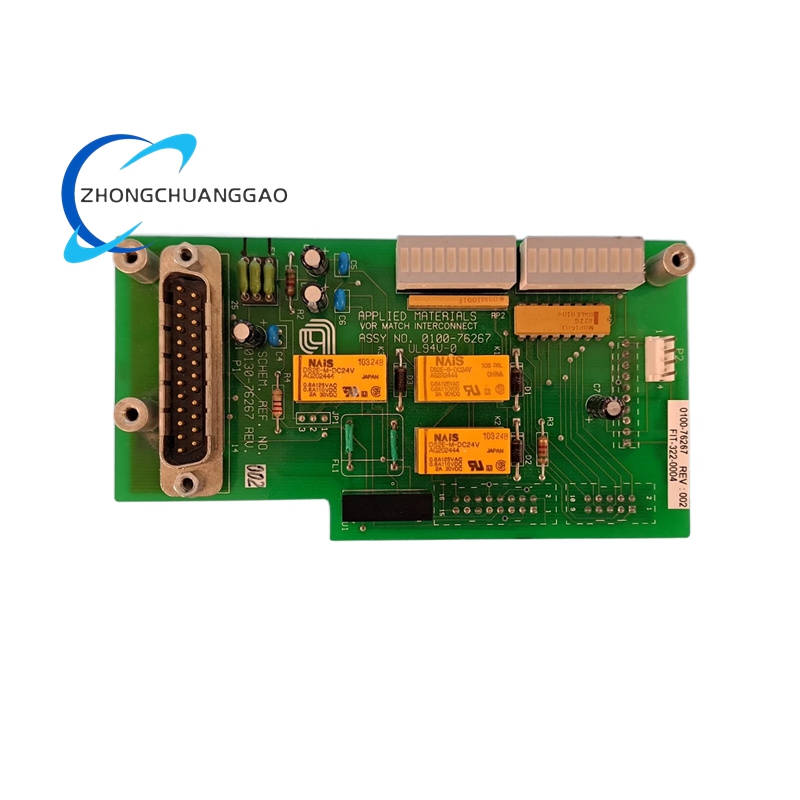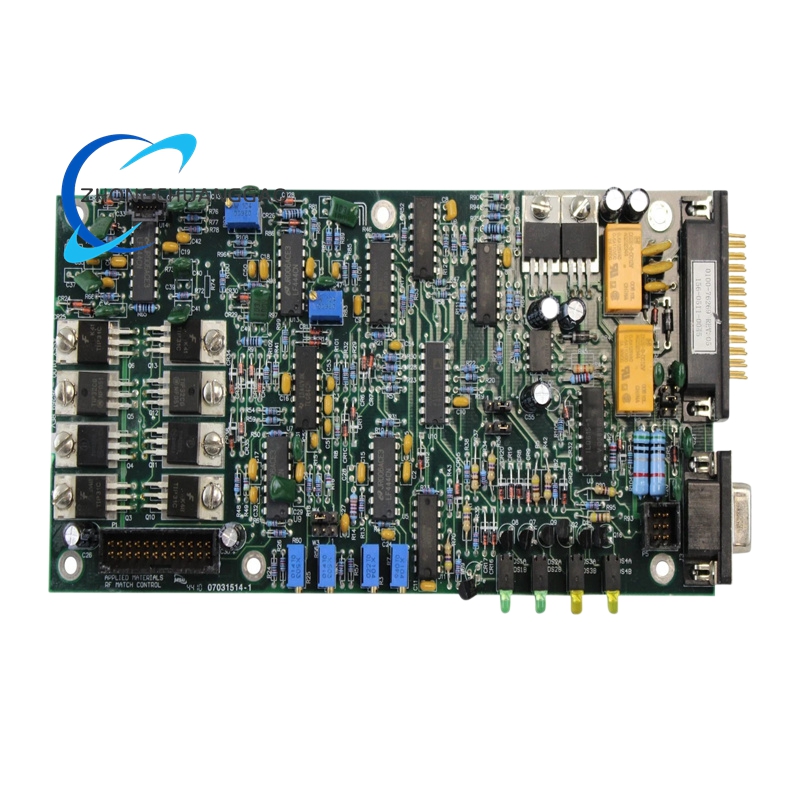

AMAT 0010-53873
Product Name: High-Vacuum Pneumatic Gate Valve
Product Introduction:
This is a critical isolation valve used in vacuum processing systems to separate the process chamber from the vacuum pump stack or transfer modules. It utilizes a pneumatic actuator to open and close a gate or butterfly valve mechanism. The design focuses on minimal outgassing, high conductance (to allow fast pumping), and the ability to hold a high vacuum (10-7 to 10-9 Torr) when closed. It is a key component for maintaining process integrity and enabling maintenance without breaking the vacuum in adjacent chambers.
Detailed content
Technical Specifications:
- Type: Pneumatically Actuated Gate Valve or Angle Valve
- Port Size: Typically 250mm (10-inch), 350mm (14-inch), or 450mm (18-inch) nominal diameter.
- Vacuum Rating: Leak rate < 1 x 10^-9 std cc/sec (Helium) when closed.
- Pressure Rating: Atmospheric pressure differential (14.7 psi) in both directions.
- Actuation: Double-acting pneumatic cylinder; requires clean, dry instrument air (CDA) or Nitrogen at 80-100 psi.
- Cycle Time: Open/Close time typically < 1.0 second.
- Materials: Body: Aluminum or Stainless Steel; Seals: Viton, Buna-N, or Kalrez; Internal components: 304/316L SS.
- Mounting: ISO-K or ASA flange configurations for chamber and pump side connections.
Functional Features:
- Bakeable Design: Capable of withstanding bake-out temperatures up to 150°C or 200°C without degrading seals or lubricants.
- Position Sensing: Integrated proximity sensors or magnetic switches to confirm “Open” and “Closed” states to the system controller.
- Low Particle Generation: The actuator and linkage are isolated from the vacuum space (often via bellows or magnetic coupling) to prevent lubricant migration or mechanical wear particles from contaminating the process.
- Manual Override: Includes a manual hand-crank or push-button for emergency operation in case of pneumatic failure.
- Interlock Logic: Hardwired interlocks prevent the valve from opening if the chamber is not under vacuum or if pressure is unbalanced.
Application Scenarios:
- Pump Isolation: Isolating the roughing pump or turbomolecular pump stack during venting or maintenance.
- Process Module Isolation: Separating a specific process chamber (e.g., PVD) from a central transfer cluster tool to allow independent maintenance.
- Load Lock Interface: Acting as the valve between the atmospheric load lock and the vacuum transfer chamber.
- Gas Injection Isolation: Used on gas lines to isolate the MFC from the chamber during pump-down.


.jpg)