Digital guide

You are here:

AEG MM-PMA1-400

Product Category: Electrical Power Quality Analyzer / Energy Monitoring Module

Product Overview:
The AEG MM-PMA1-400 is a precision power measurement and analysis module manufactured by AEG Power Solutions (formerly known in the power electronics domain). It is designed for industrial and commercial energy monitoring, power quality analysis, and electrical parameter recording. The unit measures voltage, current, power, energy, harmonics, and power factor with high accuracy.

Detailed content

Technical Specifications:

  • Model: MM-PMA1-400
  • Manufacturer: AEG Power Solutions
  • Measurement Channels: 3-phase 4-wire (3V + 3I) or 1-phase 2-wire configurable
  • Voltage Input: 57.7V / 100V / 230V / 400V AC (auto-ranging)
  • Current Input: 1A / 5A AC (via CT or direct)
  • Voltage Accuracy: ±0.2% of reading
  • Current Accuracy: ±0.2% of reading
  • Active Power Accuracy: ±0.5% of reading
  • Reactive Power Accuracy: ±0.5% of reading
  • Power Factor Accuracy: ±0.01
  • Frequency Range: 45–65 Hz
  • Harmonic Analysis: Up to 63rd harmonic (IEC 61000-4-7 compliant)
  • Energy Recording: kWh, kvarh, kVAh — cumulative and interval (1–60 min)
  • Sampling Rate: 12.8 kHz per channel
  • Data Interface: RS-485 (Modbus RTU), Ethernet (optional)
  • Display: LED status indicators (no local display — remote readout only)
  • Power Supply: 85–265V AC/DC, 5W
  • Operating Temperature: -25°C to +70°C
  • Dimensions (W x H x D): 90 mm x 110 mm x 65 mm (DIN rail mount)
  • Weight: 0.35 kg
  • Enclosure Rating: IP20 (DIN rail mounted in control cabinet)
  • Standards Compliance: IEC 61557-12, IEC 61000-4-30 Class A

Material Composition:

  • Enclosure: Polycarbonate (PC) flame-retardant housing (UL94 V-0)
  • PCB: FR-4 TG150, conformal coated
  • Terminals: Screw-clamp terminals, nickel-plated brass
  • DIN Rail Clip: Steel with zinc plating

Structural Features:

  • Mounting: 35 mm DIN rail (EN 60715)
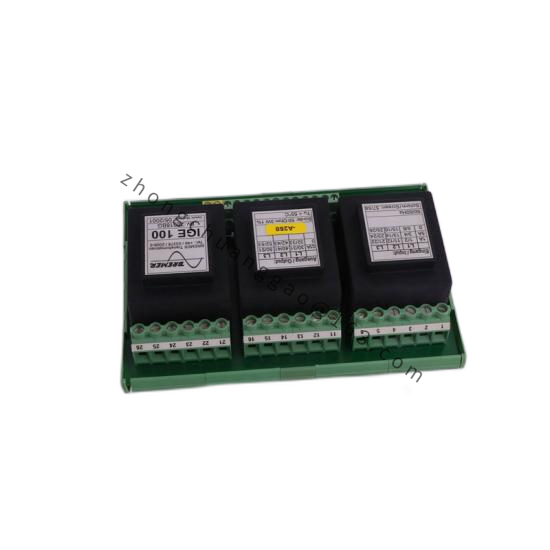
  • Terminal Blocks: 6 screw terminals — 3 for voltage (L1, L2, L3, N), 3 for current (CT inputs)
  • Indicators: 4 LEDs — Power, Data, Alarm, Communication
  • Communication Ports: RS-485 (RJ45 or screw terminal), optional Ethernet (RJ45)

Working Principle:
The module samples voltage and current waveforms at 12.8 kHz per channel using 24-bit ADCs. A dedicated DSP calculates RMS values, active/reactive/apparent power, power factor, frequency, and performs FFT-based harmonic analysis up to the 63rd harmonic (3,150 Hz at 50 Hz fundamental). Energy is accumulated by time-integrating power values. Data is transmitted via Modbus RTU over RS-485 or TCP/IP over Ethernet to a SCADA system, energy management software, or PLC. The module supports 4-quadrant energy measurement (import/export, active/reactive).

Advantages & Highlights:

  • Class A Accuracy: Meets IEC 61000-4-30 Class A — suitable for revenue-grade metering.
  • 63rd Harmonic Analysis: Full compliance with power quality standards.
  • 3-Phase Capable: Single module handles full 3-phase 4-wire systems.
  • DIN Rail Mount: Standard industrial cabinet installation.
  • Modbus RTU + Ethernet: Dual communication for flexibility in SCADA integration.

Applicable Industries / Use Cases:

  • Industrial energy management (factories, plants)
  • Commercial building energy monitoring (BMS integration)
  • Renewable energy systems (solar, wind — import/export metering)
  • Data center power monitoring
  • Utility substation metering
  • Power quality auditing

Installation Requirements:

  • DIN Rail: Standard 35 mm top-hat rail, mounted vertically.
  • Wiring: Voltage inputs connected in parallel to the measured circuit; current inputs via CTs (clip-on or window-type) — never open-circuit a CT secondary.
  • Communication: RS-485 daisy-chain — maximum 32 devices per bus; terminate ends with 120Ω resistor.
  • Grounding: Chassis ground to protective earth (PE).
  • Clearance: Minimum 30 mm above and below for ventilation.

Usage Precautions:

  • Never open-circuit CT secondary — this generates dangerous high voltage.
  • Verify voltage range before connection — applying 400V to a 230V-rated input destroys the module.
  • Use shielded cable for current signals in high-EMI environments.
  • Calibration: Verify annually against a reference standard (Class 0.2 or better).
  • Do not exceed 85°C ambient temperature — derate accuracy above 50°C.

You may also like